A few letters seem to have been lost over the years …. I spent a couple of months at Chris and Hazel’s home in Huntingdon, Cambridgeshire during the UK summer of 2009 while they were sailing in Greece. (More about sailing in the Greek Islands later…… see next Post )
My home in Huntingdon
Nearby Godmanchester
And so to continue from where the last entry finished….. (??? earlier letters missing)
HUNTINGDON – Thursday 18th July (Ely, Houghton Mill, Earith, Cambridge)
Ely Cathedral
On Monday 13th, I spent the whole day in Ely, about 1 ½ hours drive north from Huntingdon, on the southern edge of the great Fens. I’d read that the Cathedral in Ely is a ‘must-see’ – and it is. It’s sometimes called the “Ship of the Fens” and it’s not hard to imagine it looking like a giant ship sailing across the marshes in centuries past. It’s an enormous building, quite awe-inspiring and a true wonder of engineering.
Altar at Ely Cathedral
A little bit of history and geography first…. Ely actually means Isle of Eels, and the town is located on a raised area of ground in the fens, like an island. These days, with modern technology, most of the fens have been drained for agriculture, but for many centuries they were wet, boggy marshlands where people lived a fairly harsh life in houses made of reeds and willow – and ate eels and water birds. (They still fish for eels around here). The first Christian community was started in what must have seemed like a godforsaken place in 673 AD by St Ethelreda, and it’s been a pilgrimage site ever since. How they ever got there way back then defies imagination, let alone how they built a huge edifice of stone and glass in the middle of the marshes over subsequent centuries. The various monasteries and communities on the site have been pillaged and destroyed by Vikings, Henry VIII and great fires…. but the good Christians of Ely just kept on rebuilding and today it really is a magnificent building. The oldest original parts of the building date back about 1000 years, with the main Nave built in the 11th & 12th centuries.
There are two huge towers which can both be climbed. I did the West Tower, up what seemed like an endlessly-spiralling tiny stone staircase. But the view from the top was worth every huff ‘n puff. It‘s possible to see for miles across the flat lands of the fens, and the Great River Ouse winding its way across the countryside. The brochure says the West Tower is 215ft or 66m high. The other tower, the Octagon is a slightly smaller.
The Cathedral has lots of little side chapels and countless tombs of ancient bishops and noble men and women. I found it equally as beautiful as King College Chapel in Cambridge – and certainly more inspiring.
View over Ely from the West Tower
The town of Ely spreads out around the Cathedral. Our old Huntingdon friend Oliver Cromwell also lived here. His house is now the Tourist information office, and there are many other lovely little crooked houses in the narrow lanes. It rained gently in the afternoon, but that added to the atmosphere of the river and the fens – lots of boats and ducks everywhere. I wandered along the Quay and whiled away some time in an old warehouse packed to its ancient timber beams with antiques.
The next day (Tuesday 14th) was spent at home. Work and personal emails needed attention too (I’m still doing my p/t job over here and there’s been quite a bit of activity lately related to NDS, ILO, ABV and ADDC – have to love those acronyms in the disability & development world…)
Houghton Mill
But too many sunny English summer days can’t be wasted indoors, so on Wednesday (15th) I drove to Houghton, a nearby village with an old Mill that’s now a National Trust property. Another idyllic setting that seemed simply made for taking photos. The whole village is gorgeous. I walked around enjoying more thatched cottages with hollyhocks and roses, old Tudor-type houses and a pretty little market square. It’s no wonder so many English movies and TV series are made in these kinds of places.
Wednesday evening was another walk with the Ramblers – this time in Earith, a village beyond St Ives on the way to Ely. We walked across a lot of meadows and along a myriad of country footpaths and somehow wound our way back to the Village Hall where the cars were parked – then went to the pub, of course. It was 9pm by the time the walk finished, but it was like a mid-summer evening in Adelaide … warm and still … so we sat outside overlooking the river. Got home about 10.30pm.
Charles Darwin, Garden Christ’s College
Today (Thursday 16th) took me back to Cambridge again. There’s still so much to see there – especially with my new hero, Charles Darwin. Today I made my way to the Botanic Gardens, then to the Museum of Zoology. I was surprised to find you have to pay to go into the Cambridge Botanic Gardens, but since falling in love with England, I’ve also become much more interested in the English gardens. The Cambridge Gardens are part of the University so there’s a lot of botanical research going on. All very pleasant … but I wonder why gardens seem to attract people of a certain age (i.e. mine)? And particularly lots of women? Cambridge students must have much more interesting things to do than stroll around trees and flowers with a bunch of predominantly middle-aged garden enthusiasts, but I’m glad Darwin liked botany in his student days. Among his many other interests he studied carnivorous plants and wrote yet another book on them. There’s a great display of them in one of the glasshouses.
Another feature of the Cambridge Botanic Gardens is the Dawn Redwood tree. Thought to be extinct, this lone specimen was discovered in a remote Chinese village in the 1940s and brought to Cambridge as a scientific specimen. It’s now the only known one of its kind growing since dinosaurs ruled the world.
Darwin’s Room, Christ’s College
The Museum of Zoology contains Darwin’s Beetle box, complete with hundreds of beetles, pinned to boards and minutely labelled. It also has the famous Galapagos finches collected during the Beagle voyage, and a whole display of barnacles – yet another field of research for Darwin for 8 years, and the subject of another book. He believed he had to keep on contributing evidence to support his (then) controversial theory of evolution and continue to develop the science of geology, botany and zoology.
I walked miles again today … wandered back to where all the punting activity happens and enjoyed sitting for a while to watch people poling their way along the river. School holidays must have started because the city seemed to be full of kids today. Not a problem though; it’s a happy kind of place. I’d also wanted to visit Jim Ede’s house in Kettle Yard that my ‘white witch’ friend had told me about last week, but I got there too late, so that means another trip to Cambridge. Great! (Jim Ede was the curator of the Tate Gallery in London and his house is supposed to be like an art gallery – it looks fairly unprepossessing from the outside, but I’ll look forward to seeing it another time.)
On the way home to Huntingdon, the bus had to detour through a maze of little villages because there’d been a breakdown on the main road (A14) and cars were queued for miles. We wound along lots of little leafy lanes through quintessentially English countryside before we could finally get back onto the main road at St Ives. It didn’t seem to worry any of the passengers. For me it was a lovely bonus to see more of the area.
HUNTINGDON …. A trip toYork (written 22 July?)
Last Sunday (19th) I caught the train to York. This rail trip’s supposed to take about 2 hours, but there was a track problem at Doncaster, so everyone had to change trains and we all crammed into another one headed to Edinburgh. I ended up standing for the next hour to York. But apart from this glitch, I’m still mightily impressed with British trains and the whole rail system. It moves thousands of people around the country quickly and efficiently – and you get a great look at the countryside along the way.
Got to York late morning and found the bus easily to my pre-booked B&B. My room at Midway House turned out to be the cutest little attic under the eaves, only part of which I could actually stand up in. No matter … I didn’t spend much time inside over the next couple of days. There’s so much to see and enjoy in this beautiful, historic city and, as usual, I walked for miles during my days there.
Day 1: After checking in, made my way back to the centre of the city and wandered through its maze of lanes and courtyards before hooking up with a free volunteer-guided York Walk, which turned out to be a marathon history lesson. Like 2000 years in 2 hours. In Yorkshire, it seems there’s evidence of every age and every conquest from the dawn of civilization. Layers of stones and bricks in the city wall, ramparts, gatehouses, old churches and crumbling abbeys all combine to tell the story of who lived here, when – an absolute treasure trove for archaeologists. York has been a centre for pre-Christian tribes, Vikings, Anglo-Saxons, Normans, and every conqueror to the present day – but of course I can’t remember all the historic dates and details. (I decided years ago to simply live in the present, soak up the atmosphere and enjoy the moment. Somehow you still get a good overview and ‘feel’ for what happened and there’s no stress if you can’t remember who begat, betrothed or beheaded whom)
York Wall through the centuries
York Minster
We walked along part of the city wall (restored during Victorian times) and through the cobbled streets inside the wall – Coppergate, Petergate, Moorgate etc … they’re still called ‘Gates’ from the old Viking word for street or road. (I recall living in Noorgaade in Copenhagen many years ago). The Shambles is another famous little street – one of the quaintest anywhere – with ancient crooked houses at all angles leaning towards each other across a narrow lane. Today these quaint dolls-house type houses are all tempting little tourist shops and pubs, but you can’t help taking photos. And there are baskets of flowers everywhere.
York Minster, the cathedral, is visible from almost everywhere so it’s a good landmark. I made my way there to find it still open at 5pm, and surprisingly with no admission charge – possibly because it was Sunday? Of course I took advantage of the opportunity to explore the beautiful interior of this mediaeval gothic building, and with sunlight streaming through the western stained glass windows it was very beautiful and peaceful. The great East window is more famous but it’s being repaired … a painstaking labour taking several years apparently. There was also an interesting exhibition on the life of Henry VIII in the Cathedral, with copies of 500 year-old letters and documents from the British Library.
Not wanting to miss anything in York, I did another walking tour at 7.30pm – one of the many Ghost Walks on offer. Although it was still broad daylight, it turned out to be quite entertaining, if not very spooky. There must have been at least 100 people following the very funny and talented group leader/actor on this walk, but he did it brilliantly with plenty of ghostly tales and sightings of haunted houses and alleyways. But, sadly, I didn’t spot any actual ghouls or villains anywhere.
Day 2: My favourite TV mini-series of all time will always be “Brideshead Revisited” (I watched the whole 12 hours of it again recently on video and loved it just as much the second time) …. so, being in York and only 15 miles from Castle Howard, it wasn’t hard to decide where to go on Monday. This involved a double-decker bus ride to the village of Malton, then another old-fashioned country bus right to the front gate of the Castle. The countryside is very pretty in Yorkshire … rolling hills and dales in place of the flatlands of Cambridgeshire on the edge of the fens. (I’d loved to have gone out to the Yorkshire Moors but one can’t do everything.)
Howard Castle
Walking up the long drive to the Castle, I imagined being with the gorgeous Jeremy Irons in the TV series, visiting Brideshead for the first time in 1944. It wasn’t hard to imagine Charles and Sebastian coming down from Oxford for their delicious summer holiday in this magnificent home. Of course in reality, Castle Howard has been the seat of power for the lords and counts of the family Howard for most of the past 300 years … but for me it remained the fictional Brideshead as I strolled through the gardens and the house. I’m obviously not alone in this fantasy because there was an exhibition in one part of the house about how and where the TV series (and the more recent film) were made.
The domed ceiling inside Howard Castle
The Castle, gardens, lake, fountains and statues all looked lovely in the sunshine. And the inside of the house is as magnificent as all the other English stately homes I’ve visited – hundreds of priceless paintings, tapestries and furnishings on display to the paying public in order to manage the huge maintenance costs. It’s an industry in itself, employing guides, gardeners, tradesmen, cleaners, shop assistants, restaurant staff etc. And to this day, most of the population of the nearby village work on the estate. The present day Howard family, headed by one of the many honourable sons of the long aristocratic line, lives in the east wing of the house while we, mere commoners, drift around the rest of their estate.
Other enchanting exhibitions included the ‘Maids and Mistresses of Castle Howard’ – the history of all the women who’ve lived there – and ‘Sing a Song of Sixpence’, a collection of children’s books from the 19th century owned by the family in the Castle Library. All first editions, of course, with stories about the authors and illustrators.
The Castle suffered a huge fire in 1940 which destroyed the magnificent dome, numerous interiors and many priceless works of art – but it was restored after the 2nd World War to its current splendour. And I, for one, am very glad.
I had to catch the 3pm bus back to Malton, in order to connect with another double-decker on to York. I’m amazed at how they drive these juggernauts down little country lanes – and even more so, how they navigate the narrow, winding streets in the middle of old cities that were built in the days of foot soldiers and horses.
Back in York, there were still several hours of daylight left, so I stayed in town for a while longer. Enjoyed a sit down in one of the squares to listen to some excellent buskers on guitar and violin, and then just strolled again through many of the streets and lanes that I’d discovered yesterday. This is one of the best parts of solo travel … just wandering anywhere and soaking up the atmosphere… but after a lovely day at Castle Howard it would have been nice to share a pint with Jeremy Irons in one of the charming little pubs.
Day 3: I do love English B&B’s! It’s fun checking out all the fellow-guests in the breakfast room and eaves-dropping on conversations while eating hearty eggs and bacon. Only problem is that the dialects are pretty thick in this part of the world… “Catch bus to station” and “Aye, take coat t’day” – You’d swear you’d dropped straight into “All Creatures Great and Small”.
There was still such a list of York attractions in the tourist literature, so it was a toss-up between the Viking Museum, York Castle, The Guildhalls, the Art Gallery or another York Walk,… but in the end I opted for The National Rail Museum in the morning and the Yorkshire Museum in the afternoon.
Stephenson’s Rocket
Why the Rail Museum?? Well I’d heard it was very good – and it was free. (Ever the cheapskate traveller … )Anyway, it turned out to be fantastic – and you don’t have to be a train buff to appreciate the huge collection of engines, right through from Stephenson’s Rocket to Eurostar and Japanese bullet trains. They’ve also got the Royal trains, fitted out for kings and queens, and millions of artefacts from the glory days of rail travel in Britain and the rest of the world. There’s something for everyone – whether you want to see how steam engines work, or you’d prefer to wallow nostalgically over old luggage, railway books, maps and photos. One of my favourite sections was the special show they had on rail travel in India. With movie scenes of Indian railway stations, backed by rollicking Indian music, it took me straight back to our holidays in India in the 1980s and the many miles we travelled on Indian trains. My family remember well the noise and bustle of Bombay – including the ‘Ladies Only’ carriages on the trains. This exhibition showed how millions of Indians make their living from the railways, whether they be drivers, guards, ticket-sellers, chai-wallahs or urchins who just live on the tracks.
But back to York… After 3 days of almost non-stop walking I was nearly ready to drop, but made myself hike back up to the Yorkshire Museum – and am so glad I did. With a superb collection of material dating back from Roman times, it told the story in pictures, display boards and archaeological finds of the everyday life of the Romans, Vikings, Normans, early monks etc. They really do museum displays well in England … you could spend days there. Everything from nearly 2000 year-old Roman leather sandals, helmets and jewellery to more ‘modern’ items from Norman and Saxon times. I enjoyed it more than all the museums I visited in Greece and Turkey where you get completely overdosed very quickly on pottery shards, ancient weapons, statues etc. In England, you feel as if you can get a handle on the history, relate to it somehow. Well, I do anyway.
By mid-afternoon I could hardly walk another step, but somehow made it to the station to catch the train back to Huntingdon. What bliss to settle into a clean, comfortable railway carriage and glide south through the countryside. Honestly, British trains are more like aeroplanes – only quieter – with refreshment bars, or a trolley that comes through, clean toilets, comfy seats with lots of leg room and a friendly attendant who even helps you with luggage.
Was good to get home to a gin and tonic, lots of emails and my ‘own’ bed.
HUNTINGDON: Monday 3 August (Lakes District and Penny’s visit)
This is going to be a monster effort. Not having had a minute during the past week to sit and write, I now have to try to recall all the highlights of a wonderful trip to the Lakes District with Penny.
Lakes District (Cumbria): I drove up here on Friday 24 July – a fairly easy drive up the M1, then a left turn across the Yorkshire Dales to Lake Windermere. About 8 hours in total. The road across the Dales was narrow and winding and the scenery would have been stunning if it hadn’t started to drizzle with rain. Old grey stone villages appeared at intervals and there were miles and miles and miles of little stone fences around the fields and high up in the fells. Despite (or maybe because of) the rain and puddles, it was very atmospheric … real Dick Turpin country with lonely farmhouses and little pubs.
Bowness-on-Windermere
Amazingly the sun appeared as I came down into Bowness on Lake Windermere. Found my pre-booked B&B – a big flower-decked Victorian house – more by luck than expert map-reading. Then with a few hours of daylight left, I strolled down to the lake and browsed all the very tempting touristy shops along the way. It was quite idyllic with dozens of white swans on the lake, and boats of all types drifting or moored down by the pier. Had dinner at a nice pub right on the water’s edge, at a table overlooking the whole lake, and just watched the sun set on this beautiful scene.
The walking path around the lake
Saturday turned out to be a day straight out of heaven – glorious sunshine and blue sky – absolutely perfect for a boat trip on Lake Windermere. I chose the Walker’s Ticket which involved a boat ride to Ambleside at the other end of the lake, another boat across to Wray Castle, then a 2-hour walk back around the lake edge to another pier, and a third boat back to Bowness. It was perfection in every direction. Every man, woman child and dog in the district was out enjoying the water, hiking in the hills or having a lazy picnic by the edge of the lake I discovered during the day that there was also an Air Show that day in Windermere which accounted for the big crowds back in town in the afternoon I hiked up to Biskey Howe lookout and came out of the trees onto a scene of hundreds of people with binoculars and cameras. I joined the crowed and we all enjoyed a great view of the jets – including the famous Vulcan Jet – zooming over the lake, surrounded by some of the most magnificent natural scenery you could find anywhere.
Wray Castle
I treated myself to a walking pole in Windermere – an appropriate souvenir of the Lakes District, I feel. They’re quite the thing in this part of the world where every second shop is an outdoor hiking specialty store. Many of the Ramblers use these poles, and they do actually make a difference for old knees.
English weather being what iti is, Sunday turned out to be the complete opposite of Saturday. Grey, wet and cold. But I spent the day as a literary tourist getting to know a couple of writers – Beatrix Potter and William Wordsworth. The Lakes District has long been home to writers, poets and artists, and the shops and the National Trust are cashing in on this today. There are Peter Rabbits, Jemima Puddleducks and Benjamin Bunnies everywhere in the shops and you can almost imagine Mrs Tiggywinkle bustling out of doorway of one of the little flower-decked cottages. It’s definitely the place to buy gifts for grandchildren – if you have them.
Beatrix’s house is Hilltop Farm in Near Sawrey Village, not far from Bowness. It’s been kept exactly as it was when she lived there – as she specified in her will. It’s small and rather dark. There’s still no electricity connected. She wrote and painted by lamplight while living there. Many of the scenes in the books were drawn exactly fro her surroundings so you can see the staircase, gate, doorways and other details that appear in Tom Kitten, Samuel Whiskers etc. The farm and garden are also kept as they were and would have looked lovely in sunlight, but they were still very pretty in the gentle rain.
Garden at Rydal
Rydal Mount – Wordsworth’s home
So, from Victorian children’s stories to 18th Century poetry, it was on to Rydal the home of William Wordsworth. William’s early life was hard. He was orphaned a s a young boy and separated from his brothers and sister. But his abilities were recognised by his school teacher and he was supported in getting his first works published. Rydal Mount was the beautiful home where he lived in the later part of his life, by which time he’d become a much-loved and respected poet and friend of all the other writers, artists and gentry of his time. Everyone who was anyone seemed to have stayed at Rydal at some time, and the house still belongs to his descendants. The house is quite lovely – and the garden even better. It overlooks one of the lakes and was the inspiration of much of his writing. Fortunately for history, Wordsworth’s sister, Dorothy, was reunited with him in their late teens, and lived with him and his family for their rest of her life, keeping detailed journals of family travels, visitors and day-to-day activities.
At Dove Cottage
Not far from Rydal is the village of Grassmere where William and Dorothy lived at Dove Cottage for a few years before he became rich and famous … though even during this time people like Coleridge, Walter Scott and others came to stay. The Wordsworth museum at Dove Cottage has many original manuscripts, letters, paintings and family items. I happily whiled away a few hours exploring both houses and the little village.
Ambleside Mill
I’d travelled up through Ambleside and Grassmere during the day, and after Dove Cottage meandered on the Kings Head Hotel where I stayed overnight, just outside Keswick. Despite the weather remaining fairly overcast all day, the mou9ntains, lakes, stone walls and villages continued to show their magic…. It was just one beautiful scene after another at ever bend in the road. It all reminded me of the Lakeland coloured pencils that I had when I was at school. Even way back then I knew that they were made in Cumbria … there’s actually a pencil museum in Keswick today!
Lake Keswick
In Keswick next day (Monday 27th) I didn’t go to the Pencil Museum, but did meet up with Penny as planned. She’d caught the train from Edinburgh to Penrith, then come on down by local bus. We’ve lost count of the places we’re travelled together or met up in since the 60’s, but over the next couple of days we added to our joint photo collections of posing together in far-flung places. We caught up on latest news over coffee back at Dove Cottage and then drove back through Lakeland in sunshine, across the lower Yorkshire Dales, home to Huntingdon.
Penny’s visit: Cambridge was top of the agenda, so we caught the bus on Tuesday 28th and spent all day exploring this old city again. Stopped off first at Kettle Yard, the home and art gallery of the late Jim Ede, which I’d missed on a previous visit. The home actually started out as four old cottages which he converted into a home on several levels, with interesting spaces light and windows He filled it with paintings, sculptures, rugs and other art pieces and kept it a living art gallery where artist friends and visitors could come and stay and be inspired. It’s still a place where anyone can visit freely and enjoy the peace. It’s worth a visit even if you don’t like the whole collection. There’s also a more formal art gallery with an exhibition of many of his friends’ and acquaintances’ art works.
Following this, we joined one of the guided group walks around Cambridge. These guides are fantastic … they know so much about the buildings and bring everything to life. The walk took us into Kings College and the chapel – and I have to say I enjoyed hearing the stories of its history more the sound of its choir that I heard a week or so ago. We also saw Trintiy College, St Johns College and lots of little nooks and crannies in between and behind these magnificent old buildings. There were many tales of student traditions and exploits – more than I can remember now.
Punting at Cambridge: Bridge on the Cam
After a long walk and the heat of the day, we felt like a leisurely drift down the Can in a punt, so joined the many tourists who were enjoying this very traditional activity. We had a skilled young boatman (actually an Oxford student) who poled along under the bridges and told more stories about the life and times of Cambridge. Extremely pleasant! All we needed was a glass a wine and a parasol ….
Next day I showed Penny more of ‘my’ local areas … St Ives, Houghton Mill, Cromwell Museum etc. I now feel so at home, it was great to share some of the sights with someone. I had another guitar lesson in the afternoon so Penny explored the river walk while I strummed and plucked. We finished the day with dinner at the Kind of the Belgians, the oldest pub in town. (Haven’t found out the history of this place yet, but they served a good meal…)
Bridge with the chapel, St Ives
Thursday 30th – and Penny’s last day. Left home around 11am to catch a bus into Huntingdon the caught the train to Kings Cross and the tube to Heathrow. This was the parting of the ways — Penny flew back to NZ, and I caught the bus to Maidenhead.
(This was followed by a couple of days back in Maidenhead, and another day-trip to London. Where did these letters get to?
LATER: Another lovely visit during my time in Huntingdon was to stay with Hazel’s sister, Isobel in a village near Norwich. I hadn’t even met Hazel and Chris (whose home I was in), but Isobel kindly invited me up to Norfolk anyway. Thoroughly enjoyed my time with her in Lyng, and also having the chance to see Norwich and the Norfolk Broads.
The Broads are actually man-made. Incredible! Now a National Park with over 125 miles of lock-free waterways, set in beautiful countryside and studded with picturesque town, villages and lakeside homes. Apparently in days long ago, people dug for peat as fuel …. the peat pits eventually became filled with water – and now they are the wonderful Norfolk Broads.
Norfolk Broads
I enjoyed exploring Norwich too with its big Norman Castle dominating the town, overlooking the very colourful markets.
ROME – Tuesday 6th July 2010 (written in Rome, but starts with a week in England)
I’m in my tiny cottage on the outskirts of Rome. It’s early evening and pleasantly cool after the heat of the day. Only an hour from the heart of the great city and I’m surrounded by vineyards and a national park, with just the sounds of thousands of chirping crickets and the faint rumble of distant thunder to keep me company. It’s very peaceful, and from the little I’ve seen of the neighbourhood so far I’m looking forward to exploring it all tomorrow. The cottage is located down a long winding country road in a kind of courtyard entered through a great big gate. Lavender bushes line the wall of the driveway and there are flowers around the front door.
It’s hard to believe it’s been a week since leaving Australia, but it was quite wonderful being back in England again amongst friends. The flight from Oz to UK was OK except for a lengthy delay in Singapore which meant that many people on board – including me – missed connecting flights from Frankfurt. 4 hours wait in Frankfurt airport was not something I’d planned (or enjoyed), but fortunately Daryl was still able to meet me on the later flight and we drove straight from the airport to Herefordshire (about 3 ½ hours) to stay at his mother’s place in the pretty village of Weobley (pronounced Webley).
Weobley Village, Herefordshire
Weobley is one of Britain’s scenic Black-and-White villages and it won the accolade of ‘Best Village in Britain’ in 1999. With many 16th century buildings with black Tudor beams at all angles, and whitewashed walls leaning tipsily over cobbled streets, it’s not hard to see why. There are about 12 of these Black and White villages on a kind of tourist trail through the countryside of Herefordshire and over the next couple of days I saw several of them. Daryl and Sylvie were the kindest, most generous hosts and they gave me an excellent look around this part of England. It’s definitely been added to the list of places I have to return to….
Bookshops galore in Hay-on-Wye
We had dinner the first night with friends of Sylvie’s at the Royal George, a typical old pub in a nearby village, and next day drove to Hay-on-Wye on the Welsh border. This little town is famous for its bookshops and literary festival, and claims that it has more books per square mile than anywhere else in the world. To add to its charm, it’s also twinned with Timbuktu! An absolute delight – and somewhere I’ve wanted to visit for years. From Hay we drove through Welsh villages with absolutely unpronounceable names – how on earth do you say Cwmu??? I can’t remember the name of the little town we stopped at to set off on a 2-hour walk through beautiful farm country and woodland in the Black Mountains. There were stunning views of hills and dales in all directions, black-faced sheep and even a donkey near a stile we had to climb.
Walking in Wales … the beautiful Black Mountains
With long summer evenings and beautiful balmy weather it was also good to walk in the late afternoon through the fields and parks around Weobley taking Harvey the spaniel for a run. If only we had all these gentle footpaths and walkways through the countryside in Australia …
Before heading back to Maidenhead next day, we explored Shobden, another black and white village with an old church described as ‘Strawberry Gothic’. It had a very pretty white interior that looked like an iced wedding cake, and was filled with flower arrangements from the Flower Festival of the previous weekend. From Shobden it was on to Berrington Hall, and a guided tour through this old stately home with a stroll through another grand old English garden designed by Capability Brown.
Arriving back in Maidenhead in the late afternoon definitely felt like coming home. Highlights of my 5 days in Maidenhead included two trips up to London with Pauline – using the last 2 days of my 2009 Seniors Rail Pass before it expired… On Friday night, we went to a 5-star show in the West End called ‘The War Horse’ which is basically about the horses in the 1st World War but is done with huge, life-size puppet-style horses on stage. The way they worked these animals is amazing. Everyone in the theatre was carried away by the realism and the quite moving story.
Colourful Camden Markets
Boat trip to Little Venice, Regents Canal
The second London visit next day was to do one of the superb Old London Walks, this time through Camden Town to learn something of the history of NW London and to explore the fantastic Camden Market. I think it’s probably the best market I’ve ever been to, and Camden is a truly fascinating and colourful part of London. Once a very poor and run-down area, it’s now home to many of the rich and famous and is the centre of the independent music scene, punk bands, fashions etc. Oasis and Amy Winehouse were two names I recognised in the list of artists who started out in Camden. The market is enormous, right on the docks on Regents Canal, with wonderful tunnels and architecture, wild colours, huge sculptures and the most diverse crowd of locals, tourists, vagrants and tattooed and mohawked youths. It was a glorious summer day so hundreds of people were out enjoying the atmosphere and the sunshine. After lunch on the banks of the canal, we did a boat trip up to Little Venice, past Regents Park and London Zoo. Only a stone’s throw from the old pubs and houses of Camden Town, the canal bank around Regents Park becomes a millionaire’s row with huge mansion houses and stunningly beautiful properties. But all along the canal there are also permanently moored river boats which are home to another group of Londoners. What a fabulously diverse city!
After a full day in London we enjoyed a dinner party at one of Pauline’s friends place. Mary, aged 80, was one of Pauline’s cycling companions on the recent Danube trip – and just a few days after getting home, she managed to turn on dinner for 8 people! Another balmy summer evening … so after wine and dinner in the garden out came the croquet mallets. Bob was the only one who seemed to know the rules but we managed to form two teams and had lots of laughs trying to get the ball through the little hoops. Very English – and lots of fun.
My last two days in Maidenhead involved drives and walks around the beautiful Thames Valley with Pauline and Bob. I’d grown to love this whole area when I was living in Daryl’s house two years ago. We drove through Marlow, strolled around Hambleden and up the river path, and enjoyed afternoon tea in an old church yard. On the last day we visited Henley, then went to Danesfield Hall for a traditional English High Tea and a stroll through the stately gardens overlooking the river and the Chiltern Hills. Between times, we also caught up with Daryl and his mate David for dinner at a local Carvery on Sunday night. This turned into another fun night and a farewell for Daryl who was on his way back to Adelaide next day. Over the course of 3 days since getting back from Weobley, he’d managed to finalise his visa arrangements, book his ticket and sell his car!
This feels like a very rushed diary entry and only the briefest of summaries of a great week in England – but hopefully it will be enough to bring back memories because the next few weeks are going to be a totally different adventure here in Italy.
6.30 Sunday morning. This is the only time of the day that it’s possible to breathe cool air and feel half-human again. Rome, the Eternal City, is insanely hot in July and, I suspect, eternally challenging all year round. I hate to say it, but I haven’t yet found the magic in this city….
My cottage is on the outskirts of Rome, about a 30-minute train ride from the city. It’s about 5km from the local station so I have to drive the car into La Guistiniana (an outer suburb) along a maze of little pot-holed country roads. This is probably typical Italian living but it feels somewhat isolated and rural to me. There are actually a lot of houses in the area but they’re all hidden away behind big locked iron gates, and you rarely see another person along the road. On my first day I’d decided to drive around a bit to get my bearings, and did manage to find the station, the supermarket, the post office etc – but then I got completely and utterly lost trying to find my way home. I drove up and down every little road in the area for nearly two hours expecting to stumble across ‘my’ road sooner or later, or at least find someone to ask. Impossible!! There’s not a sign of life out here in the middle of the day, and the only woman I found in a place with a gate half-open couldn’t help. There appear to be no public telephones in La Guistiniana (and they’re another challenge anyway as I’ve since found out) so in total desperation I had to ask a nice-looking Italian man if I could borrow his mobile phone. Fortunately I was able to contact Ivana and get directions. I was completely knackered by the time I reached home. Driving a LH drive manual car on the other side of the road for 2 hours in the blazing heat does not rate as a good introduction….
The second day wasn’t much better. All afternoon was spent at Termini (Rome’s main railway station and an absolute hell-on-earth) getting information and tickets for a planned trip to the Cinque Terre, before I traveled out to the airport to meet Penny when she flew in. She’d come from Dunedin, via Beijing, and had been traveling for nearly 30 hours – so guess what?? Rome train drivers decided to go on strike that evening. We only got as far as central Rome before the train stopped dead. General confusion followed with hundreds of angry stranded people everywhere. To cut a long, tiring story short, we eventually met up with some Canadian girls of Polish origin who were also going to La Guistiniana and who happened to find a Polish-Italian who could give us directions to the buses. It took two buses and 1 ½ hours through Rome by night to get back to La Guistiniana, then find the car and make the journey through the pot-holes back to the cottage by midnight. Welcome to Rome!!!
On top of these little challenges, I’d also found that the TV didn’t work at the house, and then somehow I managed to crash the computer and the telephone. So by the time Penny got here we had no links with the outside world. This situation continued for several days while I tried to find a working telephone and use a local phone card – with no success. We got it solved in the end, partly through Benito (Ivana’s father) fixing the TV antenna, and Ivana arranging for a computer technician to call when she and her husband came back to the house while Penny & I were in the Cinque Terre. I’d had to go all the way back to Termini to find a phone to call Ivana.
Sutri: hilltop village on the way to Viterbo
Because of the train strike and uncertainty about the buses, we opted to use the car next day to drive about 60km north to Viterbo, an ancient walled city founded by the Etruscans. It was residence of the popes and centre for the papal elections from the 13th century. A bit of a pity because we’d been invited to a concert in Rome that night by an Australian friend of Ivana’s – and without a phone I couldn’t even let her know we weren’t coming. (I’d bought a phone card but had no luck trying to make it work.) In Viterbo we wandered around and saw the cathedral, several palazzos and, according to the guide book, some of the best examples of original mediaeval buildings in Italy. The best part of the day, though, was finding Sutri, a little hilltop village on the way to Viterbo. This was a little gem with hardly any tourists in the tiny cobbled streets and stairways. With flowers cascading over balconies and flourishing in tiny gardens, there was a delight around every corner. We whiled away an hour or so wandering in this lovely village.
Another nice thing happened on Friday night. Benito (Ivana’s father) called in to see how we were going. He’d lived in Australia for some years so speaks pretty good English and was very entertaining company. After fixing the TV aerial, he produced a 4 litre plastic bottle of local wine made by his friend. Of course we had to try it (it was sh*t). He also brought his partner, Nina, who lives across the courtyard from here. Several drinks and much laughter later, we were invited for dinner to Nina’s place – a very spontaneous scratch meal of pasta, salad, local bread and cheeses, followed by liqueur wine and biscotti. This seemed more like the real Italy and we very much appreciated it.
Trevi Fountain
With the trains running again at the weekend, we spent the next two days sightseeing in Rome. Walking the length of the Via del Corso from Plaza del Popolo to the Colosseum on Saturday allowed us to take in the Pantheon, the Trevi Fountain, St Ignazio church, the Spanish Steps plus more churches, piazzas and the huge white Victor Emmanuel monument – a bit like doing a highlights-in-a-day tour. There’s no doubt about the beauty and magnificence of some of these buildings and fountains. It’s just a pity it was so hot and crowded and the signage was so incredibly poor. Finding the Trevi Fountain was like playing Where’s Wally … every sign seemed to point a different way and we went round in circles following Italian directions. But we, along with 10,000 others, came across it eventually. Having thrown our coins in it over 40 years ago when we were last here together, Penny and I did get some pleasure in realizing that the myth is true and we were actually back here again. But I think I might have wasted the 20 cents I threw in this time because I don’t think Rome will be on my list of travels again in the coming years.
Sunday was yet another disaster. Because Penny had only a couple of days to see Rome, I left it to her to choose what she wanted to see. She planned an itinerary to include the Forum, Colosseum, Capitoline Hill and nearby churches. This meant two train changes along the way, including a transfer at Termini, a nightmarish purgatory place. And this is where Ms Been-Everywhere, No-Problems-World-Traveller finally got her comeuppance …. I had my purse stolen by a gypsy woman as I was pushed and shoved onto a crowded train. I’d read all the warnings, I knew the dangers. And still it happened. Despite being angry and upset at losing my nice red wallet, a fair bit of cash, all my credit cards, and a few other bits and pieces, I couldn’t help feeling a touch of admiration for the woman’s cleverness in getting my bag open and her hand in, all in the space of a few seconds. I actually almost saw her doing it, but needless to say she vanished into the crowd in the wink of an eye. Termini Station is reputedly one of the worst places in Europe for this kind of thing. It happens to people every day, but I never thought it would happen to me.
Of course it was then a major challenge to report it to the police, get a police report, contact Visa, American Express, banks etc. Fortunately Penny was with me and had money, and through a stroke of luck I’d taken our Cinque Terre train ticket out of my purse the day before so we were still able to have our few days up in the north of Italy as planned. I’d had no end of trouble earlier on when trying to use public phones, but eventually managed with an international phone card and dozens of calls to contact all the various institutions and arrange for replacement cards. All in all, an unfortunate experience, but I didn’t let it spoil the Cinque Terre and – fingers crossed – it will make me even more careful in future.
Needless to say I didn’t get into the Colosseum and the Forum. I left Penny there for a couple of hours while I made my way back to Termini yet again to do the necessary phoning etc. It was so bloody hot by the time we re-grouped that we’d both had enough of ancient Rome and all the touristy kitsch that accompanies it … like fat Italian men dressed up as gladiators posing for photographs in front of the Forum. It’s very difficult to get a feel for the splendour of the past millennia that this place is really all about .
ROME 3: Trip to the Cinque Terre & Lucca 12-16th July
Cinque Terre
The five villages and surrounding countryside that make up the Cinque Terre must be one of the most beautiful parts of Italy. With a backdrop of mountains covered by terraced vineyards, these tiny villages cling to the cliffs along a magnificent strip of the Mediterranean coast. Stringing the villages together is a rocky cliff-top walking trail with hundreds of steps that wind up and down the hills and valleys through olive groves and light forest, high above the blue, blue sea. Around every corner there’s a stunning spectacle of mountain and sea, plus the villages themselves.
On the Cinque Terre, overlooking the Mediterranean
Monterossa, Vernazza, Corniglia, Manarola and Riomaggiore make up the Cinque Terre. Each village has its own character and ambience, but all have their pretty little coloured houses built one above the other, almost hanging onto the side of the cliffs. Little bays, harbours and beaches with coloured fishing boats add to the picture postcard vista. It’s all absolutely gorgeous – no wonder it’s a World Heritage listed area.
Somewhere along the Cinque Terre walk
Penny and I stayed in a very comfortable guest-house high above Vernazza – the prettiest village of all, in our opinion. Getting up and down between the village and the guest house required a bit of huff and puff and mountain goat agility (for me)… while Penny of course ran up the 400 or more steps. I like to think I enjoyed the scenery by taking it a bit slower…. We had two extremely pleasant American couples sharing the house with us and really enjoyed their company.
It’s possible to take the train between any or all of the five towns, or take a boat, but we chose to walk the trail from Vernazza to Riomaggiore on our first day. This took several hours but we did stop for a lovely swim in Manarola and also spent time in each of the villages just soaking up the atmosphere and lots of cool drinks. The toughest stretch (for me) was between Vernazza and Corniglia – about 2 hours of constant up and down steps – but overall the walk was wonderful and I wouldn’t have missed one bit of it for anything. In fact I’d do it all again if ever I get the chance.
Next day Penny chose to walk in the other direction, from Vernazza to Monterossa which we’d heard was pretty rugged and quite mountainous. I took the easier and equally attractive option of going around the coast by boat. We’d both come back on the boat the previous day and loved seeing all the towns and mountains from the sea – a different perspective. We met up in Monterossa and spent the afternoon eating, drinking and swimming, before again setting off separately on foot or by boat to return to Vernazza. Dinner that night was shared with our New York friends, Howard and Claudia, on the large balcony in front of the guest house. We’d all brought wine, bread, cheese etc up from the village and dined like millionaires with the best view in the world beneath us.
It was tough having to leave next morning, but we’d decided to spend a day and night in Lucca, an old walled town in Tuscany, instead of heading straight back to Rome. The country trains in Italy are good and it was relatively easy to get tickets when we wanted them. The trip up from Rome to La Spezia had been very pleasant too – about 4 hours in total.
With Penny in Lucca
Lucca was wonderful. Everything went well here – from our first port of call at the Tourist Information office to the cosy little B&B they booked for us. Everyone was helpful and friendly and the town itself is extremely picturesque. Lucca is the home of Puccini and Boccherini, so music and festivals are part of the life of the town. The town dates from the BC era. It was originally an Etruscan stronghold, later taken over by the Romans. It’s surrounded by massive stone walls, inside which are many ancient palazzos, towers, cathedrals, wide squares and interesting little streets and lanes. At the suggestion of the friendly lady at the Tourist Office we hired audio-guides and did our own self-guided walk through the town, taking time to climb one of the old towers to get a birds-eye view over all the red tiled roofs and other buildings. Could have spent hours browsing in the shops too, but we had to dash the last bit in order to get back to the old church of San Giovanni for the 7pm concert of operatic arias which is held every night of the year, performed by some of Italy’s top opera performers. This is something not to be missed – the soaring voice of the beautiful soprano floated to the rooftop and the young baritone sang with his soul. We heard Puccini and other composers – all magnificent. It would have been impossible to go straight home to bed after such a treat, so we stayed in the square and shared a bottle of local wine and delicious Tuscan salad while listening to more music – this time a gentle jazz duo. It was a warm, balmy summer evening and Lucca looked lovely lit by lamps and moonlight.
At breakfast next morning we met another couple from the US. The woman was a Social Worker and when she heard I came from Adelaide mentioned that she was a friend of the late Michael White of the Dulwich Centre. Well …. Penny and I, both being Social Workers too, were quite familiar with his work so that set us off on another great conversation over a shared meal! Amazing the people you meet when you’re on the road.
All good things have to end, so we had to head back to Rome on Friday because Penny was due to fly out on Saturday. I also had to get to American Express to pick up a new card to replace the stolen one. This meant plodding through the hot, hot streets again, but at least the venture was successful and the card was ready. So while we were in the Piazza de Spagna, very near the Spanish Steps, we decided to visit the Keats House Museum. This is the house where the poet John Keats died in 1821 at the age of 25. It’s been set up as a museum honouring Keats, Shelley and Byron who all spent time in Italy and all died tragically and romantically within 3 years of one another. It turned out to be a very peaceful, quiet, cool oasis filled with books, letters, photos and personal items belonging to the poets. Definitely worth a visit.
From here it was back outside. And it didn’t take long for the Eternal City to turn on its worst yet again. The trip back to La Guistiniana involved taking the Metro, then changing to another train on the suburban line. All would have been OK except that the suburban train simply didn’t turn up. It was around 5pm, so peak hour for commuters who were pouring on to the station in hundreds and thousands while we all continued to wait and wait and wait. No-one seemed to know what the problem was and – of course – there was no announcement or explanation. After almost one hour – yes, one hour – a train arrived and a stampede followed. It was about 40 degrees in the shade so everyone was hot, sweaty and tired, and the crush of hundreds of sweaty bodies into carriages designed for about a quarter the number was something I hope I never have to endure again. But being Rome, it’s quite possible I will ….
Fortunately Ivana’s car was still intact when we got back. We’d had to leave it in the street near the station while we were away. A quick stop at the supermarket for cold beer, wine and salad and it was homeward bound for a very welcome cold shower and a last supper with Penny.
ROME 4: Sightseeing in Rome 17-20th July
Even the hottest, weariest cynic has to admit Rome does have some rather special churches and archaeological treasures. Despite the heat, dust and crowds I’ve ventured forth and discovered a few of them over the past couple of days. I can’t yet say that Rome is one of my favourite cities, but I am beginning to appreciate the historical and cultural wealth of the place even if I can’t really get my head around the antiquity of it all.
After seeing Penny off on the train to the airport on Saturday, I’d been planning to head straight home because it was still at least 38 degrees and I needed to regroup and refresh after the busy week we’d had. However…. the Italian train system had no intention of letting things be quite that easy. I was using the same train ticket on the return trip to La Guistiniana because it says something about having 75 minutes use written on the back. But, oh no, when a conductor spied the ticket she was ready to whack a 50 Euro fine on me – the equivalent of about $80 Aust dollars! Of course I pleaded ignorance and stupidity, so eventually she let me get off the train at the next station on the proviso that I bought another ticket. As it happened, the next station was San Pietro, the one closest to the Vatican, so… what the heck … there I was …. might as well wander on down to the Basilica before buying the ticket ….
The dome of St Peters Basilica
The heat was intense but it obviously hadn’t deterred the other million and a half people who were trying to get a look at the Holy City, so I joined the throng. Fortunately I was wearing a dress that covered the knees but I had to buy a hideous scarf to wrap around my bare shoulders – for the princely sum of $2.50. Dress code is very strict in the Vatican, though how on earth they think the sight of sweaty tourists with all kinds of garb covering the necessary parts is respectful, I fail to understand.
ST Peters Basilica
It felt like being in a herd of cows winding our way around a maze of cattle runs to get into the Basilica. And then, once inside, there were a million flash cameras going off in all directions. It’s quite a challenge to feel humble and spiritual in such a setting. However, the Basilica is, of course, an amazing wonder of art and architecture and, despite the crowds and the cameras, I guess I felt quite privileged to be there. The huge dome is spectacular and the statues, paintings, pillars, side chapels and Michelangelo’s Pieta are indescribably beautiful. I think if I’d been a Catholic – or an art historian – it might have helped me appreciate it more, but I did the best I could in the circumstances. I may go again another time. (Some residual memory of my visit in 1966 lurked in my brain but I seem to recall it was a much more peaceful scene back then. And the Pieta wasn’t covered by a shield of bullet-proof glass in the 60’s because some idiot hadn’t yet tried to smash it with an axe.)
The Vatican museum and Sistine chapel are some distance from the Basilica so I didn’t get that far on Saturday.
Sunday and Monday had to be rest days. With blisters on my feet and a nasty red heat rash on the back of my legs I needed to lie low for a day or two. I also had to wait for the courier to deliver my replacement Visa card. I was extremely skeptical that anyone would find their way out to this house, but, wonder of wonders, the DHL van actually did arrive and the man delivered the package at about 5pm. Next trick now will be finding a bank which will give a cash advance because the replacement card doesn’t come with a PIN. Nothing’s easy….
Today (Tuesday 20th) there was the briefest respite from the searing heat – the forecast was for only 31 degrees, though I have to say it still felt incredibly hot. I spent the day in the city again and discovered a few more rather special places. Maybe Rome will grow on me yet….
Porta Ostiense – the Pyramid
First port of call was the Non-Catholic Cemetery where Keats, Shelley and many other writers, diplomats and noble protestant expatriates are buried. This proved to be a beautiful, serene place with masses of flowers, trees and cool green grass. I wasn’t the only one paying homage to the poets but all the other visitors obviously felt the same pleasure in this lovely place. There were some fascinating graves and headstones with many famous names amongst them. It’s located behind the strange Pyramid at Porta Ostiense, one of the original gates to the ancient city of Rome. The Pyramid – just like the Egyptian ones – was for the funeral of one of the Roman Emporers.
From here, it was back to the dreaded Termini station to do some travel bookings for a trip to Florence next week.
Mission accomplished, I then wandered on to the National Museum of Rome. This museum is actually spread over 4 sites and holds the most fantastic archeological collection of treasures excavated around Rome – it’s said to be one of the most important collections in the world and, at least in the Palazzo Massimo where I went, it is superbly displayed. It makes me wonder how the experts can claim that the much more recent Michelangelo and Bernini sculptures are the world’s greatest, when artists were creating such magnificent pieces in marble and bronze back in the days BC. Honestly, all of the works in the Palazzo Massimo are simply stunning, and most of them were buried under the ground around Termini Station for centuries. Some of the highlights were the massive mosaics that must have once graced the floors and walls of ancient villas, also the frescoes from the excavated Villa Livia which belonged to the wife of Emporer Augustus. The frescoes are still vividly coloured and whole rooms have been re-created in the museum, much as they would have been back in 20BC. I could have taken photos of every single piece of art in the whole place, but ended up simply walking around exhausted but awe-struck.
Near the museum is the very lovely church of Santa Maria degli Angeli. I enjoyed sitting quietly in here and appreciated the beautiful interior even more than St Peters Basilica. Of course it had huge paintings on the walls, statues, pillars, domes, coloured glass windows … all the usual sumptuous decoration of these Roman churches … but with fewer people around there was a much greater sense of peace and quiet. There was also an exhibition of Galileo’s works and ideas of time, space and movement.
And that’s it for now ….
ROME 5: 21-23 July
Sometimes you have to face facts. And the fact is that I really don’t like Rome much. I’ve tried hard, but it’s starting to grind me down. Impressions of places depend so much on the timing, weather, people you meet and the particular experiences you have – and the Roman gods seem to have conspired against me here on most counts. Sure, there’ve been some bright moments but most of these have been outside Rome – in the Cinque Terre, Lucce and more recently Bracciano. Not in Rome itself.
Bracciano Castle
In order to escape the city, I drove north to Bracciano on Wednesday, about 30km from here. It’s an old mediaeval city built on the edge of a huge lake. How Penny and I didn’t find the lake when we drove through last week, I’ll never know, because it’s like a vast inland sea and absolutely beautiful surrounded by mountains and little towns on hilly outcrops. We also somehow missed the enormous castle which overlooks Bracciano – the very same castle, as I found out later, where Tom Cruise married Katie Holmes!
I got to Bracciano at around 1.30pm and of course discovered that the castle didn’t open until 3, but this gave me time to wander through all the narrow little streets of the old town and just stare at the ancient houses up the little lanes and steps, all with wooden shutters at all kinds of angles and masses of terracotta pots of flowers on doorsteps and windowsills. It’s amazing that people have lived behind these old doors and windows for centuries and shopped in the same little lanes and markets. Around many corners there were breathtaking views of the lake, olive groves and little farms.
While I was desperate to get into the water of the lake, I decided to do a tour through the castle – and then had to choose between the 3pm tour in Italian or 3.30pm in English. I opted for 3pm and of course didn’t understand a word, but there were little plaques on the walls in each room written in several languages so I could read which king, emperor or pope had slept where, and what each room had been used for. It didn’t really matter; it was enough just to get a feel of an old Italian castle and to see how it differed from English and French castles. The views from the windows and turrets were fantastic, as were some of the frescoes, friezes and ceilings inside. But the room I liked best was the bedroom where Isabelle de Medici took her lovers …. Next to the big four-poster bed was an innocuous little door, though which it was assumed a hasty escape could be made when necessary. In fact, it led to the ‘tunnel of blades’ and a very long drop down into a pit of boiling lime … a most convenient way for Isabelle to do away with men she had no further use for! I’d read all this while the guide was talking, but I knew when she got to the interesting bit when all the women in the group roared laughing.
Lake Bracciano
After traipsing around the Castle, I drove down to the lake and followed the edge of it for several miles until I came to the little town of Anguillara with its simple beach of black shell grit. It was such a pretty sight with lots of people swimming, umbrellas dotted along the beach, sailboats out on the water, and the attractive backdrop of the town hanging on the sides of the rocky hill at the end of the lake, a bit like the Cinque Terre villages. It was even easy to find a good shady parking spot, so with no further ado, I stripped into my bathers and collapsed into the water. Bliss!! It’s obviously a popular place for families and locals to relax and enjoy and, I imagine, would be quite crowded at weekends. But late afternoon on a Wednesday was a great time to be there.
After an hour or so of floating and lazing, I got changed and went for a walk along the foreshore. It was still a bit early for the little ristorantes and pizzerias to be open – it seems that people don’t eat out until dusk or after dark – but I imagine it would be a pretty sight when the lights go on and there are people in the square. I may go back another day.
After such a pleasant day on Wednesday, I decided to brave the city again on Thursday and ‘do’ some more galleries. According to the guide book, Palazzo Barberini is a magnificent building, and now houses the National Gallery of Ancient Art. With one of the finest collections of Renaissance Art, it sounded like a good place to start.
Of course it proved difficult to find…. with no signs from the Metro station, and a map that didn’t show where the actual entrance was to a building that took up several city blocks, Rome presented me with yet another challenge. I really ought to have learned by now to simply ask someone as soon as I emerge from the Metro station, and not waste time and energy trying to follow the map. But I did find it at last, and, yes, it looked very palatial from the outside and must have been a great place for the Barberini family to live back in the 15th and 16th centuries. Sadly, like many of these old palaces and stately homes, the upkeep is not fantastic and there is slow restoration work going on everywhere, which means that many of the rooms are empty or closed and courtyards are ripped up. A few desultory workmen toiling in the heat, and the odd OHS sign, sort of spoil the effect. Two of the main features of this palace are said to be the staircases designed by Bernini and Borromoni. Both are now “Closed for Restoration”.
The paintings themselves were all the usual Madonna and Child, Crucifixions, Saints and Cherubs that typify this period of religious art – no doubt all very wonderful in their own way, but I’m afraid I can’t tell a Caravaggio from a Tintoretto and after a fairly short while they all start to look the same to me. I think it’s also unfortunate that the curators can’t do a better job in displaying them. I’ve seen much better exhibitions in less prestigious galleries around the world.
While I’m having a whinge, I might as well also say a word about the staff at all these places. They would have to be the most unfriendly, unhelpful people I’ve ever come across in places where there are obviously thousands of visitors. I’m sure they’re all hot and bored, and sick and tired of the endless hordes, but hey, it is their job, so surely they could sometimes force a smile??
Next on the agenda was another one of the four sites of the National Museum (the institution I enjoyed so much a couple of days ago). My entry ticket allowed me entrance to all 4 of the sites, over a 3-day period, so apart from wanting to get my money’s worth, I thought they’d all be a similar standard and therefore worth exploring. Wrong again. The one that I chose was the Palazzo Altemps, near Piazza Navona (which was worth a look) – but it only contained more ancient sculptures, and these not nearly so well displayed as those in Palazzo Massimo. More restoration work was going on, and by this time of the day I was trudging rather than strolling, and everything looked as worn and old as I was feeling. I won’t be bothering to try to see the other two museum sites.
It was quite a hike back to the nearest Metro station (Spagna) but there was little choice, so the teeth got gritted and one foot stepped after the other as I wound my way back through the hot streets and piazzas. Then on the train journey home, exactly the same thing happened as happened last week when Penny was sill here. When I had to change from the Metro onto the suburban train, the stupid bloody train just didn’t show. About 6 trains went past in the opposite direction while I, with hundreds of others, waited on our platform for nearly an hour. I really don’t know how the good citizens of Rome cope with this, but there was a sense of resignation and calm acceptance amongst the hot, sweaty crowd. One thing I am so pleased I packed and brought with me is a little fold-up fan that I got as a freebie at Writers Week. Lots of women use these simple hand-fans here and when there’s no air-conditioners, I guess they’re better than nothing.
What an enormous relief to get back to my tiny cottage, a cold beer and a cold shower.
ROME 6: 24th-25th July – a weekend of great art …
Villa Borghese
Isn’t it amazing how things can turn around? Just when I thought Rome wasn’t doing it for me, I went out and found some more great treasures and I’ve actually had a good weekend.
You can only get into the gallery at Villa Borghese with a pre-booked ticket, and even then it’s limited to 2 hours, so I’d booked a time slot for Saturday morning. This gallery was re-opened to the public in 1997 after a lengthy restoration process, and since then it’s been one of the most ‘in-demand’ places to visit in Rome. Actually it’s been frequently refurbished and remodeled ever since it was created by the Borghese family in the early 1600s. Built by Cardinal Scipione, nephew to one of the Popes, it’s been worked on by all the great names in art and architecture over the centuries, with successive Popes and Cardinals commissioning ever grander designs and improvements. It was acquired by the Italian government in 1902, so the villa and the wonderful art collection now belong to the Italian people.
There are too many famous paintings, sculptures, ceilings and frescoes to describe, but some of my favourites would have to be Bernini’s huge works in marble, such as Apollo and Daphne and The Rape of Persophone – also a very beautiful sculpture by Antoinio Canova of Paolina Bonaparte Borghese called Venere Vinitrice. (Paolina was Napoleon’s sister who married into the Borghese family.) These works are quite sublime – they make marble look like silk and fine leaves and flowers. Everywhere you look in Rome there are spectacular creations by Bernini – fountains, facades, piazzas and statues by the dozen. He was truly a genius and must have been a very busy fellow, along with Michelangelo and all the other artists of their day.
Villa Borghese is set in a huge park with lakes, fountains and miles of roads and pathways weaving through it. I walked in to the gallery – about 30 minutes from Plaza de Popolo – but decided to be brave and catch a bus out. I had very little idea of where it would take me, but it did a great little tour through some of the parts of the city I recognized, and I hopped out at Piazza Barberini to see yet another of Bernini’s creations, the pretty little Bee Fountain .. the bee, being the symbol of the Borghese family. And then, when I wasn’t sure where to go next, I spied a bus heading to Cipro Station, another familiar landmark. This bus ride was even better than the first and gave me a great look at Rome above ground – much better than traveling by the Metro underground. I knew there was a bus from Cipro back to La Guistiniana, and sure enough when I got there, it was waiting. Surprisingly it was faster than the train and I didn’t have to change at dreaded Valle Aurelia where the trains sometimes simply don’t turn up. Interestingly, most of the bus passengers seemed to be of Asian origin… maybe Italians prefer cars or trains?
So on to Sunday…. I’d read that on the last Sunday morning of each month, the Vatican Museums and Sistine Chapel are open free to the public, whereas normally a visit costs 15 euro (over $20). I’d also read conflicting reports about whether this was a good option to choose or not, on account of very long queues, crowds of people etc . But weighing it all up I decided I had nothing to lose, and I’d already lost enough money in the stolen purse, so I got up at 6am to make sure I was there well before opening time. Luck was smiling again – when I got to the station, there was no train but the good old bus 907 that I’d caught yesterday was waiting for me. And it took me right to Cipro, just a short walk from the main gate to the Vatican. I arrived about 7.15 to find the queue snaking down the street. But with only 200-300 people already ahead of me, I knew I’d definitely get in. Of course it meant a wait of nearly 2 hours until opening time but people-watching filled the time. They kept on coming … heaven only knows where the queue must have ended.
Saints atop the Vatican
Anyway, the free visit turned out to be excellent. Yes, there were lots of people, but the Vatican is big and there are lots of galleries so it wasn’t too uncomfortable walking around looking at all this incredible wealth of art.. There was time and space to enjoy thousands more absolutely amazing sculptures from ancient Rome, Greece, Egypt etc – and more superb Berninis – also fantastic painted ceilings, tapestries, ancient maps, mosaic floors, Etruscan treasures, gold, bronze, marble … even a contemporary art museum with prized paintings from the Impressionists onwards. Each gallery seemed more breathtaking, and it took a couple of hours to marvel my way through them all before coming to the piece de resistance, the Sistine Chapel. (Of course, one can’t help that old niggling feeling about the Pope having so much wealth in Rome while millions of his poor devout followers in South America, Africa, Mexico and the Philippines struggle through their lives in grinding poverty – but no-one’s managed to solve that little dilemma through the centuries, and I guess the guilt does go wider than Roman Catholicism.)
Inside the Vatican Museum
Well, this time I’d done some homework and had the Guidebook in hand, so I kind of knew what to look for in Michelangelo’s magnificent painted ceiling and Last Judgment painting – unlike when I was here over 40 years ago. I couldn’t help wondering why I had such little recollection of my previous visit, but I read that this Chapel, like much else in Rome, has also had a major restoration and clean-up in the 90s, so lots of accumulated dirt, dust, wax etc was removed from the works, bringing to light the amazing colours that Michelangelo used so long ago. It was probably a bit dull and dingy in 1966.
To be honest, it’s actually very difficult to see the chapel as a holy place when it’s so packed with people and the guards are shouting continually: Silence Please! No Photo! …. Despite this, every person who enters the chapel continues to aim their camera upwards. It must be a soul-destroying job trying to keep any kind of order in the place – and they don’t succeed. There are flashes going off everywhere and lots of pushing and shoving, and heaps of noise! Despite the circus, I was still very pleased to be there and to be seeing and appreciating the paintings.
Bernini’s altar in St Peters
Having read the Guidebook, I found the little door on the right that leads back to the Basilica. It’s supposed to be for guided tour groups only, but it’s not hard to attach yourself to a group for the purpose of getting through, and it saves miles of walking back around the Vatican walls and going through the cattle runs again to get back into St Peters. Getting back in so easily gave me the opportunity to have another good look around and gasp at the vast beauty of the place. It’s like lots of churches all in one, with side chapels and altars everywhere, and Bernini’s main, magnificent altar dominating everything. It was packed to the gills with tourists and visitors, most of whom didn’t seem to respect the fact that it is the holiest place for Catholics in the world. It staggers me how some people seem to be totally intent on viewing the world through a camera. Hundreds of them just point and click at absolutely everything. I reckon their friends and families are in for some boring slide nights ….
Now it’s Sunday night and I’m getting organized to go to Florence tomorrow.
ROME 7: (or FLORENCE 1) 26-29th July
This is going to be a random jotting of highlights of the trip to Tuscany this week. Trying to remember too much detail gets more difficult as the experiences continue to multiply, but overall it was a very positive few days. And Florence is definitely a more beautiful and welcoming city than Rome.
Travelled up on the slow train which took 4 hours but cost only 17 euro – as compared with the very fast, sleek express that I came back on which took under two hours but cost 44 euro. I enjoyed both …. train travel in the Italian countryside is efficient and comfortable. When I got back to the city, it took me nearly as long to travel from Termini to La Guistiniana as it had from Florence to Rome!
San Gimignano
I spent my last day in Tuscany in San Gimignano, an old walled town high in the Tuscan hills famous for its many tall towers. It’s been the setting for quite a few movies – extremely scenic and evocative of the Middle Ages – but is now mostly a huge tourist attraction. I guess it’s hard to get the balance right in these kinds of places … everyone wants to see them, and the locals want the money they bring in, but having hordes of tourists everywhere does kind of spoil the effect. But at least the good folk of San G. have done it well. The little shops which line the main thoroughfare are all very attractive and tempting and the wares that spill out onto the street are beautifully displayed. All kinds of Tuscan ceramics, leather goods, wine and food products – it would be easy to spend up big. The view from the top of the wall is very panoramic … exactly like all those cards, calendars and book covers about Tuscany … rolling hills dotted with olive groves, vines and old villas. It’s easy to see why so many artists, writers and cooks have found their way to this part of the world and written about it.
It was quite overcast all day in San Gimignano. The weather in Tuscany had generally been such a relief after the baking hot days in Rome, but the rain held off until the bus I was on returned to Florence. And then the heavens opened. It was torrential. But you have to hand it those Sudanese guys who sell fake handbags on every street corner … they were out like a shot with handfuls of cheap umbrellas! And people were snapping them up!! I was one happy customer .. I would have been drowned without my new shiny green 3 euro brolly.
Siena
The day before San G, I’d caught another bus to Siena. Both these trips take about 1 ½ hours so are easy to manage for a day’s outing. Siena is also a very special place … for me it brought back lots of memories of being here in 1966 for the famous Palio, the horse race that happens around the huge city square twice a year. I believe it’s more difficult now, and very expensive, to visit during the Palio, but 40-odd years ago, 4 girls in a Kombi van had front row positions and enjoyed all the traditional parades and flag waving that form part of the spectacle as the 9 different sections of Siena compete, as they have done for centuries. Of course there was none of this happening this time, but there are plenty of postcards, pictures and flags around Siena to let everyone know that this is the big event in the annual calendar. The whole place is like a living history book … the magnificent sloping ‘square’ in the centre (which is really more of an oval) is surrounded by ancient palazzos and mediaeval buildings, and is dominated by a massive bell tower. Of course I had to climb it – all 400 old stone steps – and the view from the top is incredible. I’m not scared of heights, but I did hold pretty tightly to the rails at the top and on both sides of the tiny narrow stone staircase. They only allow 25 people up at a time, and it’s definitely only one-way traffic. Obviously the Italians who built these towers in the middle ages were quite small guys.
Pageantry in Siena
The winding, cobbled streets make it very easy to get lost, but that only adds to the charm of the place. I spent several hours just wandering around, up and down, and through little courtyards, coming across little scenes of everyday Italian life around every corner. I’d really had my fill of churches, museums and other ‘sights’ by this stage, so for me the real pleasure was in just drinking in the atmosphere of the old streets and stones. Somehow all roads eventually lead back to the centre, so it wasn’t too difficult to find the bus stop when I needed it. Altogether, a lovely day.
Although I spent the best part of 2 days out of Florence itself, there was still plenty of time to explore the city. Like much of Italy, Florence really comes to life in the late afternoon and evening, so there were hours to stroll around the streets, sit and listen to great music in many of the piazzas, and enjoy some good simple Italian food and wine while still watching the world go by.
This is a city of great beauty, culture, art and design. Even today, many of the leading fashion designers have shops here and I sensed a real feeling of pride and community. Quite different from brash, arrogant and hard-nosed Rome. Everyone seemed friendly and helpful, and even in the markets, where they’re all hell-bent on doing deals, there was a sense of fun.
Ponte Vecchio, Florence
My hotel was in the main market area. Hundreds of stalls get set up every day from dawn ‘til dusk selling leather jackets, bags, clothing, shoes, jewellery and souvenirs of every description. Quality varies, but prices were obviously much lower than in the beautiful leather shops all over the city. Florence would be the place to visit if you wanted to restock your wardrobe – and if you had a fat, healthy credit card.
Florence Cathedral
There’ll be shrieks and howls of disapproval at this point, but I didn’t go to the Uffizi Gallery or even to the Galleria Academia to see David. (Been there, did that, 40 years ago) Mainly, I just couldn’t face any more lashings of great Italian art … it’s everywhere, and it just goes on and on getting more and more sumptuous and resplendent. My only two ventures into the world of overwhelming art experiences in Tuscany were the cathedrals in Florence and Siena…. and both of these contain enough riches for a lifetime. The Duomo (cathedral) in Florence is an icon with its famous dome designed by Bruneschelli … it’s magnificent. And the façade outside is breathtaking. It was good to have free English-speaking guides inside the cathedral explaining the history and the artworks.
But if Florence was superb, it’s impossible to describe Siena cathedral. There is not one square centimeter inside or out that it not covered with beautiful marble sculpture, frescoes, mosaics, glass and gold. There are angels and saints and tombs and tapestries – and a whole library full of bibles and religious texts handwritten and painted by monks many centuries ago. Your head just spins with all the richness everywhere.
Being so hilly, Tuscany has lots of places with fabulous views. On my first evening in Florence I caught a local bus up to Piazza Michelangelo which overlooks the whole city … a great place to get some idea of the layout of the city along the river Arno, and get a fairly close bird’s eye view of all the churches, the bridges etc. I’d already walked across the famous Ponte Vecchio to get to the bus, but it didn’t seem quite as beguiling as I’d remembered it from before. It’s always been where the jewellers lived and worked, but now seems like just any other very expensive jewellery shopping mall. Earlier, in a little back street, I’d stumbled upon a much more magical shop with the most superb rings and jewelled works of art by the artist Alessandro Dari, who was sitting in a corner playing his guitar while I tip-toed around his gallery.
Florence – the view from Fiesole
Another short trip by local bus is to Fiesole, ca little hilltop town about 10km from the city. The long and winding road up to the town is home to lots of expensive hotels and restaurants – no doubt all with fantastic views – and at the top there’s an Etruscan archeological museum (which I didn’t go into). I had to while away an hour or so over coffee while rain fell, but just as I was about to give up on Fiesole the sun came out, and I then had one of the happiest couple of hours wandering around this little town. I climbed up a very steep hilly road to yet another panoramic viewing point and found a very old church and Franciscan monastery at the top. But best of all, I was the only person there for about an hour and it was so peaceful and pleasant exploring the church, the little gardens in the cloisters and the tiny cells where the monks once lived. There was also a really excellent (and free!) museum below the church that showed the old Etruscan walls and foundations upon which the monastery was built – and a collection of Oriental artifacts brought back by the missionaries who’d gone out from the monastery over the centuries. It must have been a truly awesome experience for Italian monks from a tiny outpost in Tuscany to go so far afield to spread their message. I think I liked this little church as much as any of the grand cathedrals – just for its simplicity.
The little Franciscan monastery at Fiesole
With more time and money, there’d be much more to see, do, eat and drink around Florence and the surrounding hills of Tuscany. It was lovely at least to have a little taste and relive some old memories again.
ROME 8: Arriverderci Roma – the last week 30th July – 6th August
First day back from Florence last week was spent with basic living stuff – even in Italy the washing and supermarket shopping have to be done.
Saturday (31st) turned out a little different to what had been planned, but I did get to see the Catacombs along the old Appian Way. I’d decided to do a guided tour for this experience rather than go it alone because the catacombs are a bit out of town and apparently not the easiest place to find by bus. However, the best laid plans often come unstuck in Rome, and, sure enough, I found that the trip I’d arranged to do had been cancelled – what a surprise. Having had an early start from La Guistiniana to be there by 9.30am, this was not good news. The young man in the office was very apologetic, even embarrassed, and to cut a long story short he finally arranged to book me onto another company’s tour that afternoon at 3pm – but not before inviting me to do an independent tour with him of another lot of catacombs south of Rome the next day …. shades of Shirley Valentine …??
I then had to fill in about 5 hours, so decided to re-visit the Forum and Colosseum which Penny and I had intended to explore on the fateful day my purse was stolen. Fortunately the weather was much more conducive to climbing hills, steps and cobble-stones this time, so I wandered around and discovered lots of vantage points and pathways that I hadn’t seen before, including a rather good museum of the history of Rome, and an art gallery that opened out on to a fantastic terrace which overlooked city in all directions. It adjoined the terrace at the top of the Victor Emmanuel monument, a huge white landmark building replete with statues, pillars and very grand steps above the elegant Piazza Venezia.
The Roman Forum
Where else? The Colosseum …
The Forum and the Colosseum are some of the most amazing remains of the glory days of the Roman Empire and must have once been the scene of vibrant city life in ancient Rome. I walked right round the outside of the Colosseum and figured I got a pretty good view of quite a bit of the inside, just peering through the gateways and holes. I have a dim recollection from years gone by of going into the cellars and dungeons where they kept the slaves and the lions – and it’s not difficult to imagine the brutal rituals and gladiatorial contests that must have gone there.
Eventually I met the bus tour people – only 8 in the group, a mix of Spanish and English-speaking and a bi-lingual guide. I really don’t like guided bus tours, but after walking around the Forum for nearly 5 hours, this time it was a relief to just climb into a bus and let myself be organised by someone else..
It turned out that this tour was labeled their “Christian Tour” ( fortunately they didn’t check credentials before letting people on the bus…) and it visited not only the Catacombs, the original burial places of the early Christians, but also some of the most important churches in Rome. Yes .. more incredible architecture, art, ceilings, mosaics and holy pictures. But I learned something that I hadn’t known before – St Peters Basilica is not the most important church in Rome. The cathedral of Rome is actually San Giovanni’s in Laterno, the real holy of holies. There are four basilicas in Rome which all belong to the Vatican, and San Giovanni (or St Johns) is the oldest, and the one where the Popes have their own inner sanctum.
Devout pilgrims ascending the stairs on their knees!
The adjoining Palazzo Laterno was originally home to the papal court before it went to Avignon in France, then came back to St Peters. And in this building, there’s the most amazing staircase which tradition says was brought from Pontius Pilate’s house in Jerusalem by the mother of the Emporer Constantine (head of the Roman Empire, builder of Constantinople etc). Anyway Jesus himself is supposed to have trodden these stairs, so they are now a very important place of pilgrimage for the pious and devout, who have to ascend the whole long flight on their knees!!! Sure enough, there were at least 20-30 people making their way slowly (and painfully) up while we stood there watching. I was completely gob-smacked .. I thought this kind of thing only happened in India where people prostrate themselves and crawl hundreds of miles as a kind of penance. For anyone who doesn’t want to go up on their knees, there are two more staircases on either side – one for going up, one for coming down! – which can be used to see the little chapel of the Popes at the top. I had a peep through the grilled windows but can’t say that it was particularly impressive, certainly not in comparison with many of the other chapels I’ve seen in recent days. (I like the quote in Lonely Planet, attributed to Martin Luther when he was crawling his way up the stairs a few centuries ago … supposedly he said the equivalent of “Sod this for a joke” … and walked back down.)
We also visited the huge church of St Mary Maggiore before bussing along to the Catacombs. Being a bit ghoulish, I was sorry I hadn’t visited this area back in the 60’s, because we were told that all the skeletons, bones, skulls etc that used to be visible in the remains of the old tombs were all taken away about 30 years ago and buried somewhere in the Vatican … (apparently ghoulish visitors used to help themselves to souvenirs). Anyway the whole place has been respectfully cleaned up and lots more archaeological work done since then to make the tunnels safe. There are several areas of catacombs, mostly discovered by farmers digging in their fields. They date back to the 3rd century when the population of Rome was quite large and there was no room for burials within the city walls. They dug these labyrinths of tunnels under the ground and buried people in hollows in the tunnel walls. The tombs were sealed with marble slabs, many of which have been recovered and are being dated and catalogued. Lighting back then was provided by little oil lamps … it must have been quite a dark and scary place, but families and friends could come to the burials to say their farewells so it was all part of the cycle of life and death. There was also a whole underground church in the catacombs the tour visited. It’s worth a look. All in all, quite a fascinating little tour.
Since Saturday, life’s been taken up mostly with reading, writing and sleeping. The TV antenna has given up the ghost again so I can’t even get BBC News on the telly, and there’s no English-speaking radio that I can find. However, on Tuesday night I met up with one of Ivana’s friends, an Australian woman who’s been living and working in Rome since the 70’s. We’d arranged to go to a concert in one of the churches – Beth had seen it in the daily paper – but when we got there, there was neither sight nor sound of music and the church was all locked up. Ah well … this is Rome …
We ended up having dinner, then wandering down to Piazza Navona which looked lovely in the evening light, despite being thronged with tourists, buskers, street artists etc. A very lively place indeed. I had a chance to see one of my favourite sculptor’s work again .. Bernini’s Fountain of the Four Rivers in the middle of the square. Before meeting Beth, I’d taken myself to Santa Maria de Vittoria to see another of Bernini’s famous and controversial works .. the Ecstasy of St Teresa, which I’d heard about in a recent documentary. What St Teresa described in words is her experience of ecstasy and pain on feeling the holy spirit moving her, but her words are very suggestive of another form of ecstasy and this is what Bernini has captured in marble. Quite beautiful really – and one that lots of people were coming in to see.
Wednesday ….spent most of the day doing some work stuff and generally lazing around, but too much time alone gets me a bit stir-crazy, so around 4.30pm I drove up to Aguillara on Lake Bracciano again. Had a lovely swim and an ice-cream (best ice-cream in the world in Italy!), watched swans gliding around the lake, enjoyed the lovely view of the mountains and the town on the cliffside – then drove home via the supermarket to stock up for the last couple of days.
Last night in Rome – along the Tiber
Thursday …. Met Beth in the city again at 7pm and had the best night to end my stay in Rome. I was a bit early so spent the time looking around the outside of Castel San Angelo and the Bridge of Angels designed by Bernini. Then strolled along Via Victor Emmanuel past lovely shops and little lanes until I met Beth in Largo Argentina. There are old sunken ruins in this piazza where the cats of Rome are protected. They’re looked after by volunteer women and have become a bit of an attraction in themselves. From here it’s an easy stroll to the river where in the summer, little stalls and restaurants are set up all along the river bank. After dark it’s a fairyland of little lights and happy people eating, drinking and lounging back on big cushions or armchairs in the hundred or more little bars and cantinas … a bit like a mile-long Garden of Unearthly Delights that happens in Adelaide at Festival time. It was so good to see Rome by night and get a different perspective on this big, complex and multi-layered city. Isn’t it always the way … things get better as the time comes to leave?
So this is the end of my Roman Holiday – off to Greece tomorrow.
MAIDENHEAD, Berkshire (Recently retired – and my first home exchange)
24th February 2008: After a whirlwind of farewells, and a great day meeting Daryl (my home exchangee) when he arrived in Adelaide, it was time to hit the sky. The flight was long and cramped, and a 5 hour stopover in Singapore didn’t help. Arrived at Heathrow at 5.20am, then had an interminable wait for luggage and a search for my guitar. An hour later I emerged into the cold dawn of an English Sunday morning. Poor taxi driver had been cruising for 3/4 hr waiting for me. We eventually we found each other and he was bright and chirpy for the 25-min drive to Maidenhead.
Maidenhead is just to the west of London – on the River Thames in Berkshire in the Royal Borough of Windsor. Windsor Castle is only a few miles away, and from what I’ve seen so far, the surrounding countryside is stunningly beautiful. The trees are still bare, but millions of daffodils and other bulbs are blooming everywhere and there’s a feeling that Spring will burst any day. It’s definitely coat and woolly scarf weather, but the sun’s been shining every day.
Front garden, Cob Cottage
Daryl’s friends David & Sophy met me at Cob Cottage – an heroic effort at 7am on a cold Sunday morning. And I’m now completely in love with my new English home. Flowers, wine and chocolates made me feel welcome … thanks Daryl! From the entrance, a charming, comfy sitting room leads into a dining room and sunny living space overlooking a green lawn, blossom trees, patio area and pots full of bulbs – and through the bay window the first morning there were even two plump grey squirrels bouncing around the garden. How English! There’s a working farm almost directly over the back fence, so the smell of country hay and cows adds to the atmosphere. Just beyond that, the mighty M4 motorway stretches across the landscape – but it’s not visible from the cottage and not really intrusive.
A bit fuzzy-headed and jet lagged for the first 24 hours, but I couldn’t resist going for a long walk around the immediate area soon after I arrived. All the houses along Ockwells Road are unique, but typically English cottages, with names like Fir Tree Cottage, Robin Cottage, The Beeches. The road itself is almost a country lane… when spring comes it’ll be a mass of greenery and flowers. A bit further afield there are rows of quaint old single-fronted cottages.
Ockwells Road in winter
Boulters Lock, Maidenhead
Ventured out in the car the next day. Drove into Maidenhead and managed to find my way around pretty well. It’s bigger than I’d imagined, full of winding roads and streets … nothing square like Adelaide. People in the shops, library etc are all very pleasant, & a nice man in the music shop tuned my guitar. Then, over coffee in Sainsbury’s I met Pauline, who I think will become a friend – about my age, a travel addict, music-lover, theatre-goer, walker, historian etc. We’re meeting for lunch on Saturday. I continued on, driving and walking along the river past some famous old locks, and houses that must belong to the rich and famous. Very privileged anyway. Magnificent old mansions are dotted all around this area, with some of the best just out of Maidenhead in charming little villages like Cookham and Bray.
Walked into town again yesterday- about 20 mins- and I now have a fair handle on the layout.
Maidenhead: Journal 2
No danger of getting bored in Britain ….
Yesterday afternoon I decided to drive to Norden Farm Arts Centre to check the roads by daylight, because I’d booked to go to a Reading Group session there in the evening. Norden Farm is an attractive Centre for performing arts, music, theatre, workshops etc – not far away. While I was there I wandered through the local art exhibition, then decided to continue on driving through the countryside. I wound around the back roads and lanes and ended up following the signposts to Windsor – about 8 miles away. What a lovely town! Dominated by the Castle, but with very attractive shops and malls and a cosy kind of feel. I’d forgotten how enormous Windsor Castle is – can’t remember much about it at all actually. I’m feeling fairly confident driving around the whole area now. The only anxieties are parking and roundabouts at major junctions – plus the fear of ending up on a motorway heading for London or somewhere even more remote. However, so far I’m managing OK ….. it always works out somehow.
dWindsor Castle
The Book Group last night was excellent. About 15 women – all interesting, intelligent, welcoming and inclusive, even though I hadn’t read the book (Helen Dunmore: House of Orphans). With glasses of wine all around, conversation flowed. The discussion was fascinating with a wide range of opinions and ideas but most of the group hadn’t found it a particularly enjoyable or easy read. I’ll definitely go again next month. Next book is Liam Browne: The Emigrant’s Farewell.
Along the Thames
Another bonus of going to the Book Group was meeting Hilda, a bubbly young Welsh woman who lives nearby. She walks every Thursday morning with an older friend, Dora, and invited me to come along. They picked me up and we drove to Cookham – just the 3 of us. They were great company and the walk was exactly as I’d imagined walks along the Thames paths would be … soft misty light, green fields, beautiful bare wintry trees, a few other people out walking dogs .. .and a colourful array of boats moored along the riverbanks. We were in the Bourne End part of the river, and finished the walk back in the old churchyard in Cookham (dating from about the 9th Century). Cookham must be one of the prettiest villages in the whole area.
When the women had called to pick me up, they’d noticed that my car parking lights were on… Anyway, later in the afternoon, Dora called by on her bike, with a battery charger in the bike basket, because she’d guessed (rightly as it turned out) that the battery would be flat. Dora’s in her 70’s but still very active and I was really chuffed that she’d thought to come around to help. In the end I didn’t need it because I called Daryl’s Roadside Assistance people and the guy turned up promptly and gave it a boost. However, then I had to go for another drive to make sure it was fully charged, so I followed some of the same roads I’d gone on yesterday. I prefer the back roads with the little farms, villages, pubs, hedges and trees. The whole area is a maze of little roads and lanes – and all roads seems to lead back to Maidenhead somehow, so you can’t really get lost. I could happily drive around all day except that petrol here costs over £1 a litre (more than $2) so I’ll have to watch the miles a bit.
Maidenhead: Journal 3A Walk in London
Sunday 2nd March: It’s Mothers Day in England, so shops are full of flowers and lots of families are out in the parks and restaurants. I had a fairly quiet day and didn’t feel at all neglected because I know my two will shower me with chocolates and flowers when I get back in May on the Aussie Mothers Day (hmmm??). But I did venture out on the bike today – went for a ride around Ockwells Park (where I saw all the Mothers Day families) and around the local streets of this part of Maidenhead. Have to say I’m more confident in the car, but perhaps I just need more practice on two wheels.
Monday 3rd: What a fantastic, wonderful day … a BIG day too, because I went up to London. Spent the whole day walking, walking, walking. Forget the recommended 10,000 steps a day, I must have done at least 3-4 times as many, but for most of it I felt as if I was floating on air and had to stop myself from skipping. I realise how much I do love London, and this time it felt special because I didn’t feel like such a tourist. Caught the train from Maidenhead with a Day Travel Card that gave unlimited use of National Rail and the Tube, and I made the most of it – though having said that, I think travel is quite expensive here. The Card cost £13.40 (about $26 dollars). But I would have paid twice as much yesterday for the sheer pleasure of it all.
Started out early and walked to Maidenhead station (about 20 minutes), and before actually catching the train, went to one of the big bookshops in Maidenhead to order the next Book Club book. Then back to the station and on to London. Arrived at Green Park tube station just in time to join one of the famous London Walks, as planned. These Walks are great, led by young actors who really bring the particular part of the city to life. The Walk I chose was around the Old Palace area (SW1). We started in a field of daffodils in Green Park. The story goes that this was the site of an old leper hospital many, many years ago and when the poor inmates died, they were buried in the park. In the mistaken belief that the disease might spring up with flowers and plants, nothing but grass was grown in the Park for centuries afterwards. This changed at the time of QE2’s 50th anniversary when hundreds of children were given daffodil bulbs to plant … these have now spread in great masses throughout the Park and look absolutely stunning at this time of the year.
Honey display at Fortnum and Masons
Anyway, on we walked … past Spencer House (the former estate of the Spencer family) and one of the most beautiful houses in London … through little lanes and alleys into exquisite little courtyards of some of the most famous hotels and gentlemen’s clubs … areas that I would never have found by myself. It was like stepping back into the 17th & 18th centuries, with gaslights, secret passageways and more. As the London Walk blurb says “It’s all so well preserved, it’s a wonder the whole neighbourhood hasn’t been sold off as a museum”. We saw the world of Beau Brummel and George IV, the elegant arcades, bespoke tailor shops, shoe-makers and hatters around Jermyn Street, lovely Georgian houses with plaques saying who’d lived there, or who’d done something famous. Then on to Piccadilly, past Fortnum & Masons (Grocers to the Royal Family). Saw the F&M clock chime at midday and the two little figures (Mr Fortnum & Mr Mason maybe?) come out of the clockworks, bow to each other and return. Maybe it all sounds a bit twee back in Oz, but when you’re here, it’s perfect. Into St James church on Piccadilly, then past Hatchards, the famous bookshop where the Royals, the poets, playwrights, lords and ladies have bought their books over centuries… then back around St James Palace and other magnificent stately homes. Following the walk, I continued to float around on my own – down to Buckingham Palace, back up along Piccadilly and Regent Street, in and out of some of the shops and arcades we’d seen with the guide. Hatchards is now my second favourite bookshop in the world (after Shakespeare & Co in Paris) … and I had to buy something in Fortnum & Masons so found the least expensive jar of cherry jam! Felt like a cheapskate, but it IS delicious. All the displays of honey, jam, chocolates, tea etc are so tempting … but at prices like £85 ($190) a kilo for handmade chocolates … I don’t think so.
One practical thing I did during the day was to pick up my Great Britain Heritage Pass at the British Visitors Centre in Regent Street. I’d ordered it over the net before leaving home. It’ll get me free into any of the many hundreds of English Heritage properties all over the country for 30 days, so within the next week or so I’ll get it activated and some great sight-seeing expeditions will begin.
After all this walking, I caught the Tube to Pimlico to take in the permanent collection at the Tate Gallery. What a collection of British Art … all the famous names, like Turner, Constable, Whistler etc as well as many more contemporary artists. Could have stayed for hours, but left near closing time as I still had an hour’s train ride home, then another 20-minute walk from the station. Got home safely, well after dark, and was too high to sleep for hours.
4. Wednesday 5 March
In the Chiltern Hills – and the Vicar of Dibley’s Church in Turville
Had another great English experience … walking through some beautiful countryside in Oxfordshire with the East Berkshire Ramblers. This walk was very much up hill and down dale in the Chiltern Hills, some of it quite steep in places and I had to pause frequently to take in the view (& maybe just a bit to catch my breath..). It was the best possible day for walking – clear sunny sky, green fields, woolly white sheep, footpaths through woods and open fields, little stiles to climb over and some of the prettiest little villages, including … yes … the Vicar of Dibley’s village. It’s called Turville and it’s where they actually made the series. The church, the cottages and the village green are all there. Another equally charming village was Fingest where we had a mid-morning break in the old churchyard. The walk also went right past an old windmill which everyone told me was where the film ‘Chitty Chitty Bang Bang’ was made. This area seems to have a particular claim to fame for films and TV shows … not hard to see why if the producers want the archetypal English village and rolling countryside. At the end of the walk, a small group stayed on for lunch at the Golden Ball pub in Lower Assendon. Since I was in the car with the walk leader, I was included. David had kindly picked me up for the drive to & from the walk area. Everyone on the walk (about 35 people, mostly retired (but all super fit) was as friendly and interesting as everyone else I’ve met since I arrived. I’ve been invited to join them for as many walks as I want while I’m here.
Today (Thursday 6th) was yet another walk – quite the best way to see this country – this time with Hilda & Dora. Today we went to Runnymede, where King John signed the Magna Carta in 1215. It’s also on the Thames, just the other side of Windsor. Seems strange that the Magna Carta doesn’t appear to have been such a feature of school history lessons in England as it was in Australia or the USA – according to Hilda who went to school in Wales, then studied Law. The actual spot that marks the signing is maintained by the American Bar Association, with little signs and a memorial waxing on about liberty, freedom, rule of law, birthplace of democracy etc… I found it quite a significant place to visit and really enjoyed it. Nearby is a memorial to John F Kennedy, set in an acre of land that has been given to the USA. Once again, it seemed strange to be walking through an English park in, what is in fact, America. Continuing our walk, we followed another stretch of the Thames – with more lovely riverside houses and boats – then headed back inland and uphill to the Air Force War Memorial. This was built in memory of more than 20,000 RAF and Commonwealth airmen who lost their lives in the 2nd World War and is a beautifully designed building, set in well-maintained lawns and gardens. From the top, up a spiral staircase, there’s a panoramic view over the whole valley, from Heathrow airport at one end to Windsor Castle at the other.
Maidenhead: Journal 5Oxford
Does life get any better than this? Yesterday I drove to Oxford and spent a heavenly day wandering amidst the dreaming spires, soaking up centuries of learning and literature, history and architecture.
Setting out on my first longish drive on the motorways was with a bit of trepidation, but it turned out to be easy as pie … Oxford’s only about 40 kilometres away and the signposts were excellent all the way. (OK England, I think I can manage any old roundabout now …) I also discovered the very efficient Park and Ride system for getting into the centre of the city. On the outer city ring, there are huge open carparks (free), with frequent comfy double decker buses to run people into the city centre. This is a great way to get a birds-eye view of the city before you actually land right in the middle, and eliminates all the parking hassles.
The dreaming spires of Oxford
Anyway, on to my love affair with Oxford. Truly, anyone who hasn’t had the good fortune to visit Oxford should put it on the list of ‘places to see before you die’. I’d give anything to be young and brilliant and have the opportunity to study here. I’d fly round the cobbled streets on a bike like all the other students. Naturally the whole city feels like one big, and very old, University. It’s full of interesting and beautiful young people, dashing between Colleges, pubs, bookshops and student digs – along with a fair number of wiser, older, rather conservative academic-looking fellows and their wives… and the odd tourist or two, of course.
William Morris screens at Exeter College
I arrived in perfect time to join a walking tour around some of the Colleges – an excellent way to see and learn. We started at Exeter College, inside the old city (there used to be a city wall in the Middle Ages). Through the gate, into the quadrangle, then across to the magnificent old Dining Hall where all the students in residence at Exeter eat. Spanish chestnut beams, oak tables and huge portraits of principals dating back to at least the 16th Century or earlier. William Morris (of wallpaper and fabric design fame) was a student of Exeter (as was Tolkien) and in the very lovely College chapel there’s a huge Morris tapestry and altar cloths which he made especially for his old alma mater.
The Light of the World – at Keble College
From Exeter, we wandered through some lovely streets and lanes, past the Sheldonian Theatre and Bodleian Library, other museums, colleges and one of the tiniest little pubs I’ve ever seen – teeming with students intent on an ‘Education in Intoxication’ as a chalkboard in the little courtyard invited. Next stop was Keble College, larger and more ‘modern’ than some (only about 300 years old, I think). It was founded by some very pious and sombre Christian men of the time, so has an enormous chapel – more like a Cathedral. The jewel in the crown, though, is a little side chapel housing one of the most famous religious paintings in Britain, ‘The Light of the World’ by William Holman Hunt, who was a student at Keble. This painting took me right back to my very own olden days of church and school … it was the picture in my first prayer book, and must be known to everyone with any shred of Anglican upbringing in them. Amazing to see the real thing. It’s so famous that they had to make a copy to hang in St Pauls -and you have to pay to see the copy!
Our guide told some lovely stories of long ago – including the history of Wadham College. Built by Mrs Dorothy Wadham about 400 years ago in memory of Mr Wadham who’d left his fortune for the purpose, she insisted that the College would only be for the education of young men. The only woman who could be employed would be a laundress because men were so notoriously incapable of caring for their clothes, she believed. However, stipulated Mrs Wadham, the laundress must be the ugliest woman who could be found, so that she would not distract the students! (Hardly a member of the feminist sisterhood was old Dorothy…)
We ended the walk opposite the Eagle and Bird pub, where Tolkien, C.S. Lewis and other literary giants used to meet regularly and read their writings to one another. No wonder Lord of the Rings, The Lion, the Witch and the Wardrobe and other great classics of English literature are such wonderful books … they had the best and greatest critics as they were being written. I had to have a peek inside the pub later and discovered the photos and stories of these great men on the walls.
After the walk, I just wandered up and down every street, dropping into every cloister and quadrangle that I could find. Also explored the great church of St Mary the Virgin and climbed up the scary little stone staircase in the bell tower to one of the best vantage points over the city. ‘Dreaming spires’ all around. Dropped into the Ashmolean Museum and also saw an exhibition of John Milton at the Bodleian, but didn’t do the whole tour of either building. Might just have to make a return visit some time.
Getting home was just as easy – bus back to the Park and Drive, then straight out onto the A4 and then the M4. Got home right on dusk – perfect!
Maidenhead: Journal 6Henley-on-Thames
Henley on Thames
Sunday – so a stroll around Henley felt just the ticket. Only about 15 minutes away and a pretty drive through the countryside, Henley is another lovely, famous old town on the Thames. Site of the Royal Regatta every summer, and home to the sport of rowing for centuries. The river is wider at Henley and must be an absolute picture during the boat races. It’s very much part of the social scene to ‘do’ Henley, along with Ascot, Wimbledon etc… too bad I won’t be here in June and July ….. But I loved it in March, anyway.
Rowing Museum at Henley
Just walked around the town with its pretty houses and shops, then strolled along the river path to the Rowing Museum. Even the architecture of this Museum is interesting and attractive – a big, rectangular wooden and glass structure … maybe designed to look like a boat shed? The displays inside were fantastic. Firstly, a wonderful look at the history of the river since time began. They’ve found all kinds of ancient artefacts, wooden boats, pottery, stone flints etc in and along the river that tell the story of this waterway since the Stone Age. But there’s also a lot of charming reminders of days not so long ago with all kinds of leisure boats, picnics by the river, angling, stories of the lock-masters and more. I think I’ve developed a special affinity for this part of England (I know … it’s only been 2 weeks …) but I’ve now enjoyed the Thames from many picturesque towns and villages from Windsor to Oxford and still want to see more.
Another major section of the Museum is devoted to the sport of rowing, with excellent interactive displays, photos, letters, trophies, medals …. including information about the achievements of Steve Redgrave (now Sir Steven) who won 5 Gold Medals for the UK in 5 consecutive Olympic Games – and Sir Matthew Pinsent with 4. Inspirational stuff.
And then there’s the Wind in the Willows walk. Probably designed for children, but equally enjoyable for anyone who’s read the book and loved Mole, Ratty and Mr Toad. You take an audio tape thing with you as you wander through a display of scenes from the book, with charming models of all the little animals just messing around by the river. Hopelessly nostalgic. I loved it!
On the drive back to Maidenhead, I turned off to the village of Hurley, another very pretty section of the river with more boats along the banks than anywhere else I’ve seen – even more than Henley – along with all the ducks, swans and other water birds that belong in this environment.
For the last couple of nights I’ve been hooked on watching TV live from Cruft’s Dog Show in Birmingham. This is the mother of all the dog shows in the world with over 20,000 animals of all shapes, sizes and breeds doing whatever they’ve been bred to do. Some beautiful, some grotesque – just like their owners! Sadly not a Corgi in sight though. It was actually quite compelling viewing.
Maidenhead: Journal 7Lingering in London
Maidenhead seemed to survive the storms and gales that battered the rest of Britain on Monday with hardly a hair out of place. It was – still is – a bit blustery, but no problems around Cob Cottage.
Tuesday saw me lingering in London again. It seemed like time to catch up on a bit of culture – given that I’m missing the Adelaide Festival. So – Adelaide, eat your heart out – in one day in London I toured the National Portrait Gallery, went to a lunchtime concert in St Martin in the Fields, wandered around Covent Garden and caught a matinee performance of ‘Woman in Black’ at the Fortune Theatre.
I’d expected the National Portrait Gallery to be good, but it turned out to be fantastic. I spent over 2 hours there and could have lingered lots longer. It has the most wonderful collection of paintings and photos of absolutely everybody who’s anybody in English history – all the Royals and their entourages of course, but also all the famous explorers, scientists, naturalists, writers, artists, film stars, musicians. As the blurb says, it’s a walk through English history to do a wander through the gallery. And it’s not only the actual portraits that are fascinating, the captions that tell the stories really capture attention too. Hard to pick favourites because each room seemed to hold another whole collection of treasures. Wish I could remember them all in detail … but I do have enough memory left to know that it was a most enjoyable couple of hours.
Came outside into drizzly rain, but only had to cross the road to St Martin in the Fields (right on the edge of Trafalgar Square). They have free (by donation) lunchtime concerts with outstanding performers 2 or 3 times a week. Yesterday it was a trio from Argentina playing flute, viola and harp. Unfortunately, much of the church is under scaffolding at present, so the ambience wasn’t probably quite what it can be, but the acoustics were great and it felt lovely just being there.
After the concert I had about an hour to fill before the theatre, so walked to Covent Garden and wandered through the market, listened to buskers and stayed under shelter as much as possible. A bit cold and grey .. but hey, it’s London! And it’s fabulous. I chose ‘Woman in Black’ partly because there was a Tuesday matinee and I could get a half-price ticket .. but also because I’d only recently read the book. I hadn’t heard of it before, but the play’s been running in London for 19 years! It’s a ghost story and quite scary both to read and to watch. Very well done (of course) in the intimacy of the old Fortune Theatre, a perfect setting for such a dark and sombre tale.
Travelling by train here is easy and comfortable, though does cost the equivalent of Aud$27 for a day’s travel card. You can buy a coffee at the station, take it on the train, sit at a little table and watch the world go by. I commented on how civilized I’ve found the trains to be to a woman in the walking group this morning – and she was amazed. Apparently, the Maidenhead to London line has a very poor reputation, is usually overcrowded, running late and very unpleasant. Maybe I’ve been lucky … but it certainly beats the trains back home. And it’s so easy to connect up with the Tube when you get into Paddington.
Went walking with the Ramblers again today. A much shorter walk than last time, and the lanes around Knowl Hill were pretty muddy after the recent rain … but it was still great to get out, meet some more people and enjoy more of the countryside. Saw wild primroses and snowdrops along the way too.
Also, I’ve finally got a SIM card and a mobile phone number. The particular SIM I wanted is very popular and hard to get, but they’d just received a new batch in at the local Maidenhead shop, so I can now send and receive texts again.
Maidenhead: Journal 8 (Stratford-upon-Avon)
‘If music be the food of love, play on’ … Wish I could think of a more apt quote for a day in Stratford-upon-Avon, but I like this one, so it will do…
Yesterday I immersed myself in William Shakespeare’s life story and visited all five of the so-called Shakespeare houses – which include his mother’s family home and the cottage where Anne Hathaway grew up – and the place where our good Will might have romped in the haystack with her before he married her when he was 18, she 26 and 3 months pregnant. I did actually learn lots more about the man, and about the life of people in Tudor England, and, as always, thoroughly enjoyed it all.
The day started out misty and the 2-hour drive north didn’t reveal much of the countryside through the fog. Travelled up the motorway past the general areas of Oxford and Banbury (not a cock-horse in sight) and I found Stratford quite easily. Fortunately, the mist cleared by mid-morning and I had a lovely wander around this old Warwickshire town, with its many Tudor buildings and shop-fronts, old market place and gentle river.
Shakespeare’s grave
Somehow, I managed to do my own tour backwards. Started with the grave, rather than the birthplace – but saw it all anyway. Set off along the River Avon, past the RSC Theatre and the new Courtyard Theatre, then to Holy Trinity Church where William was buried in 1616. Was good to see his grave and the records of the Parish Register from the 1600s which note his birth and death. From there, found my way to Hall’s Croft, the very fine Tudor home of Shakespeare’s daughter Susannah and her husband, John Hall, an eminent physician of the day, and probably a good friend of William’s. Interesting information about medical practices of the time displayed there, along with John Hall’s own case notes.
Royal Shakespeare Theatre, Stratford
All the Shakespeare houses are maintained by the Shakespeare Trust – and they do it extremely well. Even if the furnishings aren’t the exact bits and pieces that the family sat in, slept in, wrote at etc, pieces have been collected that would have been very similar, and they certainly create the period atmosphere. The low beams and uneven floors, small lead-light windows and plastered walls are all authentic and give a real feel for what it would have been like to live there. Needless to say, the Shakespeare houses are rather more luxurious than those that many of the townspeople of the time would have lived in. The Shakespeare family seems to have been well-established and respected, and William himself had the privilege of a good education and exposure to theatre and literature while he was growing up.
Next stop was Nash’s House & New Place. Apparently, Shakespeare lived on this site at some time, but the original house has long since gone. The remaining house is still very charming, and was lived in by Thomas Nash and Shakespeare’s grand-daughter, Elizabeth. Upstairs there was an exhibition of the Complete Works … many and various editions published through the centuries.
Shakespeare’s birthplace and the house in which he grew up, and lived for a time with Anne Hathaway, is in the centre of town. It’s a rather crooked place, with little nooks and crannies, stairways, low doorways and lots of beams and timber. I seemed to catch up with the tourist crowd here … lots of people wandering through the house, the exhibition and the inevitable Gift Shop at the end of the trail. These shops are very attractive and tempting, but I’ve stayed strong, so don’t have a pen, bookmark, apron, teapot or anything else with Shakespeare’s name on it to remind me of Stratford. But I’m quite sure I won’t forget it.
The other houses, Mary Arden’s Farm (Shakespeare’s mother’s home) and Anne Hathaway’s cottage are a mile or two out of town in neighbouring villages. The Farm is one of those places where they dress up in period costume and live the life … baking, blacksmithing, candle-making, falconry etc, with lots of animals in traditional old barns, hay-sheds and pig-sties. Quaint and folksy, but a bit dull and damp by the time I got there. It started to drizzle rain during the afternoon, so Anne Hathaway’s Cottage was also viewed from under a brolly and the garden didn’t look as pretty as it might have in bright sunshine. Still, worth a visit all the same.
Warwick Castle
Despite the weather and the time, I decided to whiz over to Warwick (about 10 miles away) to explore the Castle while I was in the vicinity. Got there about 3.30pm and am very glad I did. Still had plenty of time to wander through the magnificent State Rooms, Great Hall and living quarters of the aristocracy who owned the Castle in Victorian times. The Castle actually dates back to the mediaeval era and has all the towers, turrets, moat and dungeons that any good mediaeval castle should have. And it all looked appropriately stark and gloomy in the late foggy afternoon. The displays inside, however, were very grand and gave a good insight into the life of the Count & Countess and their many royal and noble guests – including Queen Victoria, King Edward VII, Winston Churchill, Gladstone etc. Magnificent paintings and tapestries on the walls too.
By 5pm, the sky was quite threatening and I was still at least an hour and a half from home, so after a quick coffee to keep me alert, I wound out of the magnificent castle car-park and grounds and found the M40 to take me back to Maidenhead. Travelling on a 3-lane expressway at 110kph in rain at dusk isn’t probably the smartest thing for anyone to do, and it wasn’t what you’d call a scenic pleasure drive, but it’s amazing how good these roads are and how the traffic flows … so, no problems whatsoever … and the trusty Scorpio and I arrived very safely back to the Cottage by about 6.30. Another great day in a great country.
Maidenhead: Journal 9 A Day in the New Forest
19th March It’s now Wednesday and I’m getting behind with emails and journal. Too much to do, not enough time. Today is sunny and I should be out walking with the Ramblers, but it’s a case of the spirit being willing but the body definitely too weak to face another hilly walk.
To go back a couple of days …. most of the weekend was cold and drizzly, so I didn’t venture out too far. A bit of local walking and a drive over to the Arts Centre on Sunday to see a new exhibition by a local artist pretty much sums it up. Monday afternoon was spent window-shopping at Marlow (quite classy and probably very expensive) before heading to Flackwell Heath to meet my new guitar teacher. He’s Ed – young and cute. Between gigs in Europe, he lives at home with his family in a road called the Straight Bit! What a fantastic address … 39 The Straight Bit! After the lesson and drive home, I felt quite hyped-up, so ended up having a late night with TV and Internet, resulting in booking a Ryanair special deal flight to France for 5 days in April. I mean, how could I resist a flight to Tours in the Loire Valley for £10 each way. So I’ll be away from 21-25th April. …. More on that later.
Yesterday (Tuesday) I headed south to the New Forest. With hindsight, it was probably a bit ambitious for one day, but I did get to drive through the Forest, see lots of the ponies and spend a couple of glorious hours at Beaulieu, the grand home of the Earl of Montagu. The drive down and back took over 2 hours each way – and more difficult than either of my previous day trips to Oxford and Stratford. My smugness about coping with motorways and road junctions took a bit of a battering yesterday. I blew it trying to get past Reading and Basingstoke – both ways! Oh boy, can they do roundabouts in Basingstoke…. there must be at least a dozen to negotiate before you get onto the next motorway, all with roads leading off in every direction. And then some. However, despite a Cooks Tour in and around the industrial parks and housing estates, I did eventually find the roads I needed every time with no mishaps.
New Forest pony in the car park
The New Forest, I expect, is a lot prettier in spring or summer than it is on a cold wintry day in March. There is a certain beauty in bare trees in the woods, but a lot of the New Forest area is actually open heath and scrubby gorse country, and even in the forest parts it just looked a bit bleak and grey without any sun shining through the trees. The central village of Lyndhurst is quite pretty with an excellent New Forest museum. Here I learned that the deeds of the Forest date back to William the Conqueror who set aside this piece of land as a royal hunting ground and a place for the locals to enjoy as common ground. The ponies and deer have continued to roam free (apart from being hunted) ever since.
Beaulieu and daffodils
Driving through the Forest in an hour or two didn’t do it justice … it would be much better to take time to walk or cycle through the off-road parts. But that was all the time I had after visiting Beaulieu – pronounced Bew-ley here in Britain. I could probably go on for hours about this place, but will keep it short and say it is a magnificent estate, owned and lived in by the Montagu family since the 1500’s. The Palace where the family still lives is a magnificent stately house (only about one third is open to the public), surrounded by an old moat and beautiful gardens which at present are a sea of daffodils. Portraits of the Earl of Montagu, his family and his ancestors line the walls, dating back to at least Charles II, but you really do get the feeling that this is a family home because there are also portraits and photos of the current Earl, his wife and children doing all the normal things that wealthy landowners and aristocrats do. Wandering through the halls, drawing rooms, library and old Victorian style kitchen also took me back to memories of the castle I lived and worked in in Austria – because it too was a real family home.
Beauieu
The Palace is by no means the only place of interest on the estate. There’s also the old Abbey, now mainly ruins, but gradually being restored. Founded in 1204 in the time of King John, the Cistercian Monks lived there in poverty, chastity and silence for centuries until good old Henry VIII changed the face of religion in England and dissolved the monasteries. Beaulieu is restoring the ruins, and visitors can get an understanding of much of the way of life during the time of the monks and the lay Brothers. The Brothers were mainly illiterate men who devoted their life to the church by doing the practical labour around the monastery. This allowed the cleverer ones to spend their time in prayer and meditation …. not a bad system if you can manage it.
And then, as well as all this history, and the natural beauty of the house and gardens, Beaulieu is the home of the National Motor Museum (eat your heart out, Birdwood!) The Beaulieu collection is fantastic. The previous Earl of Montagu began a love affair with cars and the collection has grown to massive dimensions. It seems that most of the ‘famous’ cars in the world are there (eg Donald Campbell’s Bluebird and many others), lots of Formula 1 cars, every kind of vintage model imaginable, some amazing customised vehicles … so much I can’t begin to describe it. I think my men friends (ok, maybe some women too) would be completely overawed.
Another interesting smaller exhibition in the grounds of the estate is about the role of Beaulieu during WWII. It was the home of the Special Executive Operation force … i.e., secret military intelligence, where people learned to be spies. Kym Philby was one of the instructors there. Being in such a strategic location (near Southampton on the Channel), the area around Beaulieu was well-placed for secret military operations and keeping an eye on what Hitler’s planes and ships were doing. It’s amazing how much you learn and how history is brought to life when you are actually in the places where it happened.
Anyway, after all that, and the long drive home – through all those bloody roundabouts in Basingstoke – I was deadbeat when I got back to Cob Cottage. In bed by 8.30pm.
Maidenhead: Journal 10 Billy Elliott
GOOD FRIDAY: I’ve decided I want to live for ever … especially if life keeps being as good as this. Last night (Thursday) I saw ‘Billy Elliot’ on stage at the Victoria Palace theatre in London. What a magical show!! The whole evening was wonderful. Went up and back to London by coach and loved cruising around the city seeing so many favourite places through big picture windows … went through Earls Court, South Ken, Cromwell Rd, past Harrods, Hyde Park, Marble Arch, V&A Museum, Natural History Museum … all looked an absolute picture by night and brought back so many memories of living here in the 60’s, also revisiting briefly in 2004. Of course it’s all much glitzier than it was in the 60’s … a truly swinging city now. The big red buses haven’t changed, but the traditional London cabs are now red, yellow, silver-blue etc as well as black.
‘Billy Elliot’ has been described as the ‘best musical in the land’ … and I believe it. The dancing is quite fantastic – especially the two leading boys (Billy & Michael) … both aged about 12 or 13 and brilliant. The old theatre was lovely too. And such a buzz everywhere. I wasn’t the only one enjoying absolutely everything.
To catch this bus, I had to drive to Woodley, a suburb of Reading about half an hour away. Left home early to make sure I found the bus stop, convenient car park etc., and of course it turned out to be quite easy so I then had to fill in 2 hours in windy Woodley. Weather was icy yesterday, but coffee and newspapers in the Library passed the time comfortably. Driving back to Maidenhead at midnight wasn’t a problem either.
The previous night (Wednesday) I saw ‘Abigail’s Party’ put on by the Maidenhead Players at Norden Farm. Went with Pauline and her friend/partner Bob. Their ritual before going to a play is a quick meal of fish ‘n chips at Bob’s place, then coats on, and out. Good to have company … wouldn’t rave about the play though.
It’s now Good Friday. The day started out nice and sunny, so I went for a long walk around Ockwells Park just up the road from the cottage. I still marvel at the maze of sign-posted public footpaths (walking trails) that go across fields and through woods everywhere you go in this country … well, everywhere I’ve been so far anyway. But I understand that they actually are everywhere. Much of the success in keeping them open across private land is due to the constant vigilance and lobbying of the Ramblers. It would be an incredible loss if they disappeared.
Maidenhead: Journal 11 Hampton Court
A beautiful snowy walk
EASTER SUNDAY: Home again after another excellent walk and lunch with a small group of the Ramblers. Only 9 of us ventured out today … partly because it was Easter Day … but mostly because it was SNOWING when we woke up this morning. I opened the bedroom curtains at about 7.45 and it was fluttering down quite heavily and looked absolutely beautiful. Continued for about 2 hours. Just fine snowflakes which mostly melted on the ground, but some little drifts of snow piled up under the trees and in the pots of daffodils and crocus. So … the big question then was … To Go or Not to Go (on the walk)?? But I couldn’t resist, so rugged up extra warm and was in the car just as David arrived to fix his motorbike in Daryl’s garage. I left him to it and set off for Hurley to meet the Ramblers.
Hurley’s an attractive little village on the Thames with stately manor houses, a couple of nice pubs and an old church. We walked along the river for a mile or so before heading into the woods, around fields, along muddy paths, up hills and eventually back down in a great big circle to the village, then headed to the Rising Sun pub for lunch. Everyone in the group is so friendly and interesting … good fun and down-to-earth. And walking is absolutely the best way to see and enjoy the beautiful English countryside.
The earlier part of Easter was quite busy too. I haven’t stopped since Good Friday evening. Daryl’s friend David (the one with the motorbike mentioned above) dropped round and invited me for a drink at the White Waltham Aero Club. The airfield’s only 2-3 miles from here and covered with light planes. David’s built his own … can’t remember what it’s called … but it’s an old-style 2-seater made of wood with cloth wings. I met a few of the other guys at the Club and had a great time listening to talk of planes, engines, fuel tanks and motorbikes. The Aero Club has a kind of 1940’s atmosphere … a cosy, comfortable place where you could imagine Biggles strolling in and taking his goggles off. And then, after a couple of glasses of red, David and I went on to the Beehive for dinner.
Hampton Court Palace
On Saturday I took myself to Hampton Court Palace. The weather was icy with flurries of snow and sleet between bursts of weak wintry sunshine, but despite the cold, getting there and finding a park didn’t present too many difficulties …down the M4, onto the M25, then the A3 & follow the big signboards to the Palace. The problems came when it was time to drive home… a totally different scenario! Unfortunately, there are no big brown signs to Cob Cottage, and for the first time so far, I got hopelessly, seriously lost. Probably wasted a quarter of a tank of fuel driving around in circles for hours trying to find the motorway again – and when I did finally somehow weave my way onto it, I discovered I was heading in the wrong direction. Couldn’t do anything at that point but drive on towards Portsmouth for about 10 miles until the first exit appeared. I then had to simply try yet again to retrace my steps. Mega-stress!! Ended up asking at 2 service stations before a kind English gent who was paying for his petrol offered to lead me back to the A3 and point me to the right roundabout. In the end, everything worked out. … as it always does somehow.
Hampton Court Palace is huge, with superb gardens maintained as they would have been in Tudor days. The Palace itself has grand apartments, huge Victorian kitchens, great halls, corridors, a Chapel Royal, courtyards and fountains. The walls are covered with enormous paintings and tapestries but overall, it’s fairly sparsely furnished and somehow lacking in the warmth of some of the other castles and grand houses I’ve seen. For the benefit of the many tourists wandering around, actors in elaborate costumes of the Court of Henry VIII often appear on the scene, just as if they were strolling through the palace, planning the day’s activities etc. At one stage I arrived in the Great Hall just as the King and his courtiers and musicians were doing some dances of the day. Henry VIII, Katherine of Aragon, Anne Boleyn, Cardinal Wolsey and other lords and ladies were all present … OK, yes, it’s all a bit touristy, but they do it well with original musical instruments, court jester etc … and it was good to have something to watch for a while out of the cold.
The Great Vine
Despite the icy air, I strolled around the gardens and had a look at the Great Vine, one of Hampton Court’s most famous features. This vine was planted in 1768 by the celebrated gardener Capability Brown who designed some of the other great gardens of England. The Vine originally came from a cutting from a French vineyard, and it still produces a good crop of grapes each year, from which they continue to make palace wine.
And – of course – I had to visit the famous Maze. Not as big as I’d imagined but it does wind around in confusing circles before you stumble (with a bit of luck) on the centre point. From there, there’s an easy exit point and I was cold and tired enough by then to make my escape. (At that stage I didn’t know what lay ahead on the drive home or I might have just opted to stay lost in the maze ….)
Maidenhead: Journal 12 The Inns of Court
Poor journal … it’s now late Wednesday night and I haven’t written anything since Easter Day. But if I don’t get to it tonight it will all become a blur. I’m heading off to the Cotswolds and Bath for a couple of days first thing in the morning. I’m feeling nicely tired now after another long day in London – with miles and miles of walking – then Book Group tonight at Norden Farm.
Yesterday (Tuesday) was my second guitar lesson at Flackwell Heath, so I made it a local Thames day with some shopping in Maidenhead, and another look around Cookham before getting to Ed’s place at 4pm. The Stanley Spencer Art Gallery in Cookham was open this time, so I spent an enjoyable hour or so in there. The lady on the desk delighted in telling me how many of Spencer’s paintings are in the Art Gallery in Adelaide and at Carrick Hill – others are scattered around the galleries in other states and countries. Sir Stanley Spencer is quite a renowned artist but I hadn’t heard of him until I came here. He grew up in Cookham and continued to live there for most of his life. The gallery is in the old Methodist Church in the village. He lived in the early part of the 20th Century and painted prolifically. I really liked the paintings – many reflect his life in the village and scenes along the river.
Today’s trip to London was a chance to do another Old London Walk. This time I chose the one that explored the Inns of Court and the British legal system. These Inns are a bit like the Colleges of Oxford or Cambridge – every British barrister has to join one of the four Inns (Grays, Lincoln, Inner Temple or Middle Temple). They date back to mediaeval times. In the past the legal eagles actually lived and studied in the Inns. Now, with Law Schools scattered through the Universities around England and Scotland, they only join the Inns when they become ‘apprenticed’ (articled?) in legal chambers and pass the relevant exams to become a barrister. The Inns are beautiful old buildings, now mostly full of legal offices, but they all have a Chapel, a great Hall and a Library – and they’re right in the heart of London, tucked away in cloisters and courtyards so you could easily miss all this history and tradition if you didn’t venture off the busy main London streets. The guide was a wealth of information about the legal system, the characters, the wigs and gowns and all the historical colour that surrounds the profession. The walk finished at the Royal Courts of Justice – unfortunately just too late to see any sessions in the courtrooms – but the building itself is magnificent. She described it as the second most wonderful Gothic building in London, the first being the Houses of Parliament at Westminster. One of the special sights was the Temple Church – originally the church of the Knights Templar from the Middle Ages and one of the featured places in Dan Brown’s Da Vinci Code.
After wallowing in history all morning, I took myself back to the commerce and capitalism of modern-day Oxford Street to have a look around the shops during the afternoon. Not really sure why …. I didn’t buy anything and didn’t really enjoy the hustle and bustle … but it seemed like something I should do while in London. Since I’m getting by with my fairly limited wardrobe (20kg worth of luggage that I could bring over). I’ve decided the same old jeans and jumpers can last another few weeks.
The Book Group tonight was excellent once again. A really stimulating discussion and a great group of women. I’m sorry I’ll only be here for one more meeting. This month’s book was by Liam Browne: ‘The Emigrant’s Farewell’. Most people enjoyed it … I was less enthusiastic.
So, tomorrow it’s off to the Cotswolds. I have a coffee date at Bourton-on-the-Water at 10.30am so will have to get organised early for what will probably be a 2-hour drive. Very much looking forward to seeing this part of the country ….
Maidenhead: Journal 13 The Cotswolds and Bath
Right … where was I? Feels like a month since I wrote this diary, but I was actually only away for 3 days. Great days they were too ….
Set off on Thursday morning for the Cotswolds in beautiful sunshine. Couldn’t have picked a better day to see this part of the world … clear blue skies with little fluffy white clouds and absolutely picture-postcard country everywhere. The drive up was easy – just under 2 hours to Bourton-on-the-Water where I met Merv as planned. What a picturesque little village! The gentle Windrush River flows under tiny arched bridges through the centre of the town, with beautiful little stone cottages, shops, tea-rooms and inns on either side. It’s quaint and touristy, but at this time of the year there were very few cars and coaches in the car park so we saw it at its absolute picture-perfectness. After coffee in a pleasant little tea-room, we picked up a walking trail map from the Tourist Centre and set off for a glorious circular walk through the next most well-known villages in the area, Upper and Lower Slaughter, then across the Cotswolds fields past farms and manor houses all made from the honey-coloured stone that the area is famous for. All the houses throughout the Cotswolds are creamy-gold with weathered slate roofs, pretty dolls-house gardens, dormer windows and attics. You couldn’t imagine prettier villages if you tried. Apparently even Charles and Camilla live somewhere nearby at Highgrove …
The walk took about 3 hours – so then we headed to the Black Horse Inn at nearby Naunton for a ploughman’s lunch. Idyllic! Despite the warmth of the day, there was a cheery fire in the big old fireplace and a couple of dogs by the bar. One of them, a gentle black Labrador, rested her head on my lap for quite some time while I ate my crusty bread, delicious runny cheese and pickled onions. I love this about England.
Merv had to head off after lunch, so I cruised back to Bourton-on-the-Water to explore the village a bit more. Maybe it was the mood of the day, but the shops here are infinitely more enjoyable than those in Oxford Street, London. So resistance was impossible. Oh well … a slightly lighter bank balance and heavier bags to fly home with.
When I finally drove out of Bourton I had no fixed plans – just headed south towards Bath. Had hoped to find a B&B along the way but, despite a couple of small off-road detours to look at other villages, no cosy little B&Bs were visible, so I decided to stop at Tetbury about 5.30pm. Tetbury’s an attractive old market town with a main street full of timeless old buildings and tiny shops – mostly antique shops, but also delicious chocolatiers, pastry shops and classy dress shops. I checked in at the Priory Inn, a nice but fairly standard hotel/motel, then wandered around the town before dusk took over. The Georgian Gothic church was rather beautiful in the evening light and I enjoyed a stroll around inside all alone until the Rector and his dog arrived to lock up. A friendly English vicar sort of chap he was.
Had intended having another look around Tetbury in the morning but it was drizzling quite heavily and the sky was leaden. After such a perfect sunny day yesterday, the difference was incredible. But, hey, this is England. Anyway, no point in hanging around, so I drove on to Bath. Finding the way into this city is tricky. It’s built on hills (like the 7 hills of Rome) so the roads all wind up, down and around…. and I ended up almost in the city centre, before somehow instinctively (rather than by good management or map-reading) finding the right road to the Park’n Ride carpark. This kind of driving is always a bit stressful … not having a clue where I’m going, not being able to stop because there’s simply nowhere to pull over, not having anyone to read the directions .. and all in pouring rain! But I do still love solo travelling. I get so carried away with all the sights and experiences and just revel in being totally self-indulgent.
Bath was as I’d imagined it. Gracious, gentile and sophisticated. It has thousands of heritage-listed buildings. In fact, the whole town has UNESCO World Heritage status, and the lovely old terraces sweep gracefully around in long curving streets. The origins of the city date back to the Roman days, but Bath has continued as a favoured place for English society through the centuries.
Bath
First port of call for me had to be the famous Roman baths and temple ruins. We’ve all seen photos of the Great Bath, but I hadn’t realised what a big complex the whole place was – and still is. There are passages and underground chambers showing the archaeological treasures that have been discovered, as well as the well-preserved ruins of the temple and the incredible Roman engineering ingenuity for pumping the water from the original sacred spring. In some ways, for me, it was like being back in Greece and Turkey again with so many ancient artefacts and ruins (though I am aware that these are Roman.)
My Great British Heritage pass also gave me free entry to the Fashion Museum in Bath, so I pushed uphill against the wind (it was still raining intermittently too) to find this next attraction. I guess it was the kind of museum that could have been anywhere (i.e., not necessarily special to Bath) but it did have an excellent collection of fashion through the ages, including some exquisite Georgian, Regency and Victorian gowns, right through to more contemporary haute couture designs. One has to wonder how aristocratic women in days gone by survived in those corsets, bustles and hoops. I was quite thankful for my jeans.
Jacob’s Ladder, Bath Abbey
Another gem in Bath is Bath Abbey. No free entry here – all the big churches and cathedrals make sure you give your ‘donation’ as you enter – but obviously the maintenance costs must be enormous, so you don’t begrudge a few pounds here and there. I just think it would be more honest all round if they simply charged an entry fee and issued tickets. That aside, the Abbey was splendid. There are apparently almost as many tombstones and commemorative wall plaques in here as in Westminster Abbey, many going back several centuries, of course. Also, Jacob’s Ladder, with statues of angels climbing and descending, runs up the spire of the Abbey. I’d heard of Jacobs Ladder somewhere in the past – also of fallen angels – but hadn’t realised this is where it is. Must look it up on Google sometime to find its origin and meaning.
Now even travellers’ magic has to have its ups and downs I expect. So, because it was such a wet and cold day, I know I didn’t see Bath at its best, or do the city justice by spending only part of one day there. And, with hindsight, I now regret I didn’t do the guided tour of the Jane Austen Centre. I got as far as the little shop, filled with all sorts of Austen memorabilia, books etc, but by then just felt I couldn’t take in any more for one day. So I headed back to the Park ‘n Ride to get the car, with the aim of getting out of the city before rush hour. Wrong!! Got there to discover that – for the second time since I’ve been in England – I’d left the lights on all day and had a totally flat battery. Grrrrr!!!!! Anyway, once again, had to call on the roadside assistance people to come and charge me up. Finally headed out of the car park after 5pm and – of course – hit all the peak-hour traffic winding through the streets. At least the mechanic had given me very clear directions to the A36 for which I was extremely grateful, as it isn’t the easiest city to navigate.
I’d been tossing up whether to head west towards the Cheddar Gorge or south to Glastonbury for the next part of this little journey, but with the delay in getting out of Bath, and continuing drizzly rain, in the end I opted for neither and just drove down towards Warminster, in order to visit Longleat the next day. One of the great things about England is that it really doesn’t matter where you go, you’ll see something wonderful. And this time I struck it lucky again … pulled into a Travelodge motel at a big road junction, and had the nerve to ask if they knew of any B&Bs close by. The lovely girl at reception gave me a card with a list of places on it and I found Eden Vale Farm in Bickerton village about half a mile away. This turned out to be an absolute delight … an old, old farmhouse and mill nestled in a valley with free range ponies, dogs, hens and cats wandering round the old farm buildings. My room was upstairs in the mill with a beautiful outlook over the garden of daffodils and the stream below. A delicious little nest to rest in after a long day. I tucked in under the cosy covers with a pile of Country Life, Horse and Hounds and similar magazines and once again, thanked the Goddess or whoever’s looking after me.
Eden Valley Farm, outside Bath
Next morning there was a farm-cooked breakfast in a delightful sunny room, and a magnificent peacock preening himself in the daffodils just outside the window. He came right over to the window and I thought he must have liked the look of me … but was disillusioned when the farmer told me he likes looking at his own reflection in the glass!! Typical male!
Longleat
I went for a bit of a walk around the farm before setting off on the road again – this time only a few miles away to Longleat, the grand home of the Marquess of Bath. Longleat was one of the first of the English stately homes to be opened to the public to help to pay off massive taxation debts and maintenance costs after the war. It’s now a mix between Very Grand Manor and commercial safari park, pets’ playground and family fun park. I gave Postman Pat’s village etc a miss, but very much enjoyed going through the 16th Century house and beautiful gardens. The rooms are sumptuous, with ornate gilded ceilings, magnificent tapestries and paintings and so much splendour you just gasp at each room. The current Lord Bath appears to be a bit of a maverick. Lots of photos and paintings of him and the family adorn the rooms … he has long hair, brightly coloured cardigans, paints, writes books and generally seems to enjoy his life of privilege and heritage.
The weather was still fairly miserable, so once again I had to choose between going a bit further afield and seeing Stourhead, one of the most famous British gardens and parks – or heading more in the direction of home and just settling for visiting Avebury. I opted for Avebury and am glad I did. Stourhead may have to wait till my next visit to England. And some sunshine.
Avebury is on the Salisbury plain, as is Stonehenge, but is less visited than its more famous neighbour according to the guide books. However, I was absolutely thrilled with it. To quote Lonely Planet: ‘Avebury is an awe-inspiring and much-less-visited prehistoric sight. Its massive stone circle envelopes the pretty village of the same name and sweeps across the surrounding fields into a complex of ceremonial sites, ancient avenues and burial chambers’. The stone circle dates from about 2500BC – that is, over 4000 years ago. An interesting time chart in the adjoining museum indicates that the only other traces of human existence from that time have been discovered in Australia … so the stones I saw at Avebury pre-date all other known construction … much earlier than the Mayans, Egyptians, Chinese and everyone else except the Australian Aborigines.
Stones at Avebury
In the misty rain and cold, the huge stones had a very spiritual feel about them. The Avebury stones are not fenced off like the ones at Stonehenge and it’s quite eerie treading where people must have trodden so many thousands of years ago. It’s hard to imagine what the Roman settlers and others who came to England in later times must have thought when they saw these massive stones standing in the fields in a clearly circular human-made formation. The area has only really been properly preserved since the 1930’s – many of the stones had been deliberately buried in mediaeval times when fear of paganism was strong, and others had been used for building purposes over the centuries. So, many of the remaining stones had to be re-erected. It’s quite a magical place and I spent quite a while walking around the fields in cold, driving rain because I enjoyed it so much.
Back in the car, soaking wet but quite content, all I wanted was to head for home – two hours away along the M4. It was lovely to get back to the cottage and have a quiet Saturday night.
Maidenhead: Journal 14 Cliveden
Walking, walking, walking … three days in a row already, and then probably out with the Ramblers again tomorrow. I missed the last Ramblers’ outing on Sunday because it was the morning after I got back from the trip away and I felt like having a sleep-in. However, after spending most of the day at home doing nothing, I decided to take myself out for a stroll and ended up walking miles … around Ockwells Park and along roads and lanes that looked as if they led somewhere, but turned out to just connect up with more lanes and other footpaths across fields. It was actually quite a good walk – just rather longer than planned.
The view from Cliveden
Anyway, despite tired legs, the next day (Monday) seemed a good time to check out Cliveden, the stately home right on Maidenhead’s doorstep. Originally built in the 1600’s, Cliveden is now owned by the National Trust, but was the home of the rich and famous Astors during most of the 20th Century. The American billionaire William Waldorf Astor bought it in the late 1800s (I think), then gave it as a wedding present to his son William and wife Nancy. Nancy Astor went on to become the first woman to have a seat in the British Parliament, but she was also a famous hostess and Cliveden was the absolutely top place for social parties and events during the Astors’ time there. It’s been said that most of the important decisions of state, political deals, scandals and intrigues took place at Cliveden … even the Profumo/Christine Keeler affair happened there. It’s a magnificent property with many acres of beautiful gardens and woods, right on the Thames. The house is enormous and now operates as a very grand hotel – supposedly one of the best in Britain – so you can only go into part of it at certain times on guided tours. Visitors mostly visit Cliveden just to walk in the gardens and enjoy the property – which is what I did. Walked miles…
I’m finding it impossible to remember all the detail of the history of all these places, so I don’t really even try too hard any more. I just read all the brochures and signs and enjoy the atmosphere of whatever I’m looking at in the ‘here and now’ and then take away whatever images and memories hang around in the brain. There are always fascinating stories about Duke Someone-or-other, Lord Someone-else, HRH etc … but it’s almost like reading a romantic novel … you enjoy it at the time, then move on to the next one.
This afternoon (Tuesday) I went for another excellent walk with Hilda and Dora through yet another beautiful part of the countryside only minutes outside Maidenhead, in the general vicinity of Littlewick Green with some gorgeous country lanes, superb houses, farms, inns and thatched cottages. Some of the ‘Midsomer Murder’ episodes have been filmed in and around the common – and it’s easy to see why. We also passed a stately mansion in which Dora (who’s Dutch) informed us Queen Wilhelmina of Holland was sheltered during WW2 when the Germans occupied Holland. Lucky Wilhelmina is all I can say.
Tonight, I’m off to Norden Farm to see ‘The Complete Works of Shakespeare’. It played to packed houses in the West End for ages, is now on for one night in Maidenhead – and it’s supposed to be hilarious.
Maidenhead: Journal 15 The First Emporer Exhibition, British Museum
Talk about traveller’s luck … I had it in spades yesterday (Thursday). Life’s good! But I’ll get to that in a minute. Firstly, must bring this poor neglected journal up to date … On Tuesday night I saw the ‘Complete Works of William Shakespeare’ at Nordern Farm – 37 plays in 97 minutes. If it hasn’t already appeared at the Adelaide Fringe, it probably will some time …. a crazy, roller-coaster kind of madness done by 3 guys with the same off-beat humour as the 3 Canadians team who have performed regularly at the Fringe. Good fun, but probably not worth the $30 that I paid to see it.
Then on Wednesday morning was another Ramblers walk, this time through Burnham Beeches, a large area of woods and open spaces (540 acres/ 22 hectares) that’s now preserved and managed by the City of London as a natural environment for the trees, birds and native animals, and a parkland for the public. The information in the brochure says that the area has been wooded since the Ice Age. The Domesday Book (Britain’s very earliest survey of land ownership) records Burnham Parish as having ‘woodland enough to feed 600 swine’. There are some very ancient trees still protected and growing there, and it’s a lovely area to walk in. Once again there was an extremely pleasant group of walkers … and I’m getting to be almost one of the crowd. Everyone’s very friendly and there’s now quite a bit of interest in the idea of home exchanging within the East Berkshire Ramblers group.
And so to yesterday…. I’d decided before I left Adelaide that one of the things I wanted to do while I was here was see ‘The First Emperor’ exhibition at the British Museum. It opened late last year and finishes on 6th April. But I didn’t get round to booking on-line straight away as I should have. Nor did I get round to phoning as soon as I arrived here. So, with the last days rapidly looming, I decided earlier this week that I’d go up to London on Thursday to see it. But – too late – I found that all pre-booking sales had closed. I learned via the recorded voice message that the Museum was still releasing 500 timed tickets each morning for the remaining days … also that it would be advisable to get in early to get one. The earliest arrival I could manage from Maidenhead to the nearest tube station (on an off-peak rail ticket) was 10.20am … but I was still fairly confident they wouldn’t have sold 500 by then. Just how wrong and naïve can a person be! They’d completely sold out by the time I got there and hundreds of people were being turned away. I learned that the queues were starting every morning at about 5.30am. I tried asking at every ticket counter, information desk etc over the next hour on the off-chance that they might be releasing more tickets, or there were cancellations or something … but absolutely no show. Oh well … serves me right for not getting organised in time. So I went and had an expensive coffee at the Museum café and just watched the huge crowds milling around. Thousands of people visit the British Museum every day to see the general exhibits – and there have been many millions through to see the First Emperor exhibition over the past few months. Having decided on my alternative options for filling in the day, I went back to the Ticket Sales desk to try one last time for a cancellation. I was walking away, disappointed again, when a woman came over to me and asked if I happened to be trying to get one ticket? Was I ever!! Turns out that she and her friends had booked 4, but one member of the party hadn’t been able to come so they had a spare one – timed for entry in 20 minutes time!!!! I’ve never forked out £13 so quickly. (She probably could have got $100 for it out on the front steps … there were so many people keen to get in.)
And after all that, was it worth it? ABSOLUTELY! The exhibition told the story of the First Emperor of China – born in 259BC. He became the King of Qin (pronounced Chin, and from where China got its westernised name). He went on to conquer all the warring states around Qin, proclaiming himself the First August Divine Emperor, and formed great armies to spread his control and government across all of China, with the development of systems of law and bureaucracy, standardised currency, weights and measures, a universal written script and the building of great walls, canals and roads. He also built over 270 palaces in Xianyang as a display of his power and then had a massive tomb complex constructed so that he could continue to rule in the afterlife.
In 1974, a farmer digging near the tomb area found a terracotta head, and since then archaeologists have found over 7000 terracotta soldiers in pits guarding the tomb … also bronze chariots, birds, horses and other countless wonders in what is now one of the world’s most important archaeological sites. They’re still finding great treasures and they haven’t even excavated the actual tomb.
The exhibition had a fantastic display of the terracotta soldiers, guards, officials and animals – as well as coins, sacred bells, jewellery, pots, weights and measures and much, much more. There were hundreds of people inside this central section of the Museum but everyone was so overawed that the crowd moved through quite calmly and steadily. I know some people have seen the terracotta army in situ in China … but this exhibition was so well displayed and so fascinating that I feel no need or desire to ever go to Xianyang.
Coming back into the world outside was helped by remembering that I was in London. After the First Emperor, I didn’t feel like seeing any more of the British Museum collection today, so just wandered through the streets of Bloomsbury for a while where the famous literary set lived and wrote in the 1920s and 30s. Then made my way by tube to the Royal Albert Hall. I remember going to a concert there in the heady days of the 60’s but wanted to now do a tour of the Hall and learn more about it (like Bron and I did at Carnegie Hall in New York in 2004).
Royal Albert Hall
Just missed the 2.30 tour, so filled in an hour having a look at Kensington Gardens and the massively ornate gilded Prince Albert Memorial across the road. Queen Victoria had this erected when her beloved Bertie died. It’s completely over the top, but rather beautiful in a memorial kind of way. Anyway, back to the Hall for the 3.30 tour and a great little tour group of only 4. I then fell in love once again with yet another wonderful landmark in this great city. Royal Albert Hall is superb. I’d say that a tour of this place is a must if you’re visiting London. There was a rehearsal in progress so we sat in the box directly next to the Royal Box and watched Ali Campbell and his band perform a few numbers while the lighting and sound techs set up for the evening performance. (Ali Campbell, it turns out, was the lead singer in UB40 – he’s recently made a solo album.) We were taken right through the Hall, including the Royal waiting room where Her Majesty meets the stars, and heard some delightful stories of performances and behind the scenes. We also went up to the top gallery where you pay peanuts (relatively-speaking) to stand at the rail to watch the show way down below – exactly as I did back in 1965.
It’s now British Summer Time over here, so daylight lasts much longer, but that doesn’t mean the museums etc stay open any longer. So, after leaving Royal Albert Hall there wasn’t time to see much more – and besides, I was getting a bit weary after another long day of taking in wonderful experiences. However, on the way back to the tube station I had to pass the Victoria and Albert Museum and realised there was half an hour to go before it closed. Of course ‘doing’ the V&A in 30 mins must be a like an ant trying to run a marathon … but even if our ant only covered a few metres, he’d probably still feel like he’d given it a go … and that’s what I did. I saw the Sculpture Gallery and enjoyed a quick look around the first couple of rooms I came to at random – religious icons from the 1500s in Europe (actually quite beautiful) and an exhibition of Mughal India. Best part of this was seeing a number of items from Tipu Sultan’s palace just out of Mysore which we visited with the children in 1986. Ben probably remembers it well.
After all this I made my way back to Paddington to catch the train home to Maidenhead – and walked happily home from the station in the early, and quite warm, twilight. It was 17 degrees here today – lovely!
Maidenhead: Journal 16 A Walk in the Snow
The things you do on the other side of the world …. who would believe that I got up at 5.30am on a cold, dark Sunday morning to go on the annual East Berks Ramblers Dawn Walk? But I did. And am I glad? You bet!!
Snowy walk
Just as we were all pulling in to the Maidenhead Town Hall car park at 6am, it started to snow. And it continued to snow all morning, so the walk turned out to be like rambling though fairyland. We set out along the river in the misty grey dawn with heavy snowflakes falling, and as daylight grew the snow continued to build up everywhere – on the trees, the houses, the fields – and on us. There must have been at least 2-3 inches or more on the ground as we tramped across a completely white world. There was no-one else around at that time of the morning – just 11 of us walkers and the odd horse or two that pranced away as we rambled by. It was bitterly cold taking gloves off to take photos, but I blazed away anyway because it was all so beautiful.
The walk went across the Jubilee River to Taplow, a pretty village at any time, but extremely picturesque under snow. I learned about Tapa’s Tump too … the burial mound of one of the early Anglo-Saxon kings (King Tapa) from about 600AD. It was excavated in the late 1800’s and the findings from the tomb are now in the British Museum. Of course some of us climbed up onto the mound – and the view across the fields and the village was like an English Christmas card. White, snowy and beautiful.
Back in Maidenhead about 3 hours later, 7 of the group went to Dave’s Place for a hearty breakfast and a very welcome hot mug of tea. Dave’s Place is a kind of workmens’ café … the ideal venue for tea and toast when you can hardly feel your fingers, your nose is running and snow is dripping off everything. It was so good to warm up again.
Apart from this snowy adventure, there’s not much else to record since last time. Friday night I went out for dinner with Pauline to Norden Farm, and on Saturday did some shopping in Maidenhead, went to the Library, picked up more cash etc … all the hum-drum stuff of life that has to happen wherever you are. I also finally booked accommodation via the Internet in France … so am now feeling fairly organised for the coming weeks.
Maidenhead: Journal 17 Blenheim Palace
It’s now Wednesday, a glorious day with bright sunshine. Part of me knows I should be out on today’s walk with the Ramblers – but the other part decided that a 6-mile walk in hilly country was not really what I felt like today. So here I am, having a day off from sight-seeing and socialising, just enjoying catching my breath again. Even in England a girl needs a day or two to herself now and then.
On Monday I had several phone calls during the day from Ed trying to work out whether he could fit my guitar lesson in or not. It took him four calls to decide he wouldn’t be able to make it – by which time it was early afternoon and I could have planned something else if I’d known. Luckily he’s sweet (about 25!) and he calls me darlin’ all the time, so I’ve forgiven him … but why anyone would get involved with a musician I don’t know. They’re so laid-back and disorganised.
Brunel’s bridge, Maidenhead
Anyway, with the afternoon free, it seemed a perfect opportunity to retrace some of the steps of Sunday’s Dawn Walk and see more of the river by daylight – in sunshine instead of snow. I started at Boulter’s Lock in the free carpark (parking’s always a problem here) and walked along the Thames Path to the Maidenhead Bridge, crossed the river and the road, and strolled along the other side to the railway bridge. This bridge was designed by the great engineer Brunel, built in 1838, and still remains an engineering wonder with the longest and flattest spans of single brick arches anywhere in the world. I’m no engineer, but even I can see that it’s quite impressive. The bridge was needed for the railway line from London to Bristol in the great days of shipping in the 19th Century. Another of Brunel’s masterpieces, the huge steamship Great Britain, built in 1843 has been restored and is moored in Bristol. (Haven’t been there yet, but keep hearing about it).
Monday’s walk continued on past some of Maidenhead’s loveliest houses, many of which have a conservatory or their own private piece of carefully manicured lawn and garden right on the riverfront with boat moorings or a boat-house. No wonder Maidenhead’s been described as part of the stockbroker belt. I’ve also previously noticed the cars parked in the railway station car park in the mornings … lots of Mercs, Audis, Jaguars, and at least one Alfa Romeo. There’s still plenty of money around in some parts of England, that’s for sure.
Finished the walk back at Boulters Lock with an ice-cream on Ray Mill Island just behind the lock, watching ducks, geese and squirrels pecking away at picnic crumbs. Then I watched one of the long, narrow riverboats actually going through the lock. They’re so different from the squat, square River Murray houseboats, but would be just as much fun to hire and cruise along the river in.
I’d phoned David earlier in the day to see if he was going to the Jolly Woodman that evening to the Monday night jazz session. Turned out he had a cold and wasn’t feeling up to it, but he contacted Jim, another friend of his and Daryl’s– and a little later Jim phoned to ask me to come along with him and his wife. We enjoyed a rollicking night of trad jazz with some of their friends in another great little pub.
Blenheim Palace
Yesterday (Tuesday) I took myself up to Woodstock, near Oxford, to see the wonders of Blenheim Palace, home of the Churchill family and the Duke of Marlborough. Now … even though all the other palaces and stately homes I’ve seen so far have been stunning, Blenheim, I think, outdoes them all. How can I describe it without using all the same old words over and over again? Enormous, magnificent, rich, splendid, mind-blowing, totally awesome. Blenheim is a UNESCO World Heritage site and quite an amazing place. Modelled on Versailles in France (designed by the same architect, I think), many of its treasures actually came from that great palace after one of the French/English wars. Originally the land was given to Sir John Churchill by Queen Anne after his defeat of Louis XIV and his army at the Battle of Blenheim – apparently one of the greatest military battles in history. He became the 1st Duke of Marlborough, and the Palace and the title has been handed down over the centuries. The current Duke is the 11th –he and his family still live there. Winston Churchill was the son of a second son, so didn’t inherit the title, but he was born and grew up there and followed a distinguished life and career similar to the first Duke of Marlborough. The attractions of Blenheim, therefore, are two-fold … on the one hand there’s all the history and magnificence of the house and its furnishings, and the life of the Marlboroughs since the mid-1700s … and on the other there’s the fascinating story of the life and times of Sir Winston – his childhood, school-days, early military career, political achievements and of course his leadership of Britain during WWII. He was born at Blenheim in 1874. I saw the very bed where the event occurred. At the end of the day, I also called into the Bladon village churchyard where he and other members of the family are buried.
Blenheiim Cascades
Before I set out, I’d thought that I might spend half a day at Blenheim and then a few hours back in Oxford, but Blenheim is so huge and so wonderful I decided not to hurry the visit and ended up being there most of the day. The grounds of the estate are enormous and I only walked around a small part, but I did visit the very beautiful Secret Garden, the Water Gardens and the Lakeside Walk which follows a path around the huge man-made lake, stream and cascade waterfall. The gardens were designed and created by Lancelot ‘Capability’ Brown who was responsible for many of the famous gardens of England. The task of actually creating a huge lake is mind-boggling, but with enough labourers I guess anything’s possible. And it is really stunning.
It would have been good to have time to drop in to some of the other picturesque villages around this part of the country. As you drive around, you get little peeks down country lanes to thatched cottages, village greens, old pubs and crooked little houses, but the only way to really appreciate them is to walk and explore. However, after being on my feet all day at Blenheim – and jazz in the pub on Monday night – I was feeling quite tired, so headed for home with mind and spirits buzzing yet again.
(Later … still Wednesday, but I finally couldn’t resist the sunshine outside, so walked into Maidenhead to the Library. That’s at least another couple of hours walking altogether, so I feel another early night coming on!)
Maidenhead: Journal 18 Sissinghurst
Thursday 10th Excellent weather for a walk once again, and I picked Dora up as planned. Hilda has her kids at home for half-term school holidays at present, so it was just the two oldies setting out today … hope I’m half as fit as Dora when I’m her age. We walked a very small section of Windsor Great Park today, the enormous royal estate adjacent to Windsor Castle. It’s so big it has houses, villages, farms, even a school within its grounds … all facilities for the people who work on the estate or those with royal connections. The Park is open to the public for walking, cycling and horse-riding and there are indeed some lovely walks and bridle paths. On our mini 2-3 hour ramble we came across magnificent statues of QE2 and George III, both placed on high vantage points with views over the park and down to the Castle, miles away. I still haven’t visited the Castle itself but will before I leave.
Friday 11th Pauline came with me today for a whole day out in Kent. Sissinghurst, the home and garden of Vita Sackville-West and Harold Nicholson, has been on my ‘must-see’ list for ages. Today was the day. We set off at 9am for the 2-hour drive. With maps and computer print-outs Pauline did a sterling job of navigating, and we found our way along the motorways, A-roads, and finally the smaller country roads through and around Kent.
Sissinghurst Towers
Sissinghurst turned out to be as lovely as I’d imagined from books and TV. Although the garden will probably be at its peak in another month or so, it was still full of colour, charm and lovely design at this time of the year with its old brick walls, hidden statues, brick pathways, masses of tulips – which I could identify – and all kinds of other flowers that I couldn’t.
Sissinghurst from the tower
Vita and Harold had an extremely unconventional relationship. Devoted to each other throughout their long marriage, and hugely successful with their writing, publishing, diplomatic and political careers, they also both pursued their own passionate same-sex affairs while living at and creating Sissinghurst. Vita’s best-known lover was Virginia Woolfe … but there were others whom she probably entertained in her study and writing room in one of the towers in what was also their very unconventional home. Sissinghurst was almost a ruin when they bought it in the 1930’s. There had been various buildings on the site since the 12th Century, but when Vita fell in love with the property, all that was left were two tall towers – like castle turrets – a separate long house across a central courtyard and a couple of other older cottages, barns and ruined oasthouses for drying and fermenting hops – there are lots of these around Kent. So, between them, Vita and Harold set about transforming this dilapidated estate into the beautiful and famous garden that it is today. Their home remained a collection of rooms in separate buildings, but they would join each other and their two sons (surprise, surprise!) for meals and family time in the main long house. The boys’ bedrooms were actually in a separate little cottage, but as they were probably away at boarding school most of their lives, they obviously coped. Only a part of the house is now open for public viewing (the remaining son still lives there), and Vita’s writing room can be visited by climbing up the stone spiral staircase in the turret. Oh what I’d give to have a study like it … warm, comfortable, filled with books, a worn old desk and lots of photos and personal treasures, and best of all … her very own place. Definitely a “A Room of One’s Own”. She believed passionately that for women to achieve anything in life they need their own space, which most women – certainly in her day – didn’t ever get.
I’m usually quite happy to explore all these beautiful places by myself, and generally float along in a kind of reverie and awe, but it was really nice to have company today and to share the pleasure of all the sights and stories. Pauline and I had no fixed plans after Sissinghurst, but with plenty of choices of other castles, stately homes, abbeys and gardens in Kent, we finally settled on Hever Castle as our next port of call – partly because she hadn’t ever been there, and partly because it was also covered by my Great British Heritage Pass.
Hever Castle, birthplace of Anne Bolyn
700-year-old Hever Castle, near Tunbridge Wells, is the childhood home of Anne Boleyn, 2nd wife of Henry VIII and mother of Elizabeth 1. It’s a very pretty, double-moated square castle, smaller than most of the others I’ve seen, and splendidly decorated inside with the most amazing wood carving, panelling and furniture, plus paintings, tapestries and all the other trimmings that all good castles need. Unlike some castles, though, it’s built in a small valley rather than on the highest peak, and is surrounded by rolling lawns, beautiful trees, gardens and ponds. Pauline and I both decided that everything about Hever is tasteful and classy. The afternoon sunshine probably helped to make it all so attractive, but we loved exploring inside, then walking around the grounds. It wasn’t too crowded and, being a bit smaller than some, it was easier to feel you could actually live there.
The Castle was bought by William Waldorf Astor in about 1903 (after he’d also bought Cliveden, near Maidenhead), and he must have spent a few million on restoring it and building a Tudor village kind of set-up adjoining the Castle to accommodate his extra house guests. Although this might sound a bit contrived, it actually looks extremely charming and totally in keeping with the style and architecture of the Castle itself. Nothing brash or glitzy-American about it. The ‘village’ now functions as a very fine hotel and is often used for weddings and other private functions. You can even get married in the Castle if you want … at some enormous cost.
Hever has mazes, a rowing lake, pavilions, tea-rooms and, of course, the ubiquitous Gift Shoppe. But even all these are subtle, well-designed and, consequently, more tempting. We enjoyed watching children trying to negotiate the Water Maze, but opted for the more traditional planted one ourselves and found our way in and out without too many false turns. A bit like our navigation on the roads… Driving down country roads through the afternoon in glorious sunshine was truly lovely and we only missed a few turn-offs and had to retrace our steps once or twice. I guess all the English Counties have their own appeal and character, but I have to say I was very taken with Kent. Went though Maidstone and Tunbridge Wells in the course of the day – both look to be very nice towns – but it was the villages, farms, oasthouses, rolling hills and downs and occasional sweeping views that made it all so beautiful. We also stopped along the way to have a look over the ruins of Bayham Abbey, an old monastery in a secluded green field by a river.
Arrived home in broad daylight a bit after 7pm. Lots of driving again today, and the usual adrenalin high following the successful completion of motorways, roundabouts, lane changes and exits. It’s particularly tricky getting from the M25 onto the M4 without ending up at Heathrow … very heavy traffic going the other way on the M25 but we had a good run through. Not a bad way to spend a day.
Maidenhead: Journal 19 Brighton
Brighton Pavilion
I could live in Brighton. Well … maybe not … but I’ll settle for a few weeks there with the first gorgeous guy who asks me. Brighton’s the sort of place where it would be nice to have a partner … someone to share the trendy mix of sophistication, bohemianism, cool hip and gay glam that seems to come together here. There’s an absolute feast of music and theatre on offer, great shops, fabulous food, and pubs and clubs galore. There’s also a beach covered with pebbles, deckchairs for hire and the famous Brighton Pier – full of tackiness!! And if that’s not enough, there’s the indescribably gorgeous, glorious, dazzling and decadent Royal Pavilion.
On the way down in the train on Tuesday morning, I read my horoscope in the paper that someone had left on the seat (I love this custom on all the trains … newspapers just keep passing hands throughout the day.) Anyway, after seeing what was in store for Aquarius today, I had to tear it out and save it. This is what the stars predicted … “What makes you content? You can’t define it but you have plenty of it today. A warm, giving, loving, fluffy cocoon kind of a day. The kind you want to bottle forever. Just perfect….” How right they were!!
It was great going all the way by train. Very easy too, with only a short middle tube ride in London from Paddington to Victoria. I still think the British trains are excellent. On the London-Brighton train, a man even came through with a refreshment trolley and papers for sale. Very civilized.
Enough about the journey….. must move on to what I actually did on my day at the seaside. (The place is now officially called Brighton and Hove – these two adjacent towns have merged.) I walked from the station down to the front and it was nice to see the sea again after a month or so of living in the country. In bright sunshine everything looks good, and Brighton didn’t disappoint. The “beach”, however, is made up entirely of little rocks – not a grain of sand in sight. But this didn’t prevent a few determined sunbathers from stretching out and pretending they were on the Riviera or somewhere. We’re so spoilt with our beaches in Oz. I wandered on to the Pier and had to laugh at the sort-of upmarket tackiness of it all. All that was missing were the naughty postcards … and I bet they were even there somewhere.
From the Pier it was back towards the town centre and the amazing Royal Pavilion of George IV. George had it built entirely as a splendid pleasure palace in the late 1700’s while he was a young, handsome and debonair playboy prince. And it really does defy description – no photos or guide books can quite prepare you for the truly hedonistic gorgeousness of it. On the outside it looks like a mix of Turkish, Russian, Persian and Indian domes and ornate minarets, but it’s the decorations inside that leave you gasping. You wander through it at your own pace with a hand-held audio guide listening to amazing stories of George’s life and times, and the grand parties that were held there, while staring up at superb domed glass ceilings, huge silver and gold dragons, chandeliers like crystal fountains, dazzling glass lotus flower lights, sumptuous carpets, luxurious furnishings … and on and on and on. I spent over 2 absolutely breathtaking hours going from room to gorgeous room.
George IV was the son of George III, and, like Prince Charles, had a long time to wait until he got to the throne. He was made Prince Regent in 1811 when his Dad went ‘mad’ but he only reigned for 10 years following George III’s death in 1830 by which time he was getting old and grossly overweight, suffered from gout and other illnesses and was well past his days of youthful decadence, mistresses, music and partying. He was succeeded by his younger brother, King William IV and Queen Adelaide … names well-known to South Aussies. What I learned about ‘our’ King William though, was that despite having 15 children, he had no legitimate heirs to the throne! Consequently, when he died, it passed to his niece, Victoria. And the rest, as they say, is history. Maybe it’s no wonder George III went mad with sons like young George and William.
Brighton seems to have retained something of the heady atmosphere of those days – it’s still a place to go to for fun, entertainment and probably more than a bit of decadence. It’s also still very involved with the arts, something which George was passionate about. The Art Gallery and Museum has an excellent, eclectic display of paintings, design, pottery, cultures of the world and lots of nostalgic bits and pieces of Brighton’s own history. Brighton has a Festival of Arts in May each year that would probably rival Adelaide’s. And there’s a feast of other theatre, music and dance all year long.
I enjoyed a cup of tea in the Adelaide Tearoom on the balcony of the Royal Pavilion overlooking the gardens and central park of the city where the lunchtime crowds were basking in the sunshine, doing Tai Chi, busking, eating ice-creams and generally enjoying themselves. I could probably go on raving about the happiness of the day, but that’s probably enough to remember it all by. Got home well after dark – then couldn’t sleep for hours.
So it’s now Wednesday and once again I missed the Ramblers’ walk today. Didn’t get to sleep till about 3am, so turned the alarm clock off and, of course, slept in this morning. No matter …
Not much else to report over the last few days. Only outing of interest and pleasure was lunch at Bob’s place on Sunday. He cooked a lovely meal for Pauline, me and another woman friend of theirs. After lunch he dozed off in his armchair while we girls shared a chat and some laughs. Amazing how much the Aussies and the Brits have in common … well, probably not all that amazing, but it certainly makes it easy to ‘fit in’ here. Pauline, Joyce and I worked out that we were all at Teachers College at the same time in the early 60’s, then all shared the trials and frustrations of our respective education systems. Another topic of conversation turned out to be disability services – or the lack of them. Joyce has a grandson with a severe intellectual disability and the family has had exactly the same struggle that Australian families go through to get decent accommodation, education and therapy services. Fortunately, they’ve been able to access excellent respite care, but it seems that there’s still a long way to go all over the world until there’s anything like full recognition of the rights of people with disabilities.
Maidenhead: Journal 20 Grumpy
Even in the very best of times, there probably has to be a bit of a dip occasionally. So, while I can honestly say that up until today I’ve been riding high, feeling extremely happy and loving everything, a change in mood at some stage was probably inevitable. And it happened today. Not welcome, all the same. I’ve been feeling quite tired for the last couple of days, but today I just completely ran out of steam. Probably the result of several things coming together … too much of a good time over the past few weeks, a sudden return to wintry weather, a couple of bad nights’ sleep, a long walk this morning, and the realisation that this whole experience is coming to an end very soon. I think I’ll just lie low over the weekend and get myself back into top gear ready for the trip to France coming up on Monday.
A few other minor issues also seemed to take on bigger proportions today than they should normally have, so the net result has been a tired, grumpy and frustrated resident at Cob Cottage today. For example … the smoke alarm thing started beeping periodically in the night which of course kept waking me up until I went downstairs and got a chair, balanced precariously over the stairwell at about 2.30 am, and took it down. I bought a new battery and installed it today as I didn’t want to leave the house un-alarmed while I’m in France next week. But could I get it back up again?? No sir … not yet anyway. I’m determined to solve it before I leave for France, but it can stay down for tonight. *@#’*&!!!
I also realised today that I forgot to bring an Aust-Europe electricity conversion plug with me from home, so unless I can get a universal one at the airport or somewhere, I won’t be able to recharge camera batteries or phone while I’m away, nor use my hairdryer. I also meant to go to the little local Post Office today to change some £ into Euro – but I forgot. Might be able to do it tomorrow if I have enough energy … but I know it’s not really all that big a deal, because I can always get them at the airport on Monday if I have to. Just another little frustration on a frustrating day.
The day actually didn’t start out too badly – apart from waking up to cold and wind instead of the lovely spring-in-the-air kind of weather we’ve had over the past week. I’d arranged to go for a walk with Dora, so went as planned, despite feeling quite weary. The walk was an excellent one, though would have been even better in sunshine. We went to Virginia Water, a huge lake in Windsor Great Park. It’s about 4 miles, or 6-7 km, right around the lake – and we did it all. Being on the Royal Estate, the gardens, woods and paths are very well kept, and there are interesting features along the way like mini-cascades, a stone bridge, old Roman ruins brought over from Tripoli and re-erected in the Park, a giant totem pole (gift of the Canadians), plus a few nice houses. It was only when I got home that I felt quite exhausted and run-down. Slept for a couple of hours and will take it easy tomorrow.
Maidenhead: Journal 21 A trip to France – Chateaux of the Loire Valley
Cinq jours en France … comment commencer? (Five days in France …. where do I start?) My original plan to try and write at least some of this entry in French dipped a bit overnight, but the odd word or two of français may appear when it isn’t too difficile … After 5 days of stumbling along trying to speak the language, I was actually getting a teeny bit more confident towards the end and didn’t do too badly overall, especially with all the practical questions like ….
A quel heure le bus à l’aeroport depart, s’il vous plait?
Vous allez au chateau de Chenonceau, s’il vous plait?
Le chateau – est-ce très loin de la gare?
I managed plenty of bonjours, mercis, au revoirs and d’accords as required. “Je ne comprends pas” and “Jesuis desolée, je ne parle pas français” came in handy at times, particularly when I was stopped several times by people asking for directions or wanting me to complete a survey! I must have looked a bit like une Française, which is nice to think …
I have to say, without exception, that all the French people I met in Tours and elsewhere were kind, helpful, gracious and friendly. As much as anyone can feel ‘at home’ in any country where you don’t speak the language, or know the customs, I felt very comfortable and happy throughout my whole time in this part of France. I think I got to know Tours as well as anyone could in just a few days, too, by walking up and down almost every street and boulevard, exploring the beautiful squares, gardens, river, markets, cathedral, old city and some of the surrounding countryside.
All the travel arrangements went without a hitch. I set out last Monday at 5.30am and drove to Dora’s place. She’d kindly offered (insisted) that I leave the car in her driveway while I was away, for which I was very grateful. It shortened the walk to and from the bus stop in Maidenhead by about 10 minutes, and I knew the car would be safe. Caught the 6.05am bus to Heathrow, then by a stroke of luck, connected immediately with a bus from there to Stansted (had thought I was going to have to fill in ½ hour but arrived early). The combined bus trip took over 3 hours, so I got to the airport a bit after 9am to check in for the 11am flight to Tours. The flight itself only takes 1 hour.
Ryanair is not just cheap, it’s also efficient and friendly. Unless you pay extra for priority seating (which I didn’t) they have free seating … so you just climb aboard and grab an aisle or a window if you’re lucky (which I was). Arrival in Tours was easy too, despite being a bit overcast and damp. But – talk about location, location, location – my hotel was a 2-minute walk from the bus station, the train station and the Tourist Information office, so I was able to check in within 5 minutes of arrival. In some cities, the area around the railway station can be a bit seedy, but not in Tours. There’s a lovely big square with a fountain, nice restaurants and shops and it’s very close to everything. The Hotel Val de Loire was all I could have wished for too – a very pleasant room overlooking Boulevard Herteloupe, my own bathroom, a faded rose-coloured velvet armchair and an altogether pleasant old-world charm.
Tours Plumerau
And then it was off to explore for the afternoon. I took the parapluie (umbrella) and toured Tours on foot. Picked up a map at the Tourist Office but ended up just wandering wherever I felt like and came upon the magnificent old Gothic Cathedral of St Gatien (similar to Notre Dame in Paris, I think), also lots of interesting little winding streets, Place Plumerau with its 15th century houses and shops, the huge and fast-flowing River Loire and its lovely riverside walks, attractive shops, the magnificent Town Hall and Palais of Justice, and restaurants, bars and people. Being lundi (Monday), many of the shops were closed. I also learnt during the next couple of days that many also close between 12 and 2pm for lunch every day, and that different areas of the city seem to close either for lunch or dinner … that is, you can’t expect to eat in the evening in an area that mostly serves at lunch time, or vice versa. I’m sure this would all come to be quite natural after a few days, but it took me a while to work out that I could get a glass of wine at a restaurant, but no evening meal, even when they had menus out on the footpath – and that if I wanted the sort of place I was looking for I’d have to walk back to another part of town. However, I do love just strolling around new places soaking up the atmosphere and getting the ‘feel’. On the first day, I think I felt a bit cocooned in my Anglo/Australian identity … possibly how foreigners to our shores feel when they first arrive … a bit nervous about speaking to anyone, taking extra care crossing roads, trying to work out what all the signs say etc. But that soon faded as I learnt my way around. I ended up having dinner the first evening in a restaurant next to the station – with a glass of vin rouge which came chilled. Rather a surprise, and much more delicate than our own full-bodied red wines, I thought.
Woke up next morning to light drizzling rain, so changed the plans I’d worked out yesterday with the help of the young woman at the bus station. I’d figured that I could do my own mini-tour of part of the Loire Valley by travelling on the local buses. And this is what I’d intended for today. But with 3 full days still ahead, it seemed silly to spend a whole day around the chateaux in less than perfect weather conditions. Also, when I’d pulled the curtains back in the hotel that morning, I’d found a street market set up in the boulevard below, so this was too good an opportunity to miss. I’d already decided not to have breakfast at the hotel (it cost 6 Euro and I knew I could do better in the local cafes), so I went down to the market and found a cheery little stall selling delicious French crepes. Got chatting to Jacques, the crepe-maker, in very stumbling French with lots of laughs and hand-signs, and he gave me his email address to send him a copy of the photo I took. The other market stalls were selling lovely fresh fruit and vegetables, cheeses and meat. Jacques also told me about the Flower Market on Wednesdays and Saturdays – “tres, tres belles” he assured me … so I made a mental note….
But then I had to decide what to do for the rest of the day. Made enquiries at the train station about timetables, fares etc to Azay-le-Rideau, a village with a chateau. Sounded good, so I ended up buying a ticket … aller au bus,retour au train (go by bus, come back by train). Seemed like a good idea until I went and checked with the woman at the bus station … “Non! Pas de bus to Azay-le-Rideau” (no, no bus to Azay-le-Rideau). ????? Then, for the next hour, life became a bit of a circus while I tried to work out where to go and how to get there and why there seemed to be some mix-up. But it was all good practice for French. Long story short, I managed to get my tickets reimbursed, then went and tried to book a tourist half-day coach trip at the Tourist Info Office (steeling myself to pay 40 Euro for the privilege) … only to find that they were all booked out. So, it was back to the bus station to see where any other bus might take me … only to find that it now appeared there WAS going to be a bus to Azay-le-Rideau today and that my original ticket would have been OK. So, back to the train station to re-purchase the return bus/train ticket and across the road again to the bus station to wait for the bus that might or might not be coming. By this time it became obvious that I wasn’t the only confused passenger. A group of people had gathered at Quai 9 trying to get to Azay-le-Rideau and Chinon (including two Australian couples who were going to a friend’s 60th birthday party), and there was a lot of shoulder-shrugging, and head-shaking going on. One man (a bit of a busy-body I thought at first) seemed to have taken it upon himself to make the enquiries and look after us all – like a shepherd looking after his little flock – so I eventually plucked up courage and asked “Excusez-moi, Monsieur. Qu’est-ce que c’est le problem?” to which he replied that there was a fault on the train track this morning and they’d decided to put on a bus instead … but the bus driver didn’t know and he hadn’t turned up for work! So we were now waiting for a replacement driver! Anyway, Monsieur le Professeur and I then got talking (he told me later he was a History teacher) and he turned out to be a lovely, very kind gentleman who listened patiently to my stumbling attempts at French. He told me about the village of Azay-le-Rideau and the history of the chateau, and when I mentioned to him that I’d heard the chateau was 2km from the station, he kindly offered to drive me when we got there. He had his car parked at the station.
The bus driver eventually arrived and Monsieur le Professeur shepherded us all on board. I got a front seat and had a picture postcard view of the French countryside as we drove along for about an hour. The rain had stopped and everything was beautiful. French villages aren’t as ‘dolls-house’ cute as English ones, but they have a softness and peacefulness about them, and the light across the fields and woods that morning was like an Impressionist painting. And to top it all off, during the drive, my phone rang with a call from my dear brother in Tasmania. How surreal to be driving through the middle of France talking to Malcolm – but how very nice! He was reminding me that it was Anzac Day on Friday and the 90th anniversary of the end of WWI, and there was to be a special ceremony at Villers-Bretonneux if I happened to be in the area. I told the other Australians on the bus, but they were heading off on a cycling tour after the birthday bash.
When we pulled into Azay-le-Rideau, my new friend the Professeur ushered me to his car, unlocked it and proceeded to walk around the other side. I thought it a bit odd that he’d left the keys in the door, but I removed them for him and climbed in. It was only when I looked up to find him at the open door on the other side, suggesting that I should go around there to sit, that I realised I’d automatically climbed in to the left-hand side of the car and was sitting in front of the steering wheel!!! Quel embarrassment!!! He was perfectly gracious and charming about my faux pas, and we both laughed while I climbed out and walked around to the passenger side on the right. During the 2km drive through the village to the chateau, I thanked him very much for his kindness and told him I thought I was very lucky. He nodded and said I had a “lucky star” because it had been raining for 3 weeks in Tours and today was the day the sun was shining. What a lovely man.
(1) Azay-le-Rideau from the chateau (2) Amboise on the Loire
The chateau at Azay-le-Rideau has been described as one of the jewels of the Loire Valley, and it is certainly very beautiful. Dating from about 1515, it has a rich and colourful history, like all the other chateaux. Incidentally, I’ll include here a little bit from the rather old Guide Book on the Loire that I’d borrowed from Maidenhead Library (the only one I could find). It says: “No single word in English adequately translates ‘chateau’. We employ numerous words that differentiate the various kind of chateaux. We speak of feudal fortress, castle, stately home, palace, country house, manor house, country mansion. In French, ‘chateau’ is a convenient blanket-word for all such buildings, large and small.”
Azay-le-Rideau chateau
French history is full of kings, nobles, lords and wealthy financiers – all seemingly with many mistresses – and I can’t even begin to remember the stories of who built what, slept where, with whom etc. Suffice to say that all the chateaux changed hands many times as battles were won and lost, and many embellishments and alterations were made over the centuries. But they are all similar in their beauty of location, grand interiors, furnishings, tapestries and paintings. The Loire Valley, which includes the Loire, Indre and Cher rivers, seems to have been the area where all the kings and nobles chose to have their grand homes. There are dozens of these magnificent buildings in this part of France, set on one of the rivers amidst beautiful gardens, woods and vineyards.
Of the three that I visited during my time in Tours, I think I liked Azay-le-Rideau the best – maybe because it was the first and it was such a sunny, happy day. But also because architecturally the chateau was like something out of a fairy story with turrets and towers, and built as if it were rising right out of the river. The staircases, bedchambers, drawing rooms and loggias are all exquisitely described in the tourist brochure, along with the stained-glass windows, fireplaces, statues and everything else. I hope I remember it all.
After enjoying the chateau and its gardens, I spent the rest of the afternoon wandering around the charming little village, with its pretty shops, tea rooms, boulangeries and patisseries … these are everywhere and so very tempting. The afternoon reminded me of the lovely day I spent in Giverny (outside Paris) with friends a few years ago There’s something very, very appealing about French villages.
I walked the 2km back to the station – and wouldn’t you know it – my lucky star was still shining. I knew I was too early for the train that I’d booked on, but thought I’d just sit and read while I waited. But as I arrived, along came another train going to Tours, so I hopped aboard and enjoyed the short ½ hour ride home in comfort.
Dinner that night consisted of pickings from the supermarket … a baguette, tin of sardines, a tomato and a chocolate – in my hotel room in front of my French TV set. I’d decided to go to the movies to fill in the evening. There was a Martin Scorsese documentary on the Rolling Stones showing at the local cinema – called “Shine a Light”. It was in English, with French subtitles – an absolute treat – and I loved it. I’ll forever be thankful that both the Stones and I have all lived long enough for me to come to appreciate them and their music. I wasn’t a fan in the 60’s, or even the 70’s, 80’s etc, but have certainly come to enjoy them more recently. The movie was about a concert they did in New York during Clinton’s presidency … with lots of background clips of their earlier years, news interviews etc. They now all look as ravaged and sunken as Keith Richards has always looked, but their talent is phenomenal – and they’re still dead sexy. Specially Mick. It was fun understanding enough French to read the subtitles and to realise just how inaccurate or inadequate they are … one classic example was when Mick Jagger was introducing one of his backing singers and saying she came from Queens, and she corrected him and said she was from Brooklyn … and he said to the camera “ I f**cked up” .. The subtitle appeared as “J’ai fait un erreur” (I made an error)!!
I was still buzzing with the music, the weather, and the pleasures of the day as I made my way home along the cobbled back streets after the movie. C’est la vie – vraiment!!
Flower market in Tours
So we move on to Wednesday 23rd … with a decision to be made. Chateaux or Flower Markets?? Once again, with another day up my sleeve, I opted to leave the chateaux and to check out the markets, and once again it was the right decision. A few blocks further along the pedestrian strip of the Boulevard, I came to some long, long rows of stalls on either side, absolutely covered with the most gorgeous displays of tulips, hydrangeas, pansies, carnations – every flower you can imagine in dazzling displays of colour and variety. I could have taken a photo of every single flower-seller’s stall but had to settle for 4 or 5 before just strolling along and enjoying the sights. There were also delicious food stalls, including Jacques’ crepes. Beyond the flowers, there were other stalls selling all the usual cheap clothing, watches, sunglasses and jewellery that you find in markets all around the world, so I wandered back to the flowers for a few more strolls up and down, before heading off the Old City.
It turned out to be market day at Les Halles too. Les Halles has both a splendid covered market and the traditional street market in the square, with the trestles, umbrellas and tents that you always see in French movies. Beautiful breads, pastries, fruit and vegetables – and so much choice. The inside market was like a very polished, shiny, glitzy version of Adelaide City Market with row upon row of the most amazing cheese shops, meat, fish, more fruit and vegetables, spices and wines. I just had to buy something, so settled for a small piece of one of the many varieties of goats’ cheese and a few slices of pork to go with the baguette I had with me for lunch. It was great looking at this fantastic spread of food – but also frustrating not being able to buy much and share it with someone. With my petits purchases, I went walking on …. along the river, back through the tiny, winding streets of the old city, past houses that were a mix of 15th and 20th century, old churches and more. The old houses are made of timber beams and tiny red bricks set in a kind of Tudor form (the only way I can describe it) … they’re the skinny, crooked houses of nursery rhymes, with windows and doors at odd angles, steep sloping roofs and all very, very picturesque.
As always, I found the people extremely courteous and pleasant. Everyone says ‘bonjour’ and ‘au revoir’ to each another as they enter and leave the shops. And when friends meet in the street they give each other the traditional double-cheek kiss of greeting. On one of my country bus trips, I particularly enjoyed watching a large number of high school students getting on and off along the way, with every single one of them saying ‘good morning’ as they entered, and ‘au revoir’ as they left the bus. The driver returned every greeting too. It was all very natural and comfortable. All the teenagers and young people everywhere were also neatly dressed – smart, casual, trendy and gorgeous, but no torn jeans, baggy pants or scruffy T-shirts (unlike the kids in Maidenhead). It seems that they don’t go in for grunge in regional France. No graffiti anywhere either.
I easily filled in the day in Tours, walking miles and enjoying the shops and street life. The big shops were quite expensive, but there was plenty of variety, much like we have at home. One good thing about travelling is that you can’t carry much luggage, so while the temptations are there, the reality is you can’t indulge in buying.
Thursday 24th was the day I finally got to do my bus trip through the chateaux country. And it was a glorious sunny day, the best weather of the whole trip. These country buses are very comfortable long-distance coaches, but they only cost 1.50 Euro regardless of the distance in any one trip. That’s between $2-$3 Australian. So, for a total cost of under $10.00 for the day, I got to travel through lovely villages and countryside, visit two of the best chateaux and have a whole day of doing what I wanted to do, while a half-day tourist office trip would have cost about $60 and been like being with a herd of cattle. My first stop was Chenonceaux, a small village with a magnificent chateau. For some reason the chateau has the same name as the village, but minus the ‘x’ … don’t ask me why. I’d had to catch the bus at 9am and hadn’t had breakfast before leaving Tours, so before visiting the chateau I called in to the village bakery and enjoyed a café au lait and croissant, sitting in a sunny window watching the passers-by. Then I wandered down past the 12th Century church, old stone houses and crumbling stone walls to the entrance gate of the chateau … and a totally different scene. There were dozens of tourist coaches and swarms of people milling around buying entrance tickets. Where on earth had they all come from? One of life’s mysteries is how you can travel for miles on country roads and hardly see a car, and then get to a special tourist site or picnic ground and there’ll be thousands of people. I just don’t get it. Anyway, Chenonceau was rather spoiled for me by the huge crowds – school groups, families and tourists of every nationality.
Chenonceau
Inside the chateau it was difficult to get from room to room through the tiny old doorways because of the crowds. Frustrating, too, having to pause or jump out of the way while people took photographs. I gave up, and instead of following the marked room-by-room ‘trail’, I went upstairs when I should have gone down, backwards through the Great Hall and so on … anywhere where I could find an opening and fewer people. I may have missed a couple of bedrooms or libraries or something but I really didn’t care. It was the most crowded place I’ve visited in either England or France. Outside wasn’t quite so bad, especially when you got off the main paths and wandered into the beautiful woods and along the river. I also came to the home gardens where the vegetables, flowers and herbs are still grown as they probably were in earlier centuries to provide for the noble folk in residence. This area was very peaceful and lovely – the crowds don’t seem to go off the beaten track.
Chenonceau gardens
Two hours was enough in Chenonceau, even though it obviously is a very beautiful and popular chateau. Its history is interesting too, as it’s been owned and managed by women throughout most of its years. One widow or mistress after another seems to have lived at Chenonceau. Built by Thomas Bohier, chamberlain to four kings, it was lived in by his widow, Catherine, after his death but when she died in debt, it was taken over by Henri II as a gift for his mistress, Diane De Poitiers. She lived there for 9 years (presumably entertaining Henri) until his death, when his widow the queen, Catherine of Medici, turned poor mistress Diane out. Though she did give her another chateau in consolation. Catherine and her daughter, Mary Stuart, spent a lot of time there before the next owner, Louise de Lorraine, Catherine’s daughter-in-law, came to live there. After Louise’s death and a period of neglect, another woman came to Chenonceau, the widow of Claude Dupin. Madame Dupin held court there for years with all the philosophers and intellectuals of the day, including Rousseau and Voltaire. Her descendants eventually sold it another woman, and its present-day owner is a Madame Menier. The chateau still celebrates “Les Dames of Chenonceau” with a wax museum and a sound and light show … neither of which I chose to see.
Leonardo da Vinci monument at Amboise
After the chateau and the crowds, I went back to the comparatively peaceful main road, waited under a little roadside shrine bedecked with flowers, and soon caught the bus to Amboise – saying ‘bonjour’ to the driver as I paid my 1.50 euro, of course. Amboise is on the Loire and I sat by the river to eat the sandwich I’d brought with me for lunch. It’s a big, wide river and quite fast-flowing, and it was a lovely spot for a picnic with the chateau high up above the town behind me. I climbed up the path to the chateau in the early afternoon, and more by luck than judgement missed the crowds because it was still lunch-time in France. Unlike at Chenonceau, I had the place almost to myself. Chateau d’Amboise is regarded as one of the very important royal castles of the French kings. It certainly has magnificent views from its terraces and gardens, and some very grand rooms inside. Leonardo da Vinci is buried in the chapel at Amboise too – I saw his grave. Leonardo was invited to the French court of Amboise in the last years of his life (early in the 16th century) and given a nearby manor house called Clos Luce, which has become as much of a famed tourist centre as the chateau itself, with stories of the man and his amazing inventions. Having seen an excellent exhibition of Leonardo da Vinci’s life and works in the Auckland Museum a few years ago (I think it came to Adelaide too?) I didn’t feel I needed to go through the house in Amboise, because by the time I’d explored the chateau and wandered up to Clos Luce, the hordes of tourists had descended again. The little streets around the area were very attractive though, so I just enjoyed the walk and the views.
I’m glad I visited the chateau. It had a remarkably free and open atmosphere compared with many of the stately homes and castles I’ve been in. I often found myself alone in rooms with priceless paintings and furnishings and very few roped-off areas. I guess there must have been security cameras, but it was all very peaceful and nice. When Louis-Philippe, Louis XIV’s brother, became king of France and owner of Amboise during the late 1700’s to early 1800’s, he had the castle redecorated in a more ‘modern’ style. Some of these later rooms are very sumptuous with their red velvet and rich carved furniture.
I think 3 or 4 chateaux are probably enough to visit in the Loire Valley … there are dozens to choose from … but there are plenty of other attractions in the natural beauty of the area, plus the wineries and historic towns and villages. It wouldn’t be difficult to drive around for a week or two, staying at little auberges or local farms, shopping in the markets and walking through the countryside. Tours is an excellent base for seeing the Valley, but having 5 days there has just whetted my appetite for more of regional France.
The last day (yesterday) was basically spent on travelling. I had about 3 hours to fill in in the morning before catching the shuttle bus to the airport, then had the usual check-in, immigration, security searches etc to take up the time before the flight. Then the same thing again on arrival back in UK. I was quizzed on my reasons for going to France, length of stay in Britain etc … the immigration officer possibly thought I wanted to extend my allotted time in this country. But we ended up both smiling and she stamped my passport for another 6 months. Too bad I’ll only be able to take advantage of it for one more week.
So that’s it for my little sojourn in France. Je l’ai aimé beaucoup! Et je retournerai quand je peux parler français plus bien.
Maidenhead: Journal 22 Windsor Castle
Tuesday 29th April: I am totally, completely “Castled-Out” – so it must be time to be heading back to the New World soon.
Windsor Castle
I spent the day in Windsor today ( a really lovely town ) but I do believe I’ve had my fill of castles, stately homes and chateaux – for a while. The State Rooms and St George’s Chapel at Windsor Castle are quite magnificent, but wandering through yet more Great Halls, Guards Rooms, Kings and Queens Drawing Rooms, Royal Dining Rooms, all with ever more splendid and priceless artworks, tapestries, thrones and mile-long dining tables … well, the senses become numb, the eyes start to glaze and the feet become extremely weary. I never thought I’d say it … but, yes, there is a limit.
Changing the Guard at Windsor Castle
One of the best features of Windsor Castle is its massive size and fortress dominance. It’s built high on a rocky crag overlooking the town and surrounding country for miles below. It’s quite spectacular from any angle with all its towers and turrets, especially the big Round Tower. I arrived in good time to watch the Changing of the Guards ceremony. Not as impressive as the Buckingham Palace show, but still lots of marching, stamping, barking out of orders, slapping guns up and down and generally showing off all the military hoo-ha that these sorts of ceremonial things seem to require. The new lot of Guards who came in to take over were the Ghurkhas (I think) or some similar regiment from that part of the world. They marched into the courtyard with their band of drums, trumpets and tubas, and looked absolutely immaculate in their snowy white uniforms, shiny boots and silk wrap-around skirt-things.
It was interesting seeing the Great Hall totally restored to its former magnificence following the big fire of a few years ago. Master craftsmen rebuilt the massive carved ceiling from English oak in exactly the same way as it would have been done over 500 years ago. This is the great room where the Knights of the Garter (the highest of all Royal Orders) are sworn in and meet with HRH once a year on Garter Day. All so much pomp and majesty.
Other wonders of Windsor Castle for tourists to surge past are: Queen Mary’s Dolls House and the Royal Picture Gallery. I quite enjoyed looking at the current exhibition on royal weddings through the ages. There were all sorts of little personal bits and pieces … drawings, telegrams, decorations from the wedding cakes, bits of the bridesmaids’ dresses and so on.
After the Castle I wandered around Windsor for a while. It’s a pretty town with lovely shops and restaurants. And then I walked across the footbridge to Eton – the school and the town that exists around it. What another world! There were school boys strolling up the winding High Street dressed in pin-stripe trousers, black frock coats and high stiff collars. Some boys – thank goodness – were wearing tennis or casual gear because Tuesday is apparently sports day. But it’s hard to imagine teenage boys actually living in frock coats every day. They also still wear top hats for formal occasions. All the boys I saw looked as if they’d been born with plums or silver spoons in their mouths. The fees for Eton are something like £10,000 a term. No doubt they’ll all go on to Oxford or Cambridge or take over the family stately home in later years. The school itself is like a College at Oxford. The classrooms are scattered throughout the town, which seems to exist mainly for the school, or now, to some extent for the tourist trade. I went into the main cobbled-stone quadrangle around which are the halls of residence – though some of the boys also live in ‘boarding houses’ in the town. I also looked into the Chapel – very beautiful with a definite atmosphere of hundreds of years of school-boy history. The Museum gave a good overview of how the school has operated throughout the centuries and how life and traditions continue today. Eton is well worth an hour or two. Just wandering up the High Street itself is quite charming.
Wednesday 30th April: Pauline and Bob very kindly took me out to dinner to say farewell last night. We went to the Old Devil Inn, a few miles out of Maidenhead, a lovely, cosy pub with an amazingly extensive and delicious menu. The place was full – even on a very rainy Tuesday night – but had such a friendly atmosphere. I love the low ceilings, wooden beams, nooks and crannies that these old pubs contain. A most enjoyable evening.
But I now need to go back a day or two …. I got started on Windsor yesterday and haven’t even mentioned my day up in London on Monday, or the very pleasant local walk I did around the outskirts of Maidenhead golf course on Sunday – after having morning tea with Pauline and afternoon tea with Dora that day. I’m still discovering attractive places in this local area, and the walk on Sunday was like a stroll in the country.
As Monday was going to be my last chance for visiting London for who-knows-how-long, I made a big day of it and – as always – enjoyed every minute. Started the day with another of the guided London Walks – the one called ‘Darkest Victorian London’ which covered the old corners and back lanes of Charles Dickens’ world across the river. This was one of the poorest and dirtiest parts of London in the 18th and 19th centuries and even into the last century until the workhouses were finally eradicated and ‘poor laws’ reformed with the modern welfare system. It was a world of pickpockets, street sellers, body snatchers and prostitutes … and the guide brought these characters to life with her stories and acting. We saw a paupers’ burying ground, one of the old ‘ragged schools’ for poor children, the site of the prison where Dickens’ father was imprisoned. The real underside of London. Now, of course, it’s become a trendy inner city residential and market area with apartments selling for well over £1 million – but still mixed in with updated housing-trust type tenement buildings for the less well-off.
The walk ended near St Thomas Hospital, one of the oldest in the city. I learned that the poet Keats trained there as a doctor before he gave medicine away to concentrate on his writing. It seems he was too sensitive a soul to cope with the operations that were conducted in his day without the benefit of modern anaesthetics. And I don’t blame him. I visited the Old Operating Theatre museum and saw some pretty gruesome evidence of how amputations and even abdominal operations were done in the pioneering days of surgery. No wonder the mortality rate was pretty high. The museum is above an old church and to get it you have to climb up one of the narrowest stone spiral staircases I’ve even experienced. No place for the faint-hearted…
View from London Eye
I then caught the bus to Waterloo. The London Eye was never top of my priority list of things to do in London, but being my ‘last’ day in the city on this trip, I decided to splash out – it costs about $30 for a ride – and see the city laid out in all its splendour below. There were hundreds of people queuing for tickets, but it was all very efficient and we were on board in fairly quick time in cable cars that hold approximately 20 people per car. The wheel ‘flies’ up and around over the river with spectacular views in all directions, particularly of the Houses of Parliament and Big Ben. It’s something worth doing once.
From here I strolled along Southbank past buskers, street performers, ice cream sellers and book stalls. A happy sunny afternoon atmosphere …. and on past the Festival Theatre and Concert Hall. There’s so much music and theatre, including lots of free performances, in this city that you honestly could never be bored.
Next was another bus back to Covent Garden to wander around the market again and do some last-minute shopping. Then, totally exhausted after being on my feet for hours, I finished the day sitting in the courtyard of Covent Garden with a glass of wine being entertained by a group of young string players jazzing up the classics. They had the crowd clapping and whistling along and this happy tourist smiling and feeling incredibly lucky.
By the time I got back to Paddington, and then Maidenhead, I was nearly crawling with tiredness, but wouldn’t have missed a step of today’s long, long ramble around a few more of the sights of wonderful London.
Maidenhead: Journal 23 GOODBYE ENGLAND
Goodbye UK …. A few hours of packing and tidying are all that remain before heading for Heathrow and the long flight back to Oz.
As Malcolm said in an email yesterday “all’s well that ends well”. And Helen offered this little consolation …. “don’t cry because it’s over – smile because it happened”.
The last couple of days have been a mix of routine daily life, plus a few goodbyes and generally getting organised for going home. Wednesday night was the last Book Group meeting and, once again, a great evening of discussion and sharing ideas about good books. Hilda couldn’t get to the meeting but came over to Norden Farm at 9pm to meet me for a farewell drink. She’s also very kindly offered to drive me to Heathrow tonight. Everyone I’ve met here has been so incredibly kind throughout my stay. David also called around yesterday and offered me a lift to Heathrow too.
I went walking with Dora yesterday morning at West Wycombe, about ½ hour’s drive from Maidenhead. It’s another pretty little village, but completely owned by the lord of the manor who lives in the big house on the outskirts. This seems incredibly feudal in the 21st Century, but apparently people rent the houses and shops, and the village retains its old-world charm. Too bad there’s now a busy road running through the middle of it. The views from the surrounding hills were glorious – rolling green fields and valleys – with the church and family mausoleum on top of the hill as very visible landmarks.
It’s now midday and Pauline just dropped in to say goodbye. Time is running out …
In 2009, I worked for three months at the UN International Labour Organisation (Asia) based in Bangkok. It was a Volunteer Assignment, with a per diem allowance funded by Australian Business Volunteers, in collaboration with National Disability Services (my part-time employer in Oz). The aim of the project was to establish partnerships between skilled Australian volunteers and Australian disability service providers, with ILO disability programs in the Asia/Pacific region.
With its mantra of “decent work for everyone” the ILO’s mission is to work with governments in the region to foster employment and income-generation opportunities for people in developing countries. Due to stigma and discrimination, people with disabilities are the poorest of the poor in these countries and rarely gain assistance from governments or NGOs. A 3-month volunteer assignment was not likely to achieve much more than scratch the surface in awareness-raising – or possibly establish a couple of small community-based projects. But the ILO Disability Expert (based in Geneva) wanted to try to achieve something.
Bangkok 13 February 2009 (not long after the pro-democracy rallies began in Thailand)
Travelled comfortably and arrived safely. Suvarnbhumi (the new airport) was all glitz and efficiency …. not a yellow T-shirt or protest banner anywhere, though it must have been quite a show here recently when the whole airport was shut down by political protesters. Flight BA10’s load of passengers seemed to move through fairly quickly on Tuesday night, and my cab got me into downtown Bangkok somewhere around midnight. Stayed the first night at the Ambassador Hotel in Sukhumvit and met Andrew, the ABV rep in Bangkok, next morning for breakfast. After the orientation chat, we set off to the apartment he’d found for me – very close to the UN Building where I’ve since started work. The apartment’s quite large and square – basically an L-shaped bedroom / sitting room and a kitchen and bathroom in the other bit. There’s a lovely polished mahogany floor and masses of cupboards …my stuff fills about 1/10 of them. I also have an array of 12 light switches which operate an amazing network of lights over the bed, the table, the TV, each and every cupboard and the little balcony – in addition to the separate kitchen and bathroom lights! Of course I still don’t have the faintest idea which turns on what so there’s usually a mini son et lumiere display every time I want to light up a particular area …. I’m on the 6th floor and look out onto other apartment buildings, clothes lines, mildewed walls and greenery and a patch of cement down below where the local lads play soccer and volley ball. I can also see the huge golden dome of the Golden Mount temple nearby.
Golden Mount Temple from my balcony
I’ve had 3 days at work so far … most of which were taken up with getting a security pass, being logged on to the computer system, getting the phone set up etc …. all the usual bureaucratic stuff of working in a very large office complex. The UN building is huge with about 4 separate wings and up to 15 floors in a couple of them. My office is on 10th, a bit separate from the rest of my ‘team’ who reside on the 11th.
There’s enough furniture to be comfortable (bed, table, chairs, fridge, microwave and small sofa) but no kitchen utensils or other odds and ends provided. However, Ray (from the office) has lent me an electric kettle, and I’ve made trips to the local 7-11 store on the corner, and the market down the road, so am now equipped with plastic plates, a couple of mugs, knife, spoon and a small frying pan. I’ve remembered that there’s really no need to cook when you live in this city … there are dozens of little food stalls out in the streets below, where I can eat well for about $1.50. There’s also a Thai-style coffee shop across the road that makes a semi-reasonable cappuccino. And the UN Building where I’m working has an excellent cafeteria that serves a vast array of very reasonably priced food at lunchtime, as well as other coffee lounges and shops. There’s even a tea/coffee/snack room where the Thai tea-ladies look after the ILO staff.
There are two libraries in the building with millions of UN journals and publications … and there seem to be annual reports, research documents, brochures, posters etc everywhere. (A cynic could easily come to the conclusion that all the UN does is to churn out paper …)
Courtyard, UN Building
Other facilities in the building include a bank, ATMs, travel agent, medical centre, post office and souvenir shop. I’ve already bought a UN mug for my morning coffee. And of course there are fantastic conference halls, meeting rooms and lobbies where high-level speeches and international decisions get made. It’s all very plush with lots of flags and flowers, and it still looks like state of the art architecture even though the building is more than 30 years old.
I can’t say the ILO staff have been particularly friendly and chatty, but I did meet the Regional Director (Japanese) on my first morning and have caught up with Ray (Australian) a couple of times – he seems to be very vaguely my supervisor. In reality, I think there’s a bit of a view that I’m the disability ‘expert’ and I should just get on with things .. so we’ll see how things go over the next couple of weeks. I have a 3-day Asia Pacific CBR Conference (Community Based Rehabilitation) to attend next week where I’ll catch up with lots of colleagues and friends from the disability and development sectors, Thai and others. I’ve already seen Pik (my Thai friend who I’ve worked with over the past 6 years or so) and she’s spread the word that Mar-gar-et is back in town. After the Conference we’re going down to a beach near Pattaya for a weekend camp with the families and kids with disabilities who I met on my first assignment in Thailand during 2002-2004. From all I’ve heard there’ve been huge developments in the Parents Groups since our initial work here, so I can’t wait to see them all and hear what’s been happening – with Pik’s help as interpreter of course.
Debra, my colleague from ILO HQ in Geneva, is coming to Bangkok in early March. She was here for 8 years working for the right to decent work for people with disabilities in the Asia Pacific region. The aim of my project over these 3 months is to take this forward by establishing stronger links with Australian disability service providers and Australian Business Volunteers. With the needs in the region so huge, the surface has barely been scratched, but every step along the way is worthwhile and I’m feeling positive. Debra and I are planning to go to Cambodia for a few days to set up at least one pilot partnership project there.
On Golden Mount
Apart from the first days at work, I’ve managed to get out and explore a bit of the local neighbourhood. Went for an early morning walk during the week and stumbled upon the really lovely Golden Mount wat, quite close to here. It’s a highly revered temple and monastery because the remains of Buddha were apparently brought here in the late 1800’s, and they’re now protected somewhere high up by the monks. It was especially peaceful and beautiful in the early hours of the morning with no tourists around – just a few gardeners quietly swishing the leaves on the paths and a chorus of birds in the tropical greenery. I’d love to share these special sights with everyone.
Yesterday (Saturday) I ventured into the city. This trip involved taxis, mega traffic jams and the Sky Train. I found my way to the Neilson Hayes Library, next door to the British Club, to borrow some books in English. This lovely old Library was established by one of the British wives in the early days. All the books are stored in glass-fronted wooden cases. You open the glass doors to take out your selections and then take your books to the counter where they’re stamped in the way things used to be done in the days before computer systems.
Then it was back on the Sky Train to Siam Square to have a look around this massive shopping complex and have a real caffe latte (yes, Starbucks) … and then I went to the movies to get out of the heat and the crowds. Saw “The Reader” – true to the book and very good. Couldn’t help wondering what the Thais thought of all the nudity and sex, but it was Valentines Day, I guess… V Day seems to be BIG in Bangkok …. red roses everywhere, a kind of love-song “rock” concert happening in the Square and thousands of cute Thai dolly-birds in trendy gear strolling around hand-in-hand with their just as cute boyfriends. The clothes here are amazing – both the quality and quantity – as long as you’re a size 8. Other stuff in the shops is stunning too … really superb designer homewares, electronics, arts and crafts. Luckily I’ve never been much of a shopaholic, but it was fun to look.
Today (Sunday) I went for another early morning walk beyond the UN Building and past all the big government buildings and palaces in this part of the city. Ratchadamnern Nok is a wide, tree-lined boulevard – something like the Champs Elysees without Parisian restaurants and coffee shops. It does have the “Best in Town” Thai boxing stadium though …
I’d heard from Pik that there was some kind of demonstration outside one of the government buildings here during the week, and today I spotted a discarded banner emblazoned “WE REQUEST LIBERTY AND JUSTICE” …. No demands here, just requests! A typically Thai way to seek some basic human rights, I thought.
I was also amused to see the offerings to the gods on the platform of the fairly large Spirit House inside the gates of the military establishment. It seems the army gods must enjoy a drop of Fanta now and then … there were about 4 bottles (with straws) sitting there amongst the rice cakes and fruit.
BANGKOK 2: Sunday 22 February
Today turned into a slow, indulgent day after a busy, enjoyable and worthwhile week. Housework, washing, letter-writing, reading and doing a report or two seemed to be the order of the day. Breakfast consisted of little doughy cakes filled with some sort of taro and fruit, and a delicious sticky coconut treat wrapped in coconut palm fronds and baked over a little charcoal burner. I bought these yesterday ….more about that later….
My work at the ILO is now starting to become more structured with lots of emails flowing between Debra in Geneva, various colleagues in Australia, the ILO sub-regions in Cambodia, Fiji and Mongolia – all focused on setting up meetings and/or planning the next steps towards getting some Australian disability service providers linked up in these regions.
Community Based Rehabilitation Conference
Also 3 days of the past week were spent at the Community Based Rehabilitation (CBR) Conference here in Bangkok. This was a huge event, with over 600 delegates from all parts of Asia and beyond, and a very full program of presentations on many topics related to CBR. CBR is all about alleviating poverty through action at the local level, and involves a matrix of self-help groups and disabled people’s organisations, local and national government authorities, national and international service-providers and researchers. Based on the needs of people with disabilities, it addresses health, education, livelihood and empowerment objectives.
For me, the Conference was a great opportunity to catch up with many Thai and Cambodian friends and colleagues in the government and non-government sectors, as well as the 10 or so other Australians who were here, plus many other new people and useful contacts. It was held at the Prince Palace Hotel, a gigantic place of several towers with up to 25 floors in some of them. It’s tucked away in a square in the middle of the local wholesale clothing market – and a big fruit market nearby – so it’s bedlam outside and, of course, 5 star luxury inside. We had great lunches each day!
Apart from my actual work in the UN building, I’ve also managed to join a French class. Courses in several languages are offered to staff, and I fossicked around until I found out how to get involved. There are 2 lessons of 90 minutes each per week, plus homework – and the teacher speaks French throughout. Great practice! I’m in a small group of mixed nationalities, all much at the same level as me (quite low!). But it’s good to have this extra interest – and with a bit of luck I’ll learn a new word or two, and a bit of grammar over the next few weeks. (Too bad they don’t teach guitar).
Pik, Varunee and Ar
One evening earlier in the week (Tuesday I think?), a couple of other Australian women and I were invited out to dinner with Pik, my Thai colleague, and 3 of my friends from the government here (Varunee, Achara and Ar, whom I’ve met during previous work in Thailand.). We went to a rather swish place right on the river near the Grand Palace – actually sat on a deck that jutted out over the river. The Thai people are so incredibly kind and generous, and lots of fun as well. Always lovely to be with them.
And yesterday I re-met an absolutely amazing young Thai woman, Mae Nok. She’s the mother of a severely disabled little boy, Look Hin, now aged 8. Mae Nok is a tiny person with a huge vision and she’s achieved some truly inspiring outcomes for families of children with disabilities since we first met back in 2002. She told me it was on 17th September 2002 when I first went to FCD (Foundation for Children with Disabilities)– and I spoke to the parents group about respite. She also told me that this inspired her in her dream of creating respite and support services for all families of children with disabilities in Thailand … (it’s things like this make my work here so worthwhile and so very humbling.). And it’s clear that Nok is well on the way to achieving her goals.
With Mae Nok at the camp at Pattaya (Mae Nok is tiny)
Yesterday I visited one of her Parents’ Groups activities – a weekend camp at a beach somewhere south of Pattaya. There were about 10 families there with kids with a range of disabilities and their siblings, plus cooks, workshop facilitators, driver and other supporters – and Pik and me. I couldn’t understand much of the workshop stuff but the friendships, self-confidence, fun and learning was abundantly clear. It’s hard to describe the extent of what’s been achieved in the past 6 years, but Nok now has a special learning centre set up at her own home, a “family-buddy” system of respite care established, government funding for the activity program, handbooks published for new parents and a small growing ‘web’ of parents’ self-help groups being formed. She’s also been on TV, radio and in magazines to promote the special needs of families with children with disabilities. This is quite an outstanding range of achievements in Thailand – and has all grown from the initial work that CARA did in our 2 year program with FCD with a small AusAID grant in 2002-03. I haven’t had a chance to visit another separate Parents’ Group that’s been established by one of the other original FCD mothers – but it sounds as if it’s equally active, and the self-esteem and skill of parents of children with disabilities is growing in Bangkok.
Nok has plans to develop a centre-based respite service one day, also get funds somehow to buy an accessible vehicle to take children in wheelchairs on mobile respite outings. She remembers absolutely everything about CARA’s services and learning how the Spastic Centre in South Australia originally grew out of parent activism about 60 years ago. I have total confidence that this will happen in a much shorter time in Thailand with the combined efforts of dedicated people like Nok, her family and the other families she’s making part of her world, plus the support of social workers like Pik and the commitment of the Thai government authorities.
Apart from just being blown away by really seeing what’s happened over the past 6-7 years, I enjoyed the fun of the day with the group. It was a 3-hour trip down there from Bangkok. I was very kindly picked up at 6.30am by another young social worker, who I learnt later had made the trip specially to take me and could only stay for the morning herself…. I felt quite embarrassed, but this is so typical of Thai generosity.
Kids and parents at camp
After breakfast on the beach, then watching the activity workshops, we all had lunch on mats on the floor and I just let the general noise and laughter, brothers and sisters running around playing etc wash over me …. it was a totally Thai experience, but “Ba Mar-gar-et” was obviously just part of the group, so I tried to do whatever everyone else was doing. Pik was around to translate when absolutely necessary. When the workshops were over, we all set off on the bus together back towards Pattaya making a stop along the way at Underwater World. This turned out to be a first-class attraction with underwater walkways where you experience sharks, stingrays, turtles and millions of fish up close and personal. I haven’t been to the Sydney Aquarium but I reckon Pattaya must be on par with it. Was interesting going out with a group with about 10 kids in wheelchairs … not a common sight in Thailand.
We then had another stop for dinner (yet more incredible Thai food) – this time at a lovely restaurant on covered wooden decking right on the beach overlooking a big bay. The bus took us back to Nok’s home where everyone piled out with wheelchairs and all the paraphernalia of a weekend camp. It’s incredible how they manage with kids and all their luggage, including some who need suction equipment, gastrostomy feeding gear etc.
Pik and I continued on with the bus nearer into the city, then got taxis home – arrived about 10.30pm. A big day!
BANGKOK 3: Saturday 28 February
It’s now Week 3 and once again, so much to write. Easiest to work backwards, so I’ll start with last night.
The ILO Birthday Party
Peacock Dancers at the Annual Party
Friday 27th Feb was the ILO Annual Office Party. Held at the Siam City Hotel, it turned out to be a really fun night with a sumptuous buffet dinner, entertainment and party games(!) – and most people came decked out in something green. The ILO has a “Go Green” campaign happening – green jobs etc – so this was the theme for the night. There are a couple of other Aussies working amongst the 200 or so staff of the ILO – Ray, who’s kind of my supervisor, and Rod, who’s new like me and very much on the same wave length about the cumbersome nature of the bureaucracy within the organisation … though we’re trying not to be too cynical yet. Rod’s wife, Rose, also came so we had some good laughs together at the fun and games arranged by the ILO (Thai) Social Committee.. We “passed the watermelon”, played musical chairs & leaped on to gentlemen’s laps when the music stopped, clapped along with the Pom Pom Cheer Leaders and enjoyed the various magic shows, singing duos, Thai peacock dance etc …all this to loud 70’s disco music! The whole evening was over by about 9.30pm, as seems to be the custom here. Start early, finish early. Glad I went.
During the week I had to find something green in preparation for the party, so headed out to Pratunam after work on Tues night – a huge, bustling, crowded shopping complex and street market. Browsed the street stalls and some of the thousands of little shops inside the 6-storey mall, but ended up wandering across the road to the up-market tailors at the Amari Hotel. Pratunam market just doesn’t cater for size 16’s … Anyway it was pretty easy to arrange to get a simple green silk top made – which cost about $40, an exorbitant price compared with the shops and stalls, but I was happy. I had to go back the next night to pick it up so made the most of ‘window-shopping’ in the funkier levels of the shopping mall where they have fantastic shoes, bags, jewellery and other accessories. It’s a shopping paradise, this city – and the Pratunam complex is just one of dozens similar.
The Pratunam mall also has a huge – and exceptionally good – food hall with a great array of different Asian cuisines. I had dinner there the second night and just enjoyed watching the crowd.
My apartment’s quite a distance from the sky-train or the metro, so I depend on taxis to get everywhere. Most expensive trip to date has been about $5 so it’s no problem. I can now say where I live (Nang Leung), but just to be on the safe side, always show the driver a bit of paper with Nang Leung Police Station written on it in Thai – they all know this landmark, and it’s just around the corner from my place. Going anywhere else is always fun … I usually try to get someone in the office to write the destination in Thai for me so I can show the driver. My sense of direction has gone right down the tube in Bangkok – impossible to follow the map and I never have a clue which way I’m going, but somehow I always get exactly to the right place … I think the drivers take different routes to avoid the worst of the traffic whenever possible, so I just sit back in air conditioned comfort, stay patient and trust to luck. It seems to work.
One mega frustration this week – but quite an experience all the same. I had to go to the Immigration Office miles away to get a re-entry visa for my trip to Cambodia next week. The Thai embassy in Canberra only issues single entry visas, so if you want to leave the country and come back in you have to get a separate visa. Apparently it’s quite a standard operation for interns and others not on the permanent staff of the ILO – you get a letter from HR saying what you need, then head on down to Immigration, fill in your application, pay your money and get your passport stamped. Sounds easy – and it would be if there weren’t 5000 other people there at the same time. There’s a numbered ticket system for each counter so at least you get served in turn, but there are massive delays between lodging your application, getting to the counter to pay your money, waiting for the application to be processed, and then actually picking up your passport again. For me, apart from initially being given a number for the wrong counter, and consequently enduring an unnecessary 2-hour wait, I finally got almost to the end of the process when the Immigration officers decided to go to lunch!!! I could actually see my passport sitting on a desk, but had to wait while they ate their little lunch packs and wandered aimlessly around behind the glass screens …… Eeeeeeeeeee!!!!!!
Anyway, I now have a re-entry visa, so I can get back to Thailand. Next step is getting a Cambodian visa to get into Phnom Penh! I’ll tackle that next week. Debra and I fly to Cambodia on Thursday 5th and I’m staying over until Monday 8th. We each have a fairly full schedule of meetings but I’m really looking forward to it.
Things are starting to come together with my work. There’s still plenty on the drawing board and just over 2 months to go, but I’m still optimistic about getting some results. I seem to discover useful bits of information each day so am gradually putting what seems like pieces of a jigsaw together. As mentioned earlier, the ILO (and all the UN) is a huge bureaucracy and it seems that all management and administration systems could do with a bit of quality re-engineering – some challenge! Really all you can do is go with the very complex flow and try to find the bits you need and ask lots of questions.
French classes continue too. Tres difficile pour moi, mais j’essaie …
So, now I’ve just returned from Saturday night dinner at the Royal Princess Hotel. It’s a 15 minute walk from my place, down some pretty ordinary back streets, but I’ve wandered along there a couple of times when I’ve felt like a change from Thai food. It’s actually a very interesting stroll because people spill out of their houses and little shops onto the footpath with their plastic stools, dinner tables and even TV sets in the evening, and you can get a really good look at everyday (or night) life in the small streets of suburban Bangkok. This isn’t a part where tourists go, but I always feel perfectly safe. There are kids and grandmas, old men and young spunks, all kinds of vendors, motor bikes, cats & dogs, rubbish in the street … and it all feels good.
BANGKOK 4: Working in Cambodia March 9
Le Royal hotel, Phnom Penh
I’m writing this at a lovely wooden desk in my elegant room at the gracious, luxurious French colonial-style Le Royal hotel in Phnom Penh. My room has a little balcony that overlooks the superb swimming pool – surrounded by frangipanis, palms and other lush tropical greenery. The pool is actually divided by a wide covered tiled walkway that joins the wing that Debra and I are staying in to the main lobby, lounge, bars and exclusive shops. It is a really lovely old hotel – probably the best I’ve ever stayed in – and dates from the 1920’s when the French reigned supreme in Cambodia, Laos and Vietnam. It was extensively refurbished in the 1990’s … I remember having a drink here when I was in Cambodia 10 years ago but never imagined I’d have the opportunity to stay here. It’s more expensive than the travelling allowance I’m being paid by the ILO but well worth it for the experience. Debra’s a few years younger than I am but travels extensively in the course of her work, so she decided a while ago that comfort and efficiency were essential when you were on the road doing this kind of work. Needless to say I didn’t need much persuading! Maybe my days of budget travel and backpacker hostels are over?? Anyone could get very used to this kind of luxury and pleasure …
Wat Phnom, Phnom Penh
Street scene, Phnom Penh
We flew to Phnom Penh on Thursday morning and started back-to-back meetings almost immediately. This continued all day Friday – quite exhausting but very productive. Fortunately the local ILO office had arranged a car and a driver, so we were driven to each meeting place without having to cope with taxis, address locations etc. I haven’t had a chance to see much of the city except what I can snatch out of the car window as we weave through the chaotic traffic …. but I am utterly amazed at the development that’s happened since I was last here in 2001. From what was almost a wild west town back in 1999 on my first trip, it’s been transformed into a charming city of wide, tree-lined boulevards, bitumen roads (no more pot holes and dirt streets!), tall buildings, modern shops and restaurants and a lovely river frontage of parks and gardens. There are street lights and traffic lights and thousands of cars! Back in 1999 it was mostly motor-bikes and international aid agency vehicles, barbed wire on fences, soldiers with machine guns on street corners, guards outside locked gates, rubbish in the streets and general chaos. From what I’ve been able to see so far, it’s a place that I could be very comfortable working in … lovely people, lots to do, a vibrant lifestyle and of course, still much work to be done to eradicate poverty and disadvantage. There’s plenty of money being invested in the country with huge construction sites everywhere, new factories, palatial houses and so on … but much of the wealth still probably flows back to China, Japan, Korea and the other big Asian investors … as well as into the pockets of the high officials in the Cambodian government. Everyone’s predicting that the financial crisis will have a major impact here … but the rich will survive regardless.
As far as our work goes, I have at least 4 potential disability employment projects lined up for Australian Business Volunteers and will be meeting with the ABV rep on Tuesday to discuss these. Debra’s following up other ILO activities too. It’s a complex environment to work in, having to liaise with government Ministries, international and local NGOs, aid agencies, private developers and disability organisations. Development has been extremely slow in the disability sector – and the Ministry of Social Affairs doesn’t seem to have changed much since I worked there 10 years ago! Things get started, funding runs out, people leave, and the capacity of the local people is still quite low. I’ve found that all my background experience in Cambodia has been invaluable for the current assignment. It’s also been great meeting some of the people I worked with way back then.
Debra and I are having a slightly more relaxed time over the weekend, though we’ve both also done bits of work via meetings and email. I went out yesterday morning with a Cambodian colleague I first met in 1999. I’ve run into him since at conferences in Canberra and Bangkok, so asked if I could see the work he’s doing here in an agency working with children with intellectual disability and their families. He took me to a Parents group meeting to talk with 5 Cambodian mothers of disabled children. I learnt a little about their activities and their hopes for the future. They have extremely limited resources and are very shy people so communication was slow (Chetra had to interpret of course), but I’m going to try to coordinate some links for them with the Thai Parents Groups and/or a couple of agencies back in Australia. They’re trying to provide some limited day care activities for children aged between 5 and 15, with some simple workshop training for the older ones – printing T-shirts and making handicrafts. It’s all very basic at this stage, and a bit hard for me to assess how far it’s all developed, but I do know the Australian woman who’s worked long and hard with them over the past 10 years or more (I lived under her house in Phnom Penh when I was working with the Ministry in 1999).
Last night Debra took her Cambodian friends, and me, out to dinner at a Khmer restaurant of their choice. One of the guests was a charming old man who I also worked with when I did a consultancy job for Debra in 2001. Mr Khola is now 70 years old and it was a thrill to catch up with him. There just happened to be an article about him in the local English newspaper here yesterday because when he’d returned to Phnom Penh after the Khmer Rouge time, he’d found some old photos of Pol Pot and Chinese officials. He’d kept them for over 30 years thinking they would be important one day – and now that the trial of the Khmer Rouge leaders is happening here, he has just presented the photos to the Cambodian Documentation Centre. They are going to be used as evidence in the trial.
It would be such a privilege to have the opportunity to talk with Mr Khola about his experiences during the Pol Pot era, but obviously this wouldn’t be easy. However Debra has learnt a little of his personal story during the time she’s known him. He was highly qualified teacher and interpreter back in the 70’s, and still speaks about 6 languages. When the Khmer Rouge took over Phnom Penh, Mr Khola along with the entire population of the city was marched out to the countryside to be “reorientated” – or killed. Somehow he must have avoided detection as an intellectual, or he would have been killed along with millions of others. Instead, he was put to work as a grave digger to bury the dead, and eventually when Cambodia was liberated by the Vietnamese he somehow found his way back to Phnom Penh and started his life again. It was at this time that he found the photos in a deserted house. I don’t think there are many people from his generation left to tell their stories – and probably very few with Mr Khola’s intellectual background. He is planning to write his story for his family, but not for publication.
The restaurant we went to last night is a popular place for Cambodian families. It’s a fairly flash “soup kitchen”. There’s a big pot of boiling water in the middle of the table, and dozens of bright little orange-capped waiters and waitresses keep bringing masses of little dishes of noodles, vegetables, fish, meat balls and other things which all get loaded into the big pot to cook, then everybody fishes out a bowl of soup to eat. This continues until everyone is full! Cambodian cuisine is pretty bland compared with Thai and Vietnamese, but this was a fun way to eat and share.
The seafood spread that Debra and I enjoyed here at Le Royal on Friday night was quite at the other end of the scale from the Khmer soup place. From sushi to salmon, to every kind of shellfish, to beautiful baked, grilled, or poached sea and river fish, along with a vast array of salads, vegetables, cheeses, fruit and totally decadent French pastries and desserts – you could eat as much of anything as you wanted. Waiters hover here with just the right kind of attention and everything looks quite beautiful. Le Royal is a Raffles hotel, so service and surroundings are first class.
Because of the work we’ve been able to do here, Debra’s asked me to stay on an extra day for a few more meetings to finalise things. So I’ll be flying back to Bangkok on Tuesday night. We’ve discovered that Monday is a “semi”-public holiday … some people are taking the day off for International Women’s Day celebrations. But we’ll still be working. Debra had a field trip planned to a village outside of Phnom Penh, so I’m now going along too. This village has apparently been filled with demobilised and disabled soldiers who were probably originally farmers or simple rural folk when they were conscripted into the army during the many conflicts in the 80s and 90s. They’re now working in factories and workshops set up for them in this village – with a lot of social problems. Hard to know what to expect we’ll see …
Bangkok seems a long time ago already, but thinking back to last week I had a busy time then too. Last Sunday I gave myself a ‘tourist’ day, which started with a climb up the Golden Mount temple, near my apartment. I’d found it a week or so earlier but it wasn’t open then, so I went back to climb up the many steps and into the sanctum and altars where the Buddha statues are. There’s a good view from the top.
Then, nearby, I found the river boat/bus which runs along one of the many backwaters in Bangkok. Wasn’t quite sure where it went but hopped on regardless because the map looked interesting. Turns out that it goes to National Stadium where there’s a sky-train station … so now I can get to the sky-train in about 20 minutes for 8 Baht, instead of paying 60 Baht in a taxi and enduring endless traffic jams! The boat is pretty basic, very fast and you have to be a bit agile to climb in and out (which I’m not) – there’s also the potential to get wet when other boats whiz past in the opposite direction, but so far I’ve managed it, and it’s an interesting trip down the backwater klong past little Thai houses which overhang the water.
Last Sunday continued with another trip to the British Library to change books, then another movie … saw ‘Milk’ and thoroughly enjoyed it.
Should stir myself to step outside and see a bit more of Phnom Penh …. or maybe just go and sit by the pool …. Decisions, decisions …
Later – Sunday night
Tuk tuk, Madame?
Well I did stir myself and went for a walk through to the riverside for an hour or so – past Wat Phnom, a big temple on top of a hill where there’s a well-known temple elephant. He (she?) walks from the temple every evening along the riverside road collecting money from anyone who wants to put some in his/her trunk. I really enjoyed seeing all the shops, restaurants and little bars along this main strip by the river … it’s popular with tourists and local alike. Apart from the continual cries of “Tuk Tuk, Madame?” it’s a very pleasant way to wander.
Then later in the afternoon, Debra’s friends picked us up again to take us to the Russian Market. I’ve spent many happy hours (and dollars) there on previous trips – and it hasn’t changed a bit! It’s extremely difficult to walk through this maze of little stalls without being persuaded to buy something! Beautiful silks, jewellery, carvings, pirated CDs and DVDs, fake watches, bags, T-shirts … lovely stuff.
We were dropped off back at the riverside and enjoyed a much-needed Tiger beer and early dinner in one of the many attractive little places there. Walked back to Le Royal via the night market, did a bit of work, had a swim and now it’s 10pm.
BANGKOK 5: 15 March
I left off last time while still living in luxury at Le Royal. Sad to say, I’m now back on earth in my little apartment in Bangkok with all the street noises outside and the washing flapping on clothes lines on the balconies surrounding this apartment block. No more stunning swimming pools or hovering waiters.
I flew back from Phnom Penh on Tuesday night after another couple of very full days. Debra and I went to Veal Thom on Monday, the village that’s been set up by disabled, demobilised soldiers and other poor families. It was a 3 hour drive from PP, mostly on a good highway, but when we turned off to get to the village, we were back to the dirt and potholes I remember from years ago.
Small farm at Veal Thom
Veal Thom was extremely interesting though. It’s basically a self-established and self-managed village, set up on land that’s been cleared of landmines. The people are mostly ex-soldiers and their families, from various factions and parties, now all living cooperatively. Among many other questions, we asked them how this works… when once they were fighting against each other and now they live and work as neighbours?? They just laughed and said that no-one really won the war … they all ended up poor and disabled so they might as well all be friends! Too bad the rest of the world can’t learn this lesson.
The barber at Veal Thom
The village seems well-established with a meeting hall, primary school, health centre and little farms and road-side businesses run by the people who live there. They’ve had assistance from a couple of NGO’s over the years and received training in farm skills like keeping chickens, pig-raising, fruit-growing and small business management. We visited a couple of productive little farms and saw how they weave thatch for their roofs, make rice wine, run their little black and white TVs on battery power … all the simple stuff of rural life in Cambodia. We also met the local barber who cuts hair in a little lean-to shelter while his customers sit in a worn-out old chair. He hobbles around on his artificial leg, as do most of the others.
Weaving thatch, Veal thom
The one thing they really want in the village is a secondary school. Debra and I were so impressed by what they’ve achieved that we’re going to try to work on this – maybe through our contacts in Rotary Clubs in Australia and the US. Anything’s possible!
Flying between Cambodia and Thailand is like flying from Adelaide to Melbourne – takes about 50 minutes – but getting through Immigration, then a taxi back to town takes twice as long. I arrived home at 11pm and didn’t realise how tired I was until a few days later. We’d had a very busy few days in Phnom Penh, and then there was plenty to do in follow-up back at the office. I was glad I only had 3 days left in the working week before having a lazy sleep-in today (Saturday). I now know why I like being retired. I’ve also had to cope with a lot of bureaucratic rubbish this week which has been rather frustrating. After coming back from Cambodia with at least 3 definite assignments for Australian Business Volunteers (one quite urgent), I was then informed that the “quota” for Cambodia has been filled for this financial year and no further placements could be made until after July …. Too bad this fairly important bit of information hadn’t been relayed when they knew I was going there partly for this purpose. Anyway there have been emails and phone calls going between Cambodia, Canberra, the ABV rep here in Bangkok and my office ‘supervisor’ over the past 3 days trying to resolve it. Fortunately, Andrew, the rep here in Bangkok is (like me) pissed off with the administrivia that you have to wade through to make things happen and he’s found a very logical solution, but my supervisor (a stereotypic public servant) is a bit twitchy about doing anything outside the system … so it remains to be seen whether we’ll be able to get this work in Cambodia happening quickly, the outcome of which will be a large number of jobs for people with disabilities in a new factory that’s opening in April. It will be tragic if bureaucratic bullshit gets in the way, but I’ve done all the paperwork, ABV in Canberra has now given the go-ahead and Andrew’s coming in to the office on Monday to sort things out with Ray …. so we’ll see what happens. This is the sort of stuff that gives the UN a bad name – also the reason I prefer to work in jobs where I can do my own thing.
I haven’t let the frustration get to me too much … what’s the point? I had a lazy morning today with my book and was only driven out of the house by hunger – had nothing in the house except bananas and I’ve lived on those for days. So around lunch time I set out to walk to Khao San – about 30 minutes away. It was a lovely day here in Bangkok … not at all hot and humid, so perfect for strolling.
Khao San Rd, Bangkok
Khao San Rd is the legendary backpacker, hippy hang-out area of Bangkok. Full of guesthouses, bars, restaurants, street stalls full of travellers’ clothes, 60’s music and people of all ages and nationalities wandering around soaking up the laid-back atmosphere. Have to confess I still enjoy it – brings back lots of memories of my own happy days backpacking through Europe, Middle East, India, Nepal, Indonesia etc over many years … different faces, but the same reggae music, Beatles, tie-dye shirts etc. Had lunch in a street-side café and watched the world go by.
On the way home, I came across a Thai Boxing gym where anyone can have lessons – but, no, I wasn’t tempted. All the same, it was good fun watching the boys going through their kicks and punches. There’s a lot of thumping and shouting along with the high kicking – it’s really an incredibly skilful sport.
BANGKOK 6: Saturday 21 March
Where’s the past week gone? It’s Saturday again, time to catch up on sleep, do the washing, visit the library and other routine stuff. What I’d really love to be doing today is having coffee with friends at home … guess that will have to wait another 7 weeks. I’m not complaining … just a teeny bit homesick with the whole weekend stretching ahead and no-one to share it with.
Work is keeping me busy, and there’s a long list of things to organise, write and plan over the remaining weeks. At least the time passes fairly quickly with these tasks plus meetings and daily office life – and it’s never boring. One thing you can be sure of in the world of international aid and development is that you can never be sure of anything … things are constantly changing. In my last diary entry I expressed some frustration with the bureaucracy … but it’s all worked out for the best in the end. We’ve now decided not to rush into sending an Australian volunteer to Cambodia (as originally planned) but will arrange for assistance from July onwards. There were simply too many complexities in the situation, plus other information came to light after the visit to Phnom Penh that required a change of tack. So Ray, ABV and I now are all much happier with the outcome we’ve agreed on. Debra isn’t – but she’s in Bangladesh – so I’ll deal with that when she gets back to Bangkok again next week.
And talking about things changing, I’ve also learned more about Veal Thom, the Cambodian village of disabled soldiers that we visited. It now appears that things may not be quite as peaceful and harmonious there as they presented to us. However, it’s hard to know exactly which stories to believe. Cambodia is still a very divided and fragile country with all sorts of undercurrents, so finding the “truth” is like putting a jigsaw puzzle together. Little bits of information filter through the network and you have to make of it what you can. We’d heard tales of land-grabbing going on at Veal Thom, but had been led to believe that it was the government trying to take back the land from the villagers. Latest information, though, suggests that it might be the village association itself that is feuding, and that some of the people don’t have any claims to the land they’re living on and farming. Words such as ‘bonded labour’ and ‘slavery’ came through in one email I received. It was obvious when we there were that the village association leader had a very big house, 4-wheel drive etc – so he obviously has good political connections – but it’s impossible to really know what kind of corruption is going on, or who’s doing what to whom. The source of some of my information (an Australian) is not deemed by other good contacts to be totally reliable himself … so who knows??? Needless to say Debra and I won’t be getting any further involved with plans for the school unless even more information comes to light.
Last Sunday afternoon I walked down the road to the Queen’s Gallery and enjoyed a very impressive exhibition of works by final year art students from the leading art university in Bangkok (I think). Paintings, sculptures, photos, collages – all were of a very high standard. There’s also a great gallery shop and little coffee lounge there – and only a 10 minute walk from where I live.
Across the road from the Gallery is Wat Rajnadda, a large temple complex not far from the Golden Mount temple. The monastery inside this complex is called the Loh Prasat, an amazing building with beautiful carving and tall spires. It’s pictured on the 500 Baht note. And almost hidden in a corner of the temple complex is the amulet market which comprises dozens of little stalls selling little Buddha images and miniature charms, or amulets. These are supposed to provide some form of spiritual protection, so I bought a couple just to be on the safe side … also because I liked the little market. After this I met up with Debra at her hotel and we had dinner together before she flew off to Bangladesh the next day.
On Wednesday night I went to dinner at Pik’s parents’ home. Pik’s mother is a dressmaker, and I’d asked her to make me a dress. I’d asked for red, in the same style as a dress I gave to Pik to take to her mother to copy … but of course it didn’t end up exactly the same … and I feel like a walking pillar box in it. However, I did wear it to work yesterday and had a couple of compliments, so I guess it’s OK. It was lovely to see the whole family again and share a real Thai meal in a Thai family home. During the course of the evening, I was shown a photo of twin babies born recently to some cousin or other. Very cute little Thai babies … but I learned that they’ve been saddled with the names ASIA and PACIFIC!! No kidding!! I thought Pik was joking at first, but she just explained that their father “travels a lot”…. (well so do I, but I bet Ben & Bron are pleased they didn’t get place names.)
Pik and me
Pik and her husband had called for me at 6.30pm at my place and it took us two hours to get across Bangkok in peak hour traffic. It was raining a bit and it seemed that the whole population of the city was out on the road. Getting home later in the evening only took about ¾ hour … they insisted on driving me again, of course. Pik continues to work as a high level social worker / consultant / trainer and seems to know absolutely everyone in the whole disability movement in Thailand. She’s incredibly dynamic and strong, but also relaxed and kind and always has time to do things for me. Our friendship spans more than 8 years now and we’ve achieved quite a lot together.
Disability loomed large this week … hardly surprising since that’s what I’m here for. On Friday morning I attended a workshop in the UN training centre conducted by two Thai presenters from Asia Pacific Disabled People’s International. It was about disability awareness and the rights-based approach to disability issues – as opposed to the welfare or charity model that still prevails across much of the world. Participants were a diverse lot, and it was actually a positive learning experience for everyone. It was conducted in English, with a variety of interpreters for the blind, deaf and non-English speakers. Interesting to observe English being translated into Thai – and then into Thai sign language.
Later – Saturday evening: I finally roused myself to action this afternoon and went to the library, then browsed the shops in Siam Square yet again, before going to the movies to see “Doubt”. Not a particularly adventurous way to spend the day but it passed the time. And I now have a batch of new books to read.
BANGKOK 7: Sunday 29 March
An elephant blessing!
I’ve now been blessed by the spirits … yes indeed …. because I circled a big elephant and walked under him three times. Admittedly I had to pay 20 Baht (less than $1) for the privilege – and it was at an elephant show – but it was at a temple and that’s what the legend says … so who am I to argue? I enjoyed every minute of watching the elephants dance, twirl hoops, stand on their back legs and do other tricks … so when the opportunity came to join a little group circling the biggest elephant and walking underneath him, I jumped at it!
Ayuttha – the ancient capital of Siam
This all happened yesterday (Saturday 28) when I went to Ayutthaya with Pik and her family. Ayutthaya is the ancient capital of Thailand (a bit like Angkor Wat in Cambodia). It’s about 2 hours north of Bangkok and is rather a lovely city at the confluence of 3 rivers. The old city is on a large island surrounded by the rivers – and there are lots of quite spectacular ruins of temples and palaces, as well as modern-day temples and museums. We went to the excellent historical museum first to get an overview of Ayutthaya and what it would have looked like in its heyday. I can never remember all the various dynasties over the centuries in these ancient countries, but I was quite impressed with all the historical displays and explanations.
The elephants we saw were at one of the temples. Traditionally, these beautiful, gentle beasts were kept by the kings for use in wars with Cambodia and Burma and other neighbouring kingdoms. Now, of course, they have wonderful red and gold head-dresses, umbrellas and seats on tops and they take tourists for rides. They’ve also been very highly trained to perform in a free elephant show. There were dozens of them around the place and it was fantastic being up so close to them.
As well as driving around to look at the temples, we had lunch at a typical Thai open air restaurant and nibbled on Thai snacks bought from street vendors during the day.
Then on the way back to Bangkok we stopped at a big shopping mall. The Thais absolutely love shopping and Pik is no exception. These malls are exactly like ours in Australia, and they’re mostly open 24 hours a day, so they have no great appeal for me. But I guess with a population of 12 million, there’s always someone who wants to shop in Bangkok. I much preferred the open space, trees, flowers and rivers of Ayutthaya … but I wandered through the mall with the family.
Pik was keen for me to buy more material for her mother to sew something else for me … but there was nothing that interested me at the mall (everything was exactly the same as what we can buy at home) so we then stopped at Chatuchak, the HUGE weekend market in Bangkok. I’ve been here a couple of times before and it is quite an experience. Fantastic stuff at unbelievable prices … but you could spend all day wandering through the maze of little shops and still not see it all. Anyway, Pik knew the location of the fabric shops so we ended up buying some Thai silk and cotton for 3 more tops for me! I don’t really need them, but it gave her so much pleasure and will make her mother happy too, so even if they don’t fit, I was happy to buy the material,
I had been consciously planning to resist Chatuchak on this trip – partly because it’s so overwhelming and hot and crowded, but mainly because I was determined not to buy too much. But it really is the best market I’ve ever been to so I’ll probably get drawn back for another shopping expedition before returning to Australia. There are things at Chatuchack that you’d never find anywhere else.
When we were both hot and exhausted, Pik installed me on the No 44 air-con bus which took me all the way from the market to the street corner near where I live – a ¾ hour trip for about 10 cents.
On the work front, it’s been another very busy week. For a couple of days I even got to wondering what in the name of Buddha I was doing here. Having given up 9-5 work in Australia over a year ago, I got to thinking I must have been a mug to have signed up to do it again – as a Volunteer!! Especially with Debra breathing fire down my neck when she was back in Bangkok this week. We had a very hectic day together on Thursday, and crossed swords a few times, but ended up clearing the air over drinks and dinner and re-settling both our friendship and professional relationship. I think she’s having trouble ‘letting go’ of her hands-on responsibilities in the Asia Pacific region, plus she was totally exhausted after two weeks of complex work in this region, and long plane flights between Bangkok – Cambodia – Bangladesh – Bangkok. But I’m glad she’s not here all the time so I can continue (quite competently, I think) to do exactly what my contract specifies and continue reporting to Ray here in Bangkok … not to Debra in Geneva.
The other thing about Thursday was that because Debra and I had so much to get through during the day – and then needed to de-brief afterwards – I didn’t get to a work party that I’d been looking forward to. Everyone on the 10th Floor had been invited for drinks at the Sub-regional Director’s home … and I ended up missing it. Oh well, as the Thais say … mai pen rai (which translates roughly as “no worries”.) I’ll make up for it next Tuesday because I’ve been invited out to dinner with all the senior people in the Thai Dept of Social Development and Welfare. It seems that old Ba Mar-gar-et still has a bit of status with DSDW.
Apart from the trip to Ayutthuya yesterday, social life has been quiet during the week, though I did have a very pleasant lunch and coffee meeting on Monday with two of the nicest guys in Bangkok – Andrew, the ABV rep, and David who looks after the Australian Youth Ambassador program here in Thailand. We were looking at ways the two volunteer programs could work effectively together, and came up with some ideas for strengthening the partnership.
The Red Shirt political demonstrators have been active in Rajdamnern Nok again this week. Lots of people marching, police vans, soldiers, TV cameras etc all below my office window. While there never seems to be any trouble when they’re around, I guess the police are there just in case. The Red Shirts oppose the current Prime Minister, but as the last PM was ousted on charges of corruption and is now living in exile, I’m not sure who they want in power. It seems that all the political parties gather people in from the rural areas by the busload when they want extra numbers, and give them a little bit of money to survive on while they’re here, so naturally they’ll put a red T-shirt on and come along for the ride. Only trouble is that the Yellow mob apparently does the same thing, and I’ve heard that often it’s very same people who cash in again and come to town for the ride! And why wouldn’t you if you’re a poor farmer somewhere out in the sticks? It probably makes not a scrap of difference to them who gets to be Prime Minister – they’ll stay poor anyway.
BANGKOK 8: Tigers
Highlights of this week have been …. TIGERS, the Bridge on the River Kwai, two dinner dates, and a French exam.
Well, the French exam wasn’t exactly a highlight … more like a dose of sheer embarrassment. We had a written test on Tuesday (difficilepour moi) and oral on Thursday … uncomfortable and awkward! Results come back this week.
Dinner with the lovely women from the Department of Social Development and Welfare
Much more fun was going out to dinner on Tuesday night with seven senior government officers. They all (but one) looked like lovely, middle-aged butterflies in pretty Thai silk colours, and as always, they were so incredibly kind and generous to me. I’d met most of them in Thailand and/or Australia previously, so it was like being with old friends. They laughed and fluttered and spoke to one another in Thai, and to me in English, and at the end of the evening I was presented with several beautifully wrapped gifts … including a superb black jacket decorated with Thai hill-tribe embroidery. This kind of thing makes for a different kind of embarrassment from trying to speak French … but I do feel very spoilt whenever I have any contact with Thai friends and colleagues.
My other evening out was on Friday night when I met up with one of the young Australian volunteers who’s recently started working here with Disabled People’s International. Their office is a fair way out of central Bangkok, so I’d contacted Maria during the week to see how she was coping. Turns out she’s absolutely fine and leading quite an active life – but she still suggested that we meet for dinner and a chat. She didn’t seem to mind a bit that I’m probably older than her mother! At Maria’s suggestion, we went to the Arab quarter. I hadn’t realised there was such an area, but discovered it’s actually in the centre of Sukhimvit, which is full of restaurants, bars, shops and market stalls … a very lively part of the city. As everywhere in Bangkok, there were people of all nationalities in the crowded little streets, but in this part, there were certainly a lot more Middle Eastern men in long white caftans, and women covered from head to toe in black abayahs – many with their faces covered as well. (I don’t know if it was something in the Middle Eastern lamb stew I ate, but I had to put up with a mild dose of Bangkok Belly for about 24 hours afterwards!)
Today (Monday) is a public holiday which I think is in honour of some ancient king.
River Kwai, Kanchanburi (near the war cemetry)
Being a long weekend, I decided to do something I rarely do overseas, and I booked myself on a one-day organised tour to Kanchanaburi on the River Kwai. It’s about a two-hour drive from Bangkok, towards the Burmese border, and is the site of the famous Bridge on the River Kwai, the start of the Death Railway and the WWII war cemetery. Over 30,000 Australian troops were held as prisoners-of-war by the Japanese in this area, along with thousands of British, Dutch and others. Thousands died in the death camps and during the building of the railway. The cemetery is quite a moving place … a sea of little plaques set in peaceful gardens with the names of so many young men who died in 1943 and 1944 – some who were only 19.
I’d last been to Kanchanaburi in the early 90’s and don’t remember it being such a big place then. It’s always been a popular holiday spot for the Thais (being so close to Bangkok) but it’s now become very commercialised with a rather tatty war museum and hundreds of souvenir shops. The Bridge is a big drawcard, and lots of people seem to like to walk across and back. The Kwai is rather a lovely big river and if time permitted it would be good to hire long-tail boat and explore some of the upstream areas. Last time I was here, I went on the Death Railway up through the pass which the prisoners of war hacked out of the cliffs … but this time our little tourist group had a different agenda.
Sai Yok Noi Falls
After a brief stop at a lovely waterfall and swimming hole (packed with Thai holiday-makers) we had lunch on a floating bamboo raft restaurant – then drove on to the real highlight of the day … the Tiger Temple.
This place is a wildlife sanctuary run by the monks. It started about 15 years ago when some local villagers brought a tiger cub to the monks to be cared for. The cub’s mother had been shot by poachers … a major problem that still exists today, and is the reason that tigers need protection. Over the years, other animals followed and today the “temple” is home to many tigers, water buffalo, deer, a leopard and other animals.
Asleep? Or drugged?
The main attraction is the tigers. Having been hand-reared from babyhood, they are used to being handled by people, and for a few hours every day, tourists come in by the busload and walk around with the handlers having their photos taken patting and cuddling these huge beasts. It’s quite exciting to hold a big tiger’s head in your lap – or sit up close and personal with a tiger cub.
However, there is also a lot of controversy surrounding this place. Some argue that the tigers must be drugged in order to be so docile and accommodating. The staff and many international young volunteers who work there strenuously deny this, of course. I simply don’t know. It does seem hard to imagine that so many tigers would sleep peacefully and allow hundreds of tourists to pat them – or that the authorities would allow this to happen – unless they were sedated somehow. When you go in you have to sign an indemnity form saying that you’re aware that they are wild animals etc .. and that you take the risk. But I can’t help wondering just a little bit. They looked well-fed and well cared for, and the young British, Australian and Swedish volunteers I spoke to were obviously enjoying the experience of working here.
So, I held and patted tigers along with the rest of the crowd and enjoyed the experience for what it was. I doubt if I’ll ever have another opportunity to get so close to these animals.
Monday evening: Very overcast all day and heavy rain during the early afternoon. However, when it stopped I decided to go out for a bit of air and exercise – caught the boat further than I have before to try to find the Art House cinema at Petchaburi. Turned out to be even further than I thought, so had to get a taxi for the last bit…. Saw “The Class” … in French, with English and Thai subtitles.
BANGKOK 9: 12 AprilSTREET DEMONSTRATIONS
Later: Sunday 12th:
All the news below was written about 24 hour ago … but things change quickly. The political demonstrations have taken a turn for the worse with some violent incidents occurring today. I was in a taxi on the way home from lunch in the city when the latest UN security text came through on my mobile. All staff have been advised not to go anywhere near the protests. Too bad I live only a few streets away. A lot of the streets around here have now been blocked off by the Red Shirts, and some of the traffic is actually being diverted down my little street. I’ve also just had a phone call from Pik to check on my safety (and I’m perfectly safe!) …. she told me that the situation has got worse because the military has now been called in to disperse the mobs. She assures me that she’ll keep calling to make sure I’m OK.
Friday 10th April
It’s been a quiet week in some ways – and a very noisy one in others. The Red Shirt political activists have had a full-on week of demonstrations out in the streets around the government buildings very close to the UN building. I can see a lot of the action from my window – but more annoyingly, I can hear a lot of it. The political ranting and raving thorough loud hailers or microphones goes on and on and on, very loudly and passionately, but totally boring when you can’t understand a word of it (and possibly even if you can.)
Wednesday and Thursday were the biggest days by far. Once again it was an absolute sea of red, plus armed police and soldiers everywhere. On Thursday they actually brought parts of the city to a halt. The roads around here were completely blocked, and news reports showed that hundreds of taxi drivers who support the UDD (the Red Shirt group) just stopped their cabs at Victory Monument, one of the busiest junctions in the city. Bangkok traffic is bad enough at the best of times .. it would have been literally impossible to move if you were anywhere in the vicinity of government buildings. Apparently they gave the Prime Minister an ultimatum to resign. He, of course, told them to get stuffed.
At the UN we’ve all been getting security messages (by SMS or email) to advise on each day’s situation. The office has never been closed down, but we were all advised to go home early on Wednesday because of the traffic jams. I’m OK because I walk home, but anyone who relies on taxis would have had a very long, slow trip home. On Thursday, the Prime Minister closed all the government offices and gave the public servants at holiday.
For me, the situation has never felt in the least unsafe. It’s more like a carnival atmosphere, and certainly much easier to cross the road when there’s no traffic moving. People in the streets seem happy – and there are people everywhere … sleeping on the footpaths, piled in the back of utes etc.
The newspapers have been full of it all, but even the articles I’ve read by respected analysts and academics haven’t made it totally clear to me. I understand that the Red Shirts are mainly the poorer people (the Yellow Shirts are the Establishment), but the Red Shirts support the ousted Prime Minister Thaksin who was found guilty of fraud and corruption and now lives in exile. They claim that the current PM was not democratically elected, and they want Thaksin back. It seems that there’s ‘right’ on both sides …. so it’s hard to know what colour I’d wear if I had to.
Of course the disruption of the ASEAN summit in Pattaya is probably the last straw for the government. Hard to tell where it will all end.
But enough of Thai politics – and onto other things.
I saw two French films during the week. Last weekend, found my way to an art house cinema and saw ‘The Class’ ( or‘Entre Les Murs’ in French.) While having a coffee before the movie, I read in a magazine that the Alliance Francaise shows free films most Wednesday nights in Bangkok … so guess where I went on Wednesday? Saw “Reines pour un Jour” … or ‘A Hell of a Day’ as the subtitles labeled it.
My only planned social event of the week had to be cancelled because of the political demonstrations. I’d been going to go out to dinner with Thai friends (Pik and Varunee) and a couple of people from the ILO … a kind of work/ meeting / dinner … but we couldn’t get there because of the traffic logjam around Victory Monument.
We’ve been having heavy rainfalls every day lately – usually for about an hour, though today (Saturday) it’s been raining all morning. Afterwards, everything’s usually a bit cooler but very steamy. It’s bucketing down as I write. No thunder and lightning today, but sometimes the thunder is deafening and the lightning spectacular.
This weekend is Songkran, the Thai New Year festival. I think it falls at the same time as Easter because it also follows the full moon cycle. Easter’s not celebrated here at all (Thailand is about 95% Buddhist) so Friday was a normal working day at the UN in Bangkok. Songkran is traditionally celebrated by sprinkling water over one’s family and friends, but apparently this has evolved into big water splashing in the streets. Young people love it, but wet T-shirts aren’t a good look for oldies so I might stay indoors most of the weekend, just in case …
Sunday …
Over the weekend I’ve had a good insight into the way most Western expats live in this huge city. I visited Ray’s place on Saturday to pick up a DVD player he’s lent me, then today had lunch with Manu, another work colleague who also lives in the Sukhumvit area, so I saw her apartment as well. Of course they’re both paying about 4 times as much as I am … but on big, fat UN salaries they can afford it. Both apartments are certainly very attractive, with gyms, swimming pools, great balconies and views. And Sukhumvit is where all the big hotels and quality shopping malls are – as well as lots of fascinating restaurants, bars and every kind of service you could need in the little streets all around. There are lots of westerners wandering around as well. Manu and I had lunch at Crepes and Co, a well-known restaurant here … very enjoyable.
BANGKOK 10: 20 April
Back to last weekend ….
The streets of Bangkok were a battle-zone last weekend. Very ugly street riots, soldiers, police, tear gas, burning buses and many people injured. There were two people killed very near where I live. I heard the gunshots at the end of the street. For me, it was a safe (but fairly boring) weekend. UN Security messages kept coming through advising everyone to stay indoors, so that’s what I did – and watched it all happening on TV like everyone else around the world. The UN office was closed on Monday and Tuesday until things quietened down. And quieten down they did. It was almost like a ghost town as I walked to work on Wednesday …very little traffic, but signs of battles still evident on the roads … broken glass, burnt timber and all the detritus of a street riot in the gutters. At least it was easy to cross the busy roads with hardly any traffic.
There’s been no sign of any Red Shirts since some kind of truce was called, but a couple of days ago there was an assassination attempt on the leader of the Yellow Shirts, so obviously things are still simmering under the relative peace and calm today. We’ll have to wait and see what will happen next.
And now to this weekend …
Krabi river at sunset
It’s hard to imagine how two weekends could be so completely different. But the one that’s just ended was so blissful it was almost hard to believe I was in the same country. I flew down to Krabi on Friday afternoon, and experienced the idyllic paradise of the islands off the coast of southern Thailand in the fabulous Andaman Sea. This is the world that sun-seeking tourists from all over the world flock to. And it’s just as perfect as all the postcards and travel brochures show it to be. Emerald seas, limestone cliffs and islands, coral and tropical fish, white sandy beaches and little boats dotted around the bays. It wasn’t overcrowded at this time of the year either …I think this has a lot to do with the economic crisis. While this obviously makes things difficult for the tour operators and the local economy, it was lovely for selfish old me.
I stayed at a very nice hotel in Krabi right on the river front and had the sort of view you could pay millions for in some parts of the world. But Krabi is basically a pleasant fishing town and a stop-off point for the islands and resorts. I felt completely at home there. By staying in a more up-market hotel I thought I might actually be growing up at last, but it didn’t take long to succumb to the lure of the little backpackers’ cafes, the night market and travellers’ shops that dot the town. Just my sort of place! It was so easy and pleasant to sit with a cold beer in the tropical twilight and just watch the boats on the river. Sleepy, warm, and beautiful.
Karst (rock formation) in the Andaman Sea
On Saturday, I went for a day trip on one of the many big speedboats that take groups out to the Phi Phi islands and the beaches and lagoons along the way. We anchored twice for snorkelling over the coral reefs and swam through schools of electric blue and yellow fish, red, pink and striped fish, sea urchins and banks of cabbage coral. We also enjoyed several stops on magical white beaches with plenty of time to laze around in the almost warm, milky-green water. The scenery everywhere is stunning – massive, great limestone rock formations that jut up out of the sea … exactly like the postcards. One of the most beautiful little bays was where the movie “The Beach” was made. I’ll have to see it on DVD some time. Despite getting sunburnt, I loved the whole day.
West Railay Beach
And there was still more perfection to come on Sunday. I took one of the long-tail boats from Krabi pier down the river and across the sea to the Laem Phra Nang peninsula, which is only accessible by boat. Here are the beautiful beaches of East and West Railay and Phra Nang … more white sand, stunning cliffs and rock formations, and a few bars, cafes, resorts and shops nestled in the tropical greenery along the shore. It was all so laid back and blissful. I wandered from one beach to another, swam, read and generally just soaked up the atmosphere. Glenelg’s OK, but it’s hard to compete with a beach that has trees for shade, and friendly strolling Thai vendors who wander along with cold drinks, fresh fruit and beach clothes for sale. You can even have a massage or pedicure right there on the sand. Again I succumbed to the lure of it all and enjoyed a foot scrub and massage, and had my toenails painted a pretty pink … all for about $15.
Anyone who wants a perfect – and inexpensive – tropical overseas holiday could find a cheap fare to Bangkok, then take a domestic flight down to Krabi (about $200 return), catch the airport shuttle bus into Krabi town, or go further on to the more touristy Ao Nang … and then simply chill out at a little guest house, or fancy resort, and take the little boats that ply the coast and the islands. No need for expensive package tours .. it’s all so easy and friendly and lovely. There’s so much more on offer too – elephant trekking, sea kayaking, rafting, rock climbing – too bad I only had two days in paradise.
BANGKOK 11: Monday 27 April
Last week was the ILO’s 90th Birthday. Special events were held in high-class venues around the world to mark the occasion, and government officials and other dignitaries no doubt carried on about the work of this illustrious organisation. In the Bangkok office, we had an afternoon tea with a gigantic cake decorated with the ILO logo, 90 years’ greetings etc. It’s hard to know how this helps the poor and starving out there in their millions … but maybe eating cake and writing policies helps to relieve world poverty somehow?? (Yes … it does get harder each day to hide my cynicism about the UN)
This past weekend turned out to be something of a challenge too. Pik sort of rail-roaded me into going away with her and a special group of her friends … 8 in all (plus a few kids) – all classmates from high school days who’ve kept in touch and holidayed together over the past 30-something years. There are two married couples amongst the group, including Pik and her husband, and of course they all know one another like a family. And they all speak Thai and not much English. So guess who felt like a bit of a shag on a rock for most of the weekend???
My very Thai-type holiday at the beach
It was a very typically Thai kind of holiday … at a beach ‘resort’ that belonged to a friend of theirs. We stayed in little 1-star kind of cabins at the end of a sandy track full of similar Thai holiday ‘resorts’. It was somewhere near Hua Hin, south of Bangkok, but I never really discovered quite where we were. We also did a fair bit of driving to other beaches over the weekend, and dropped into a couple of royal palaces to do a bit of sight-seeing. Absolutely everything about the weekend was Thai, Thai, Thai …. wandering around with groups of local tourists at the palaces (with commentary in Thai of course), eating in standard open-air Thai ‘restaurants’ on plastic chairs at wobbly tables, using squat loos at beaches and service stations … there wasn’t another farang (foreigner) in this neck of the woods all weekend.
It was a bit surprising because this particular group are all educated, middle-class professional people. But they are also Thai and therefore very accustomed to local standards. They had a great weekend – but I found it all quite hard work, despite the kindness they showed to me. I tried to compare what it would be like if I went away with a group of friends in Australia and took along an elderly Thai woman who didn’t speak a word of English. Same sort of culture gap would exist, I’m sure.
With Pik and Sangplern
One of Pik’s aims in taking me along was to drop into another Parents Group camp for kids with disabilities. It was good to see Sangplern again, one of the parents I first met back in 2002-03 in Thailand, and who we brought over to observe services in Australia. Like Nok, she’s another absolutely amazing woman who’s doing some great work with families and other organisations. There were about 30 kids at this beach camp, plus families, plus volunteer students from one of the Universities. It all looked incredibly exhausting to me … staying in fairly basic wooden dormitories with children of varying ages and varying degrees of disability.
One thing I learned over and over again during the weekend is how incredibly patient the Thai people are. Everything takes absolutely ages (including traffic jams) but they just drift through it all with a peaceful kind of acceptance. We travelled in a mini-van driven by Pik’s husband, and sometimes waited hours for one of the group to get back from whatever they were doing. It didn’t seem to matter how long anyone took to wander through a palace, or go to a shop, or pay a bill or pay their respects to Buddha. The rest of the crowd just chatted on in Thai while we sat around and waited in the heat … and I quietly went stir-crazy.
The children were quite cute, but another thing I’ve discovered is the strange names the Thais saddle their kids with. I remember feeling sorry for poor little Asia and Pacific a few weeks ago, but 2 of the little boys with us this weekend were called Captain and Japan. It was obviously perfectly normal to everyone else, so I dutifully smiled along at Japan’s antics, and watched him play with big brother Captain.
I know I’m incredibly lucky to have had all these experiences over the past 3 months, and to have real Thai friends – but I have to be honest and say I’m now looking forward to getting back to home comforts. Perhaps I’m simply getting too old for mildewed bathrooms, squat loos, litter everywhere, little plastic bags of food – and interminable waiting.
Only two weeks to go now – a report to write, a presentation to give and a few more meetings to get through – and this assignment will be over. But the results have been worthwhile and I’ve got projects pretty much lined up for other ABV Volunteers in Cambodia, Lao, Fiji, Timor, Indonesia and possibly Sri Lanka and Vanuatu. I’ve also prepared a Disability Strategic Plan for the Regional office that some other punter will have to attend to when I’m gone. I guess it all helps a tiny bit.
BANGKOK 12: Wednesday 6 May
Well this is it … the last day of work tomorrow … and the last of the Bangkok Bulletins.
Looking back I reckon it’s all been worthwhile. There’ve been lots of fantastic experiences, lots of learning and a bit of a contribution to disability and development thrown in for good measure. I think I’m going to have mostly very affectionate memories of the time spent here.
Maybe I was a bit too negative about the weekend away with Pik and her friends (judging from emails from friends)… really the weekend wasn’t all bad! One thing I’d forgotten to mention was the seafood feast we had when we first arrived. They’d ordered ahead, so we climbed straight out of the van to sit at a long table in a garden of frangipani and other tropical flowers to get stuck into about 8 dozen crabs, squid salad, seafood soup, seafood fried rice and other delicious Thai dishes. Very finger-lickin’ good, it was too. (Just for the record, the Classmates website is www.prasri22.net78.net and photos of the weekend have been loaded onto it – including the food. It’s all in Thai, but the dates are in English, so click on the entry for 28th April then scroll down for a few images of the feast.)
In fact, all the food over the weekend was great. The Thais know how to eat well, and being with a bunch of them made it very easy for me. They ordered – I ate. We also stopped at roadside stalls to stock up on palm sugar, palm juice and the sweet fruit from the middle of the palm nuts – a local speciality of the area we were in. They loaded the van with all sorts of fruit, big bags of salt and other odds and ends from local stalls along the way. And while this made the journey take longer, it was quite an interesting experience to learn where all this stuff comes from and how cheap it is if you buy it locally.
But that all seems ages ago already. Last weekend was very much a non-event by comparison, because I came down with a sneezy, watery, streaming head cold (right at the time that swine flu news was at its peak). But both sides of the weekend there have been several dinners with friends … one night out with Pik, Varunee and Ar from the government office, last night with Andrew (ABV rep) – and tonight I’ve just come home from the beautiful Lemongrass restaurant where I ate like a queen with Ray, Manu & Rod (and his wife Rose) from work.
Dinner with Andrew (and his son) last night was at Cabbages and Condoms – an absolute delight and quite a unique place! It’s actually a well-known Bangkok institution, and one that I’d always wanted to try. It’s decorated like a tropical fairyland with thousands of little sparkling lights and lanterns in the garden, and “bushes” and “flowers” made entirely of coloured condoms. There are also statues dressed in condom finery – plus one of the best gift shops I’ve seen in Bangkok. It sells lovely Thai handcrafts and postcards etc, along with all sorts of safe sex placemats, mouse pads, pens and other items … not to mention safe sex aids and condoms of every description. The story behind Cabbages and Condoms is inspiring too …. the founder (a Thai) believed that condoms should be as readily available as vegetables so that people could stay healthy and prevent HIV-AIDS. He started a family planning organisation that now does a range of development work in rural areas. The restaurant is a way of raising money while also promoting the message in an open and fun way.
Andrew and his son, with Condom Man
It was good to catch up with Andrew after his holiday in the US. We had lots of travel stories to share and then business to discuss …. poor 12 year-old Junior fell asleep while we worked out strategies for taking the ILO-ABV-NDS relationship to the next stage. The ILO has asked for another Volunteer to follow up what I’ve got started, which is a very good outcome. There’s also now a lot of interest in volunteer assistance in a number of countries in the region. I’ve lined up at least 5 projects, with potential for lots more. The presentation I gave on Monday went quite well, and the Final Report and Plan have now been delivered. There are still a few loose ends to tie up tomorrow – and then it will be up to someone else to keep things going. I guess I’ll keep in touch.
So … that’s it. Packing, sorting and cleaning up the apartment will keep me occupied on Friday. Then it’s homeward bound on Saturday evening and arrival home on Mothers Day!
And one last letter …. a summary to my friends at Mahjong in Adelaide
Dear Martina and the Divine Dragonflies,
I do miss my Monday Mah-jong mornings and all that pung-ing and kong-ing …. but in five more weeks I’ll be back amidst the twittering.
Unfortunately I haven’t been able to join a group here in Bangkok. I did discover that the Australian Women’s Group plays on Monday and Wednesday mornings, and the British Women play on Tuesdays and Thursdays – with a few very keen players known to sneak into both … but being a full-time Monday to Friday worker again, I can’t get there during the mornings, and no-one seems to know of any evening groups. So, as the Thais would say “mai pen rai” – which roughly translates as “no worries”!
Apart from missing Mah-jong (and blue skies, clean air and autumn in Adelaide), I’m enjoying life in Bangkok. I’m living in a small studio apartment about 10 minutes walk from the UN building where I work. The UN complex is quite big – my office is on the 10th floor of just one of the towers – and we have the very best of facilities. Flags of all nations flutter outside, and attractive courtyards, tropical flowers and lots of glass grace the centre. In contrast, the little street where I live is filled with street vendors, little open-fronted shops, washing hanging from verandas, skinny dogs and motor bikes – all the sights and sounds of typical Thai life.
Anyone who knows Bangkok will know how enormous it is. Despite having been here 5 times previously, I still haven’t seen half of it. However, I do try to get out and about at weekends and am learning my way around. A very handy recent discovery was the klong (backwater canal) that runs quite close to my street, and the boat “bus” that speeds along it. Now I can avoid the interminable traffic jams and whiz along the canal to where I want to be for less than 10 cents! One does need to be slightly intrepid to travel this way … the boat barely pauses when it pulls into a stop, and you have to hop in and out quite quickly while the rather toxic-looking water lurks below – but so far I’ve managed it safely and given up on any pretence of poise and elegance while scrambling in and out …..
I’m also pleased to report that I’ve now been blessed by the spirits here in Thailand.
At Ayutthaya yesterday I circled an elephant and walked under him three times. Well … admittedly I did have to pay 20 Baht (about 80 cents) for the privilege, and it was at an elephant show … but it was in the grounds of a temple, and it’s what the legend says, so who am I to argue?? I was taken up to the old city of Ayutthaya by some Thai friends and very much enjoyed the excellent historical museum and all the old temples, as well as the free elephant show. Ayutthaya was once the capital of Thailand – a bit like Angkor Wat in Cambodia. It’s about 2 hours north of Bangkok at the confluence of 3 rivers and is rather a lovely city. The elephants used to be kept by the kings for warfare against the Burmese, Cambodians and other unfriendly neighbouring kingdoms, but now, of course, they wear beautiful red and gold head-dresses and umbrellas and take tourists for rides around the vast temple complex.
Life at work is busy and never boring. My task is to assist the International Labour Organisation (ILO) in disability-inclusive employment and vocational training activities in the Asia Pacific region. With the financial crisis affecting employment quite drastically in some of these countries, it’s been more challenging than usual to encourage people to consider the rights and needs of people with disabilities. However, UN Conventions, ILO regulations – and just plain common justice – require that the countries in the region include some component of disability activity in their Decent Work Country Plans. I’m trying to assess the current situation, and identify needs and priorities for possible assistance by Australian volunteers.
A couple of weeks ago, I had a few days in Cambodia for work. It was great to catch up with a number of people I’d met there 8-9 years ago when working on other assignments, and I couldn’t believe the changes in Phnom Penh since that time – at least on the surface. When I first went there it was like a Wild West town still emerging from many years of conflict … high fences around all the houses and buildings, barbed wire and soldiers on street corners with machine guns. Now there’s development going on everywhere, and thousands of cars on the well-sealed roads. There are charming little restaurants and bars, very elegant big hotels and lovely parks and gardens near the river front. I suspect there’s still just as much corruption and political tension underneath the pleasant, peaceful appearance – but it’s a great little city to spend a few days.
In Cambodia, at the popular Russian market, I spotted the one and only Mah-jong set that I’ve seen since leaving home. It wasn’t particularly attractive, with a touristy-looking engraving of Angkor Wat on the box. I’m sure there must be plenty of other more interesting sets here in Bangkok around Chinatown … but Mah-jong doesn’t seem to be a game that’s widely played by the Thais.
Anyway, my dear dragonflies …. this is enough humming and buzzing from Bangkok. I do hope you’re enjoying the beautiful March weather and the Gardens will still look beautiful when I get back.
I’ll see you in 5 weeks. Very best wishes – and good luck to all for the hand of the day, Margaret
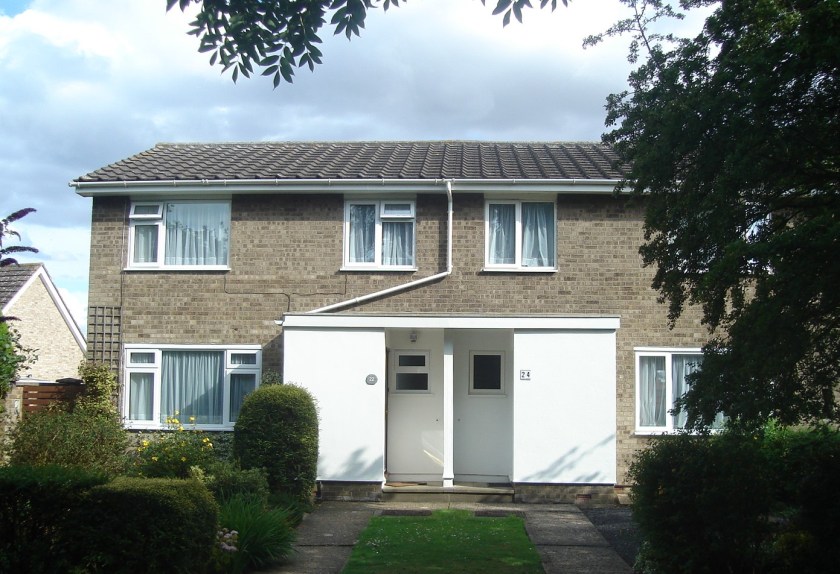
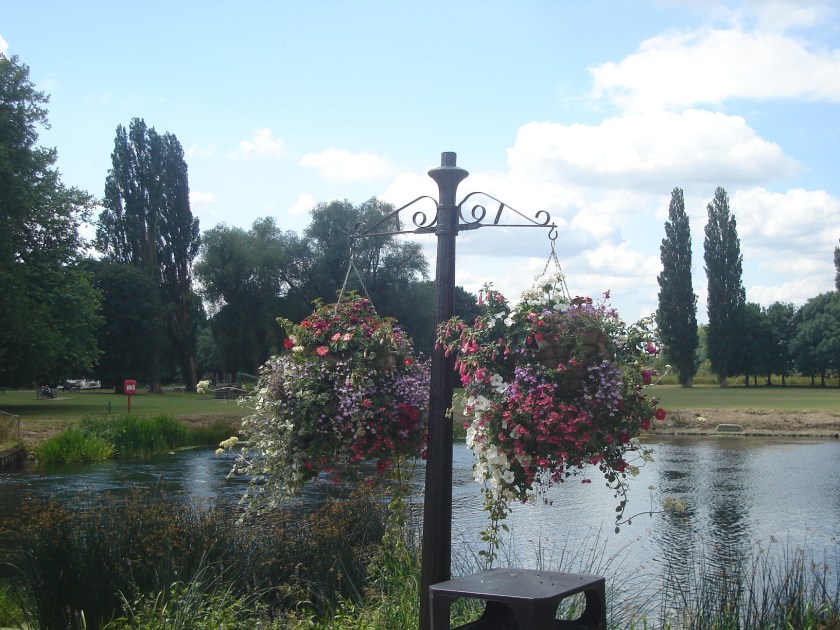

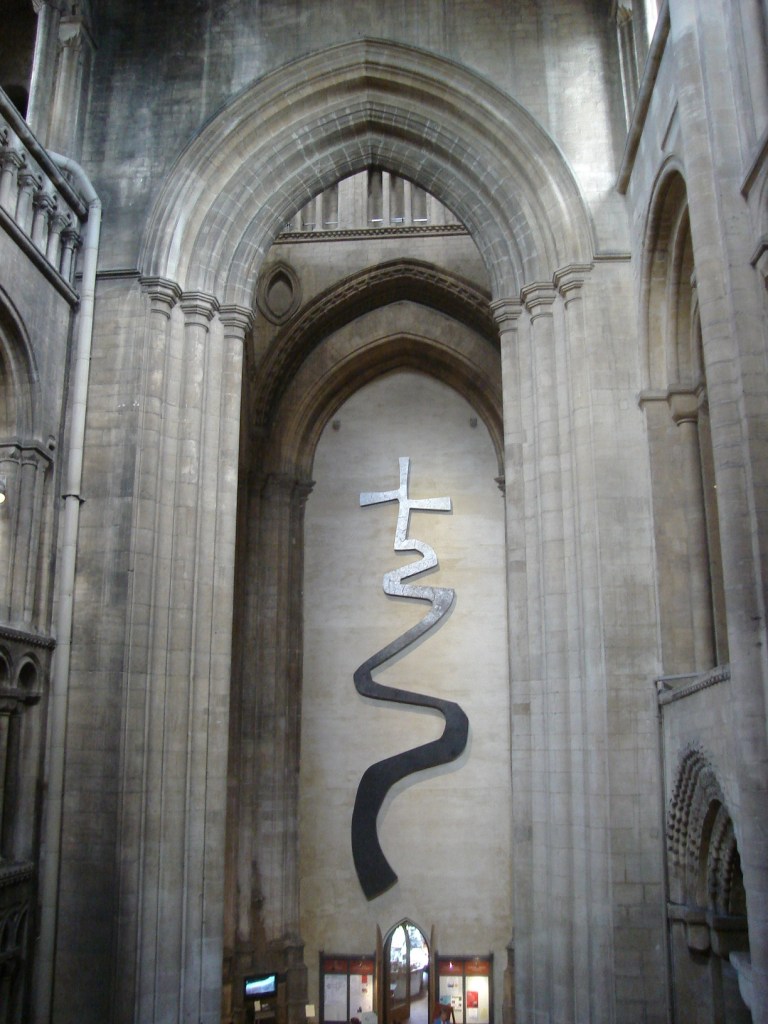
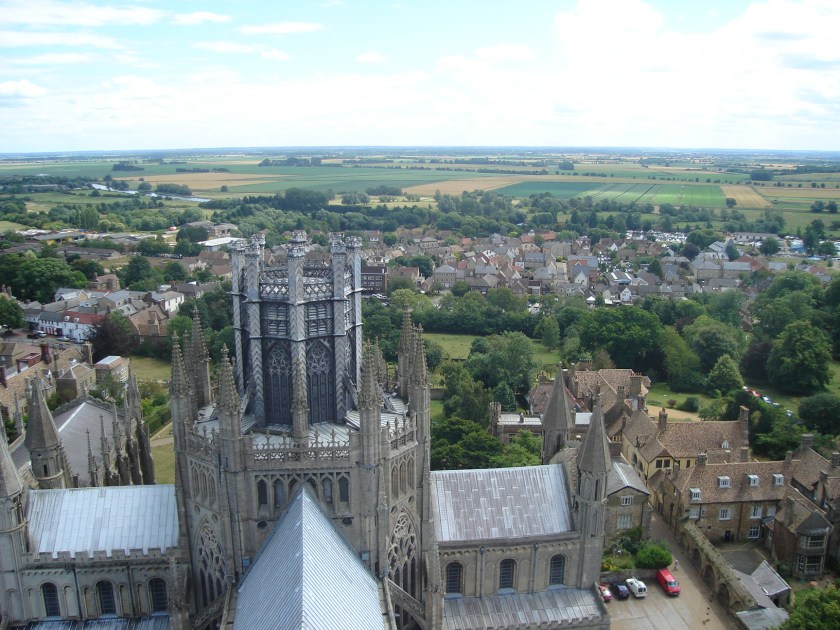
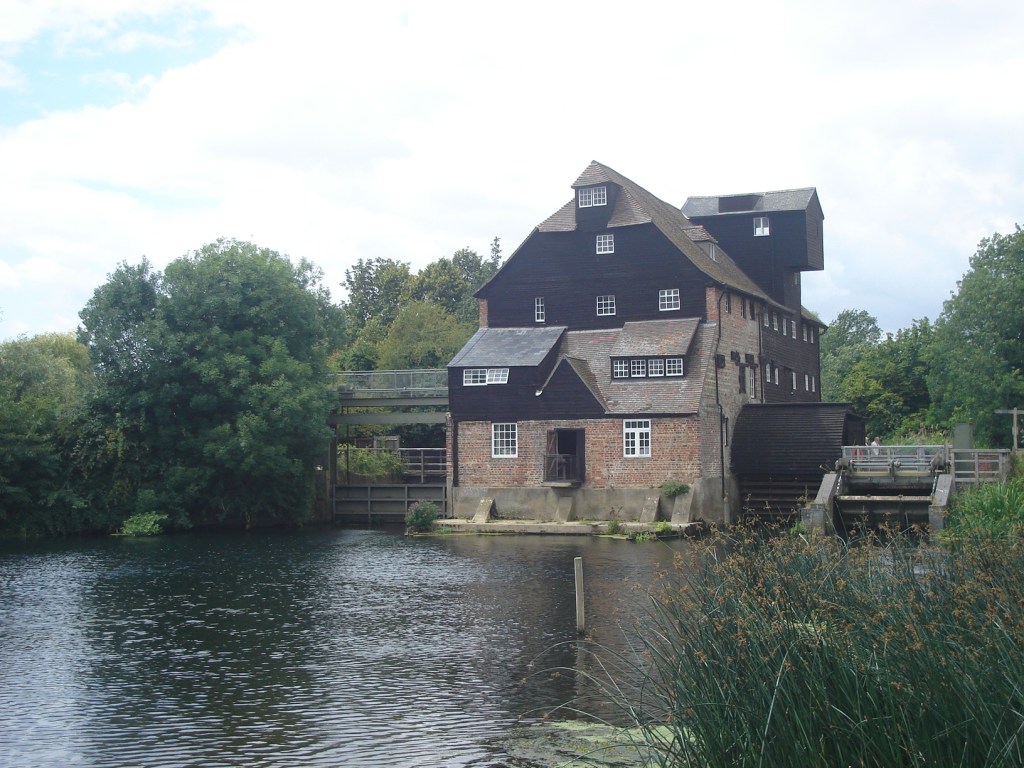
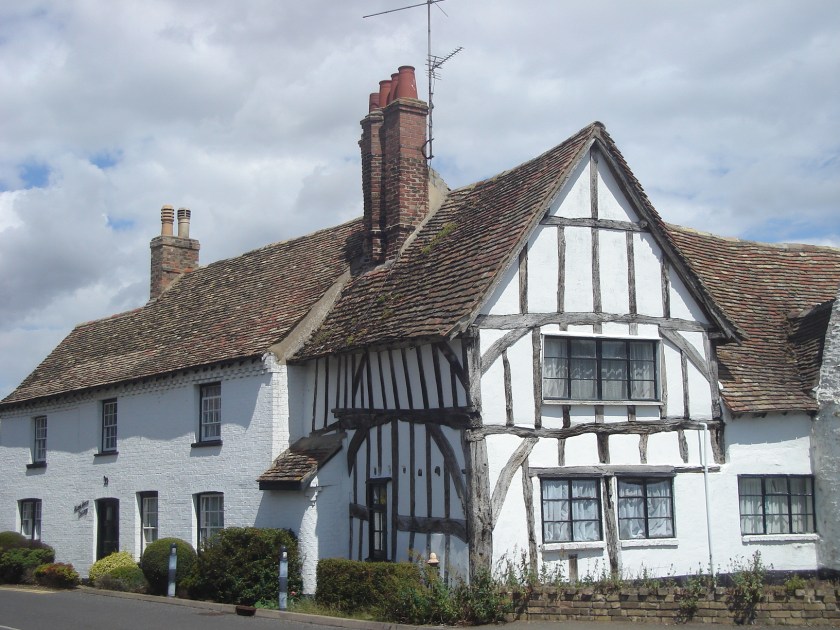
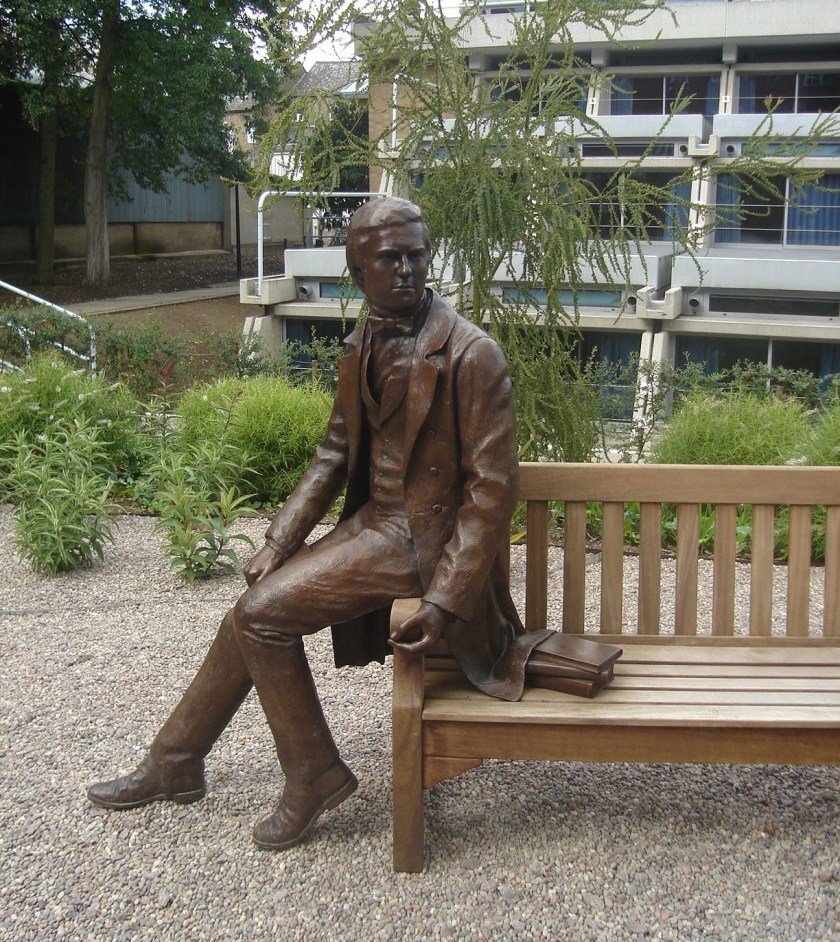
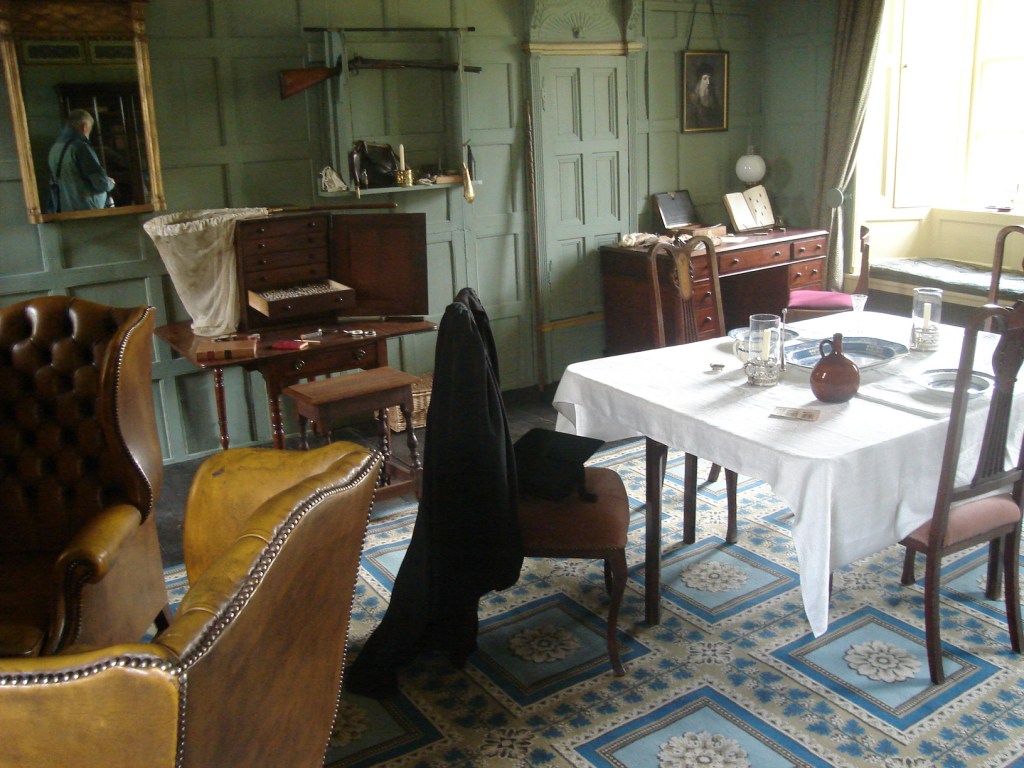
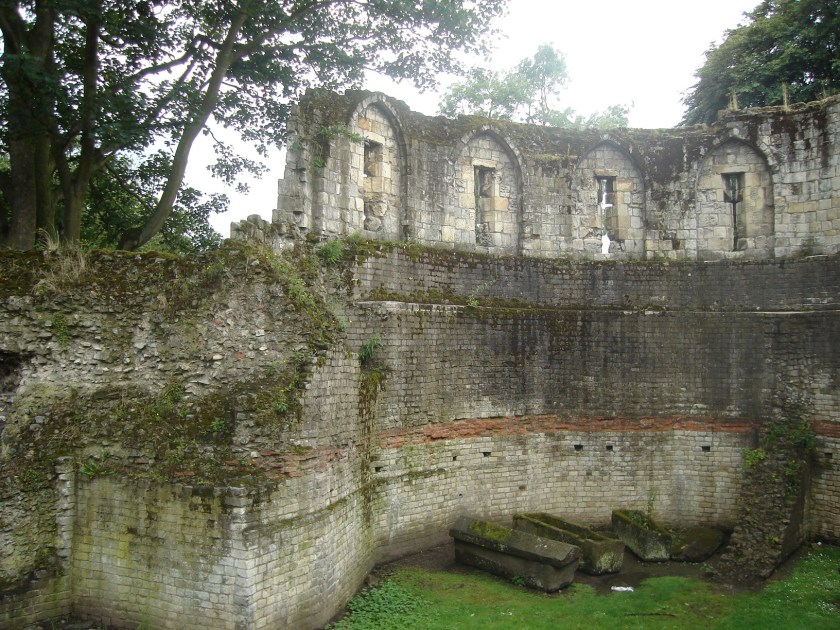
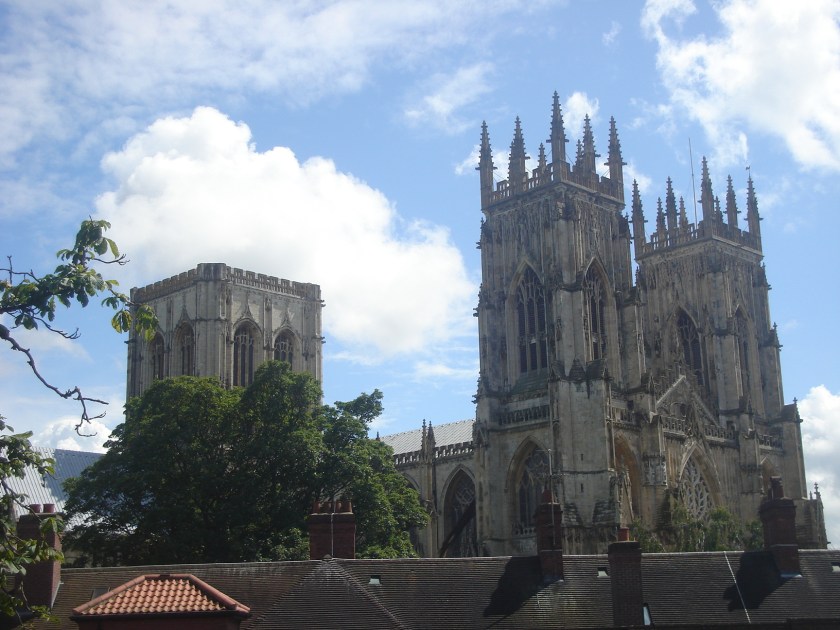
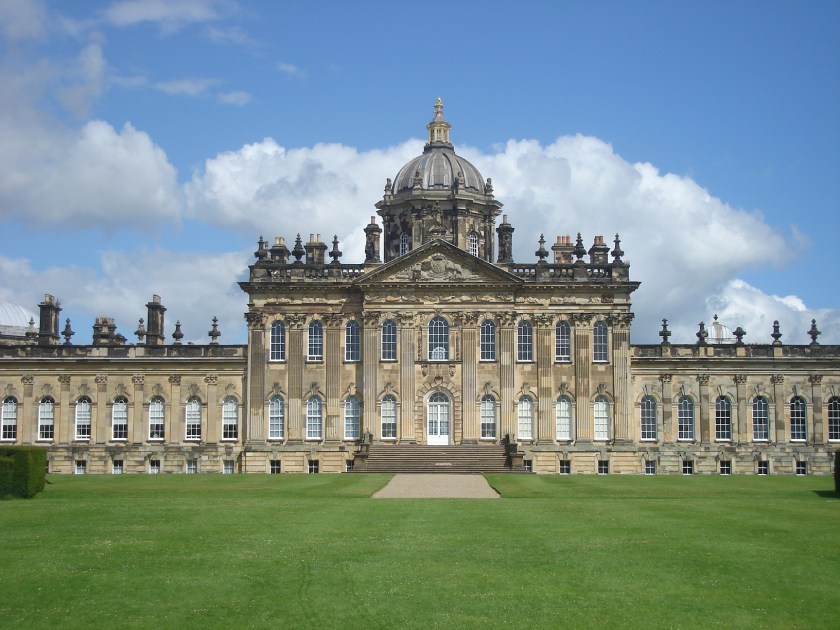
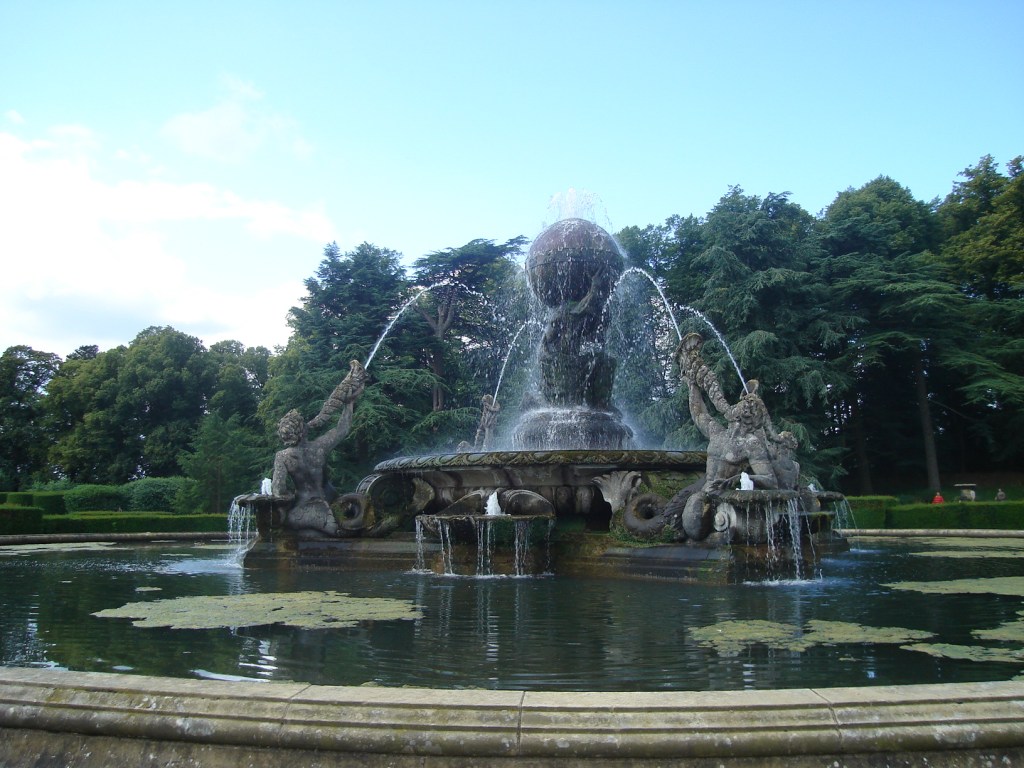
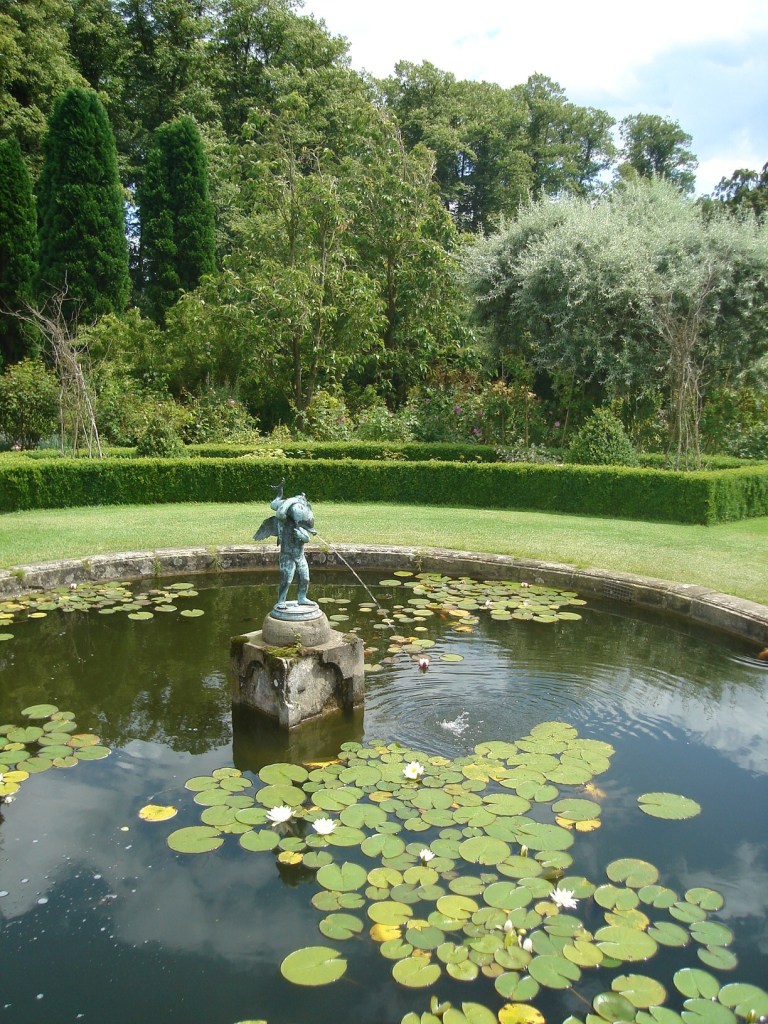
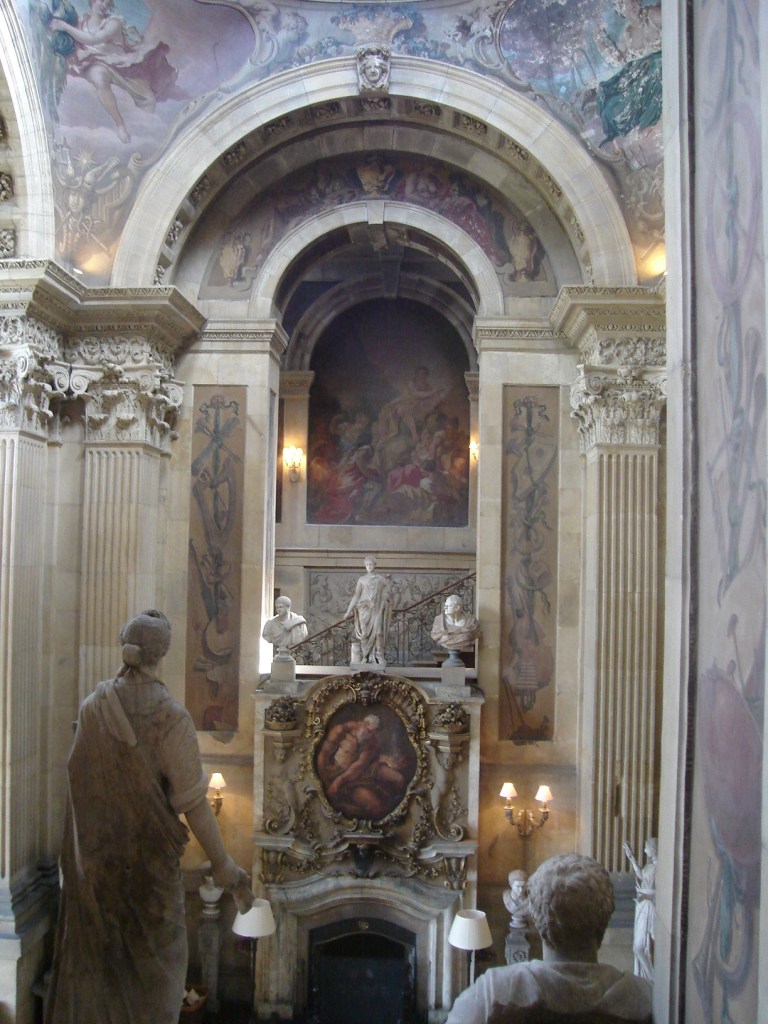
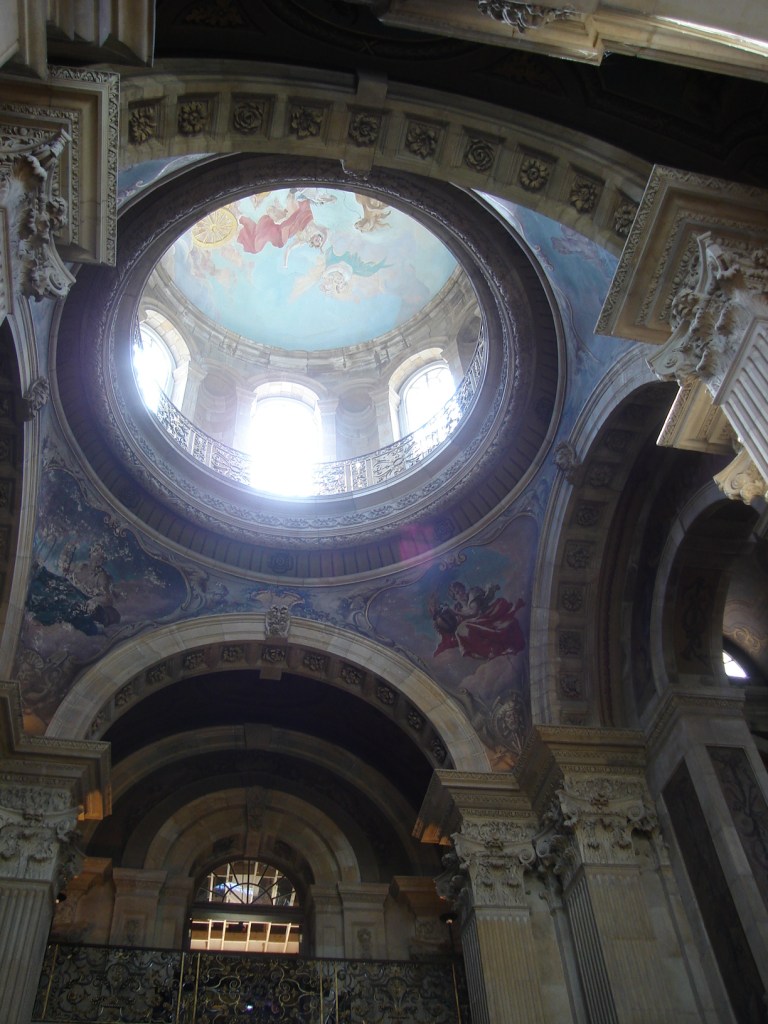
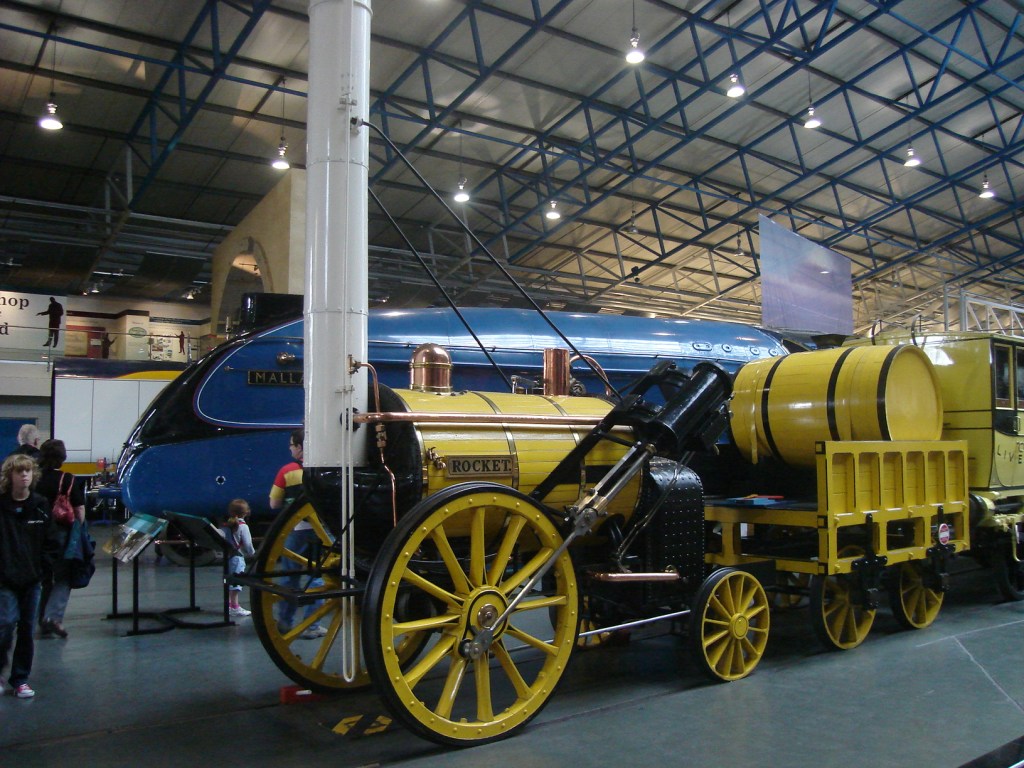
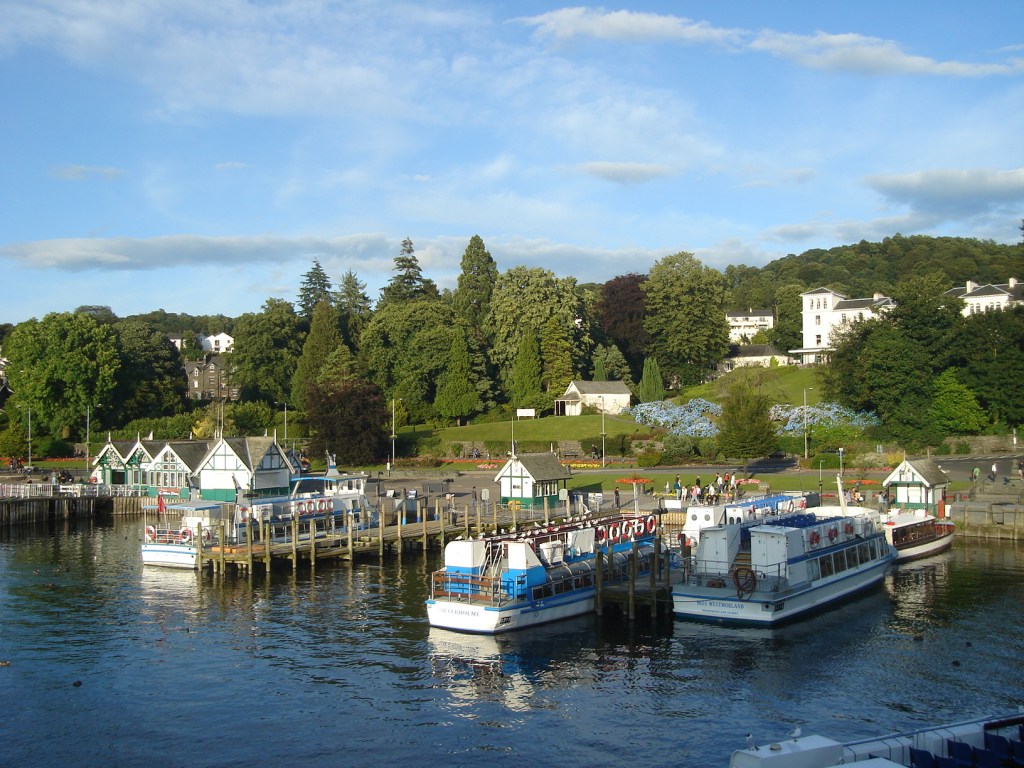
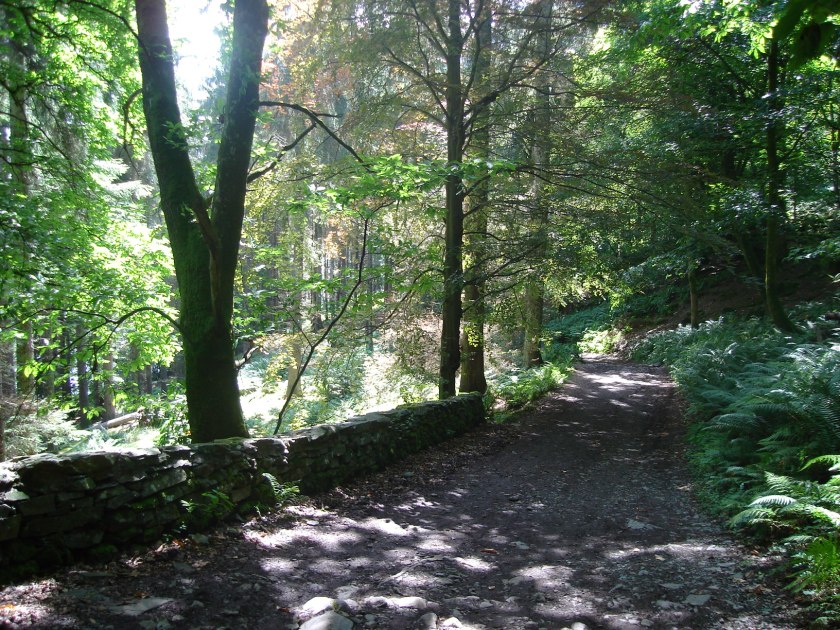
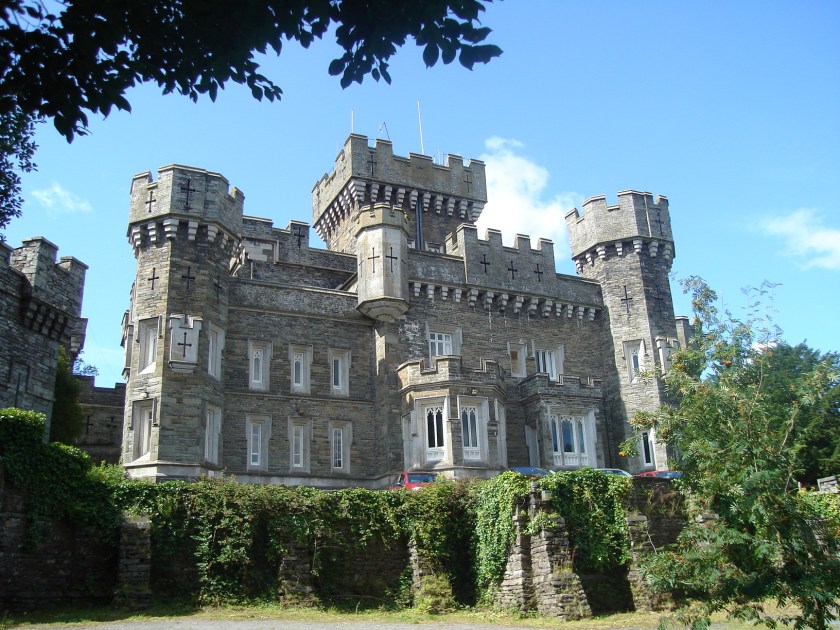
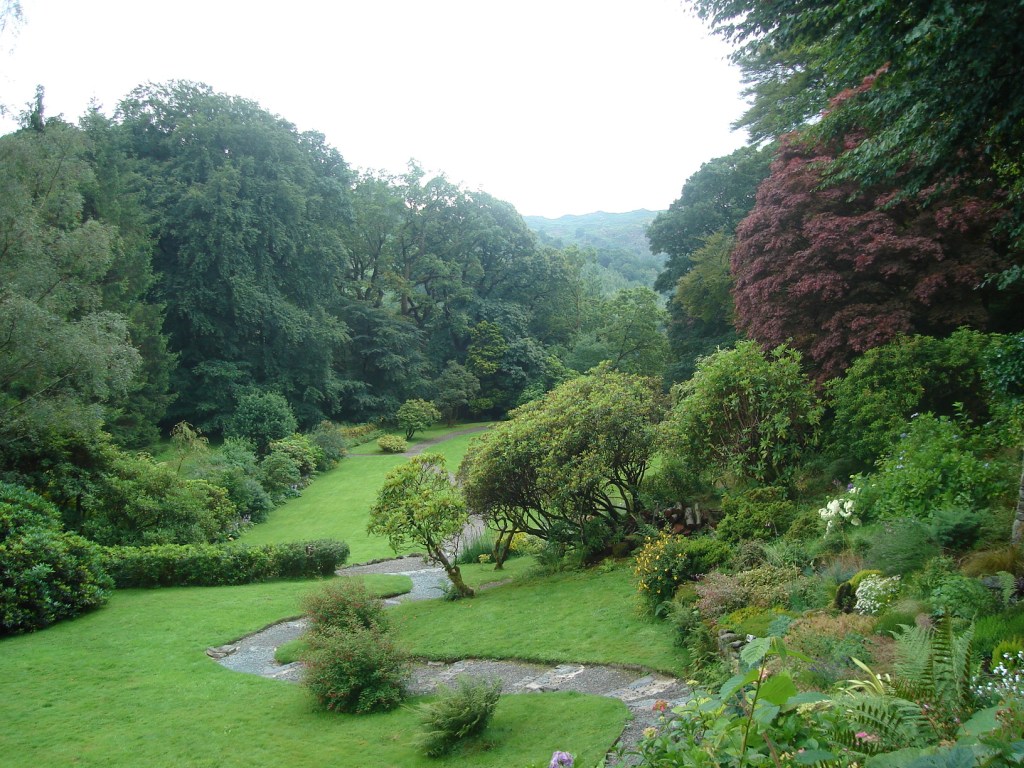
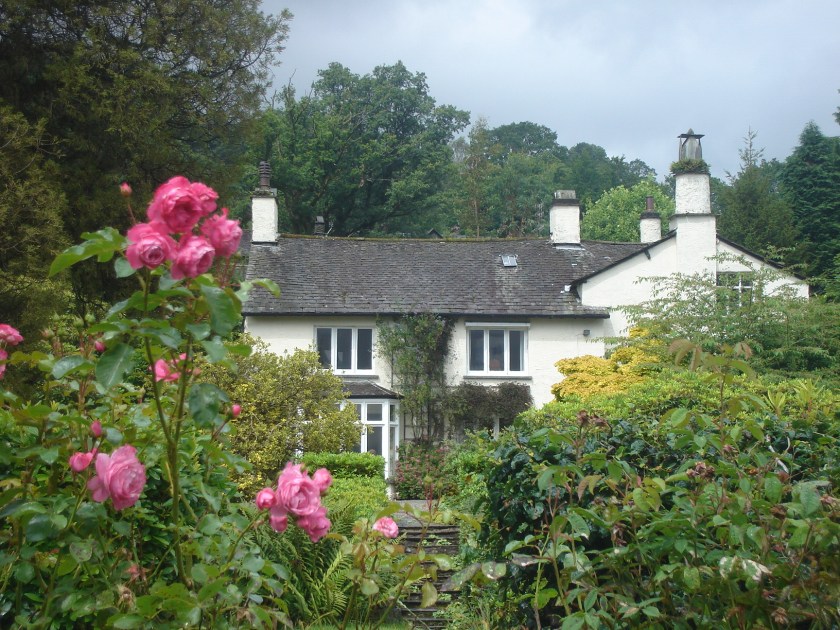
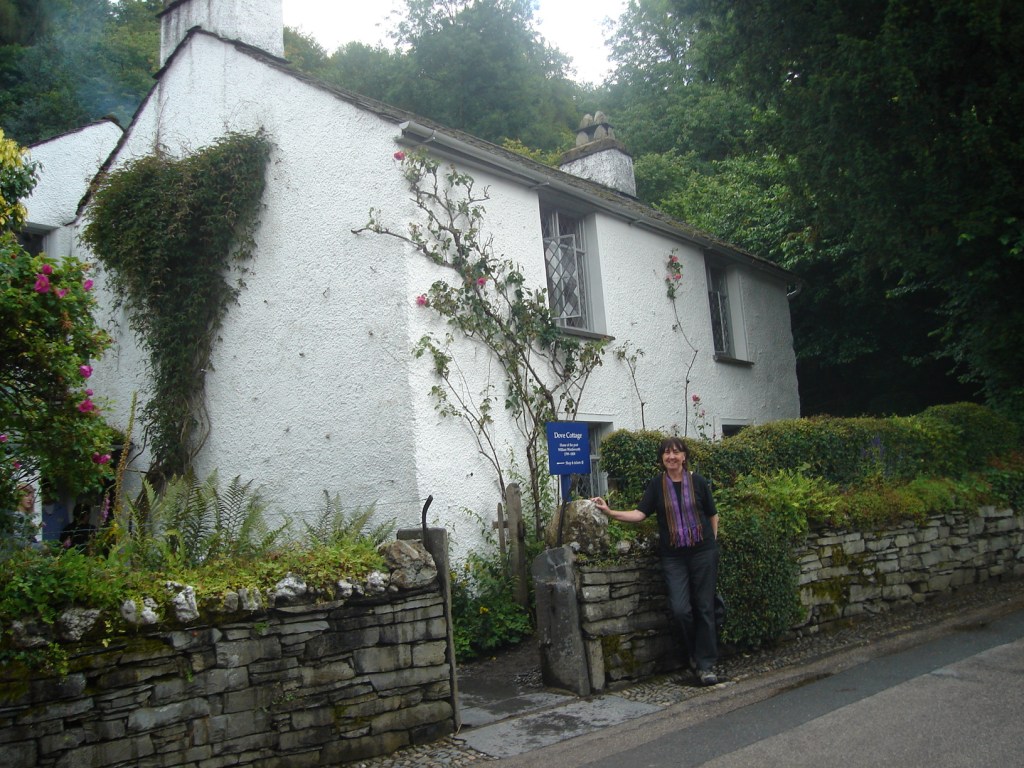
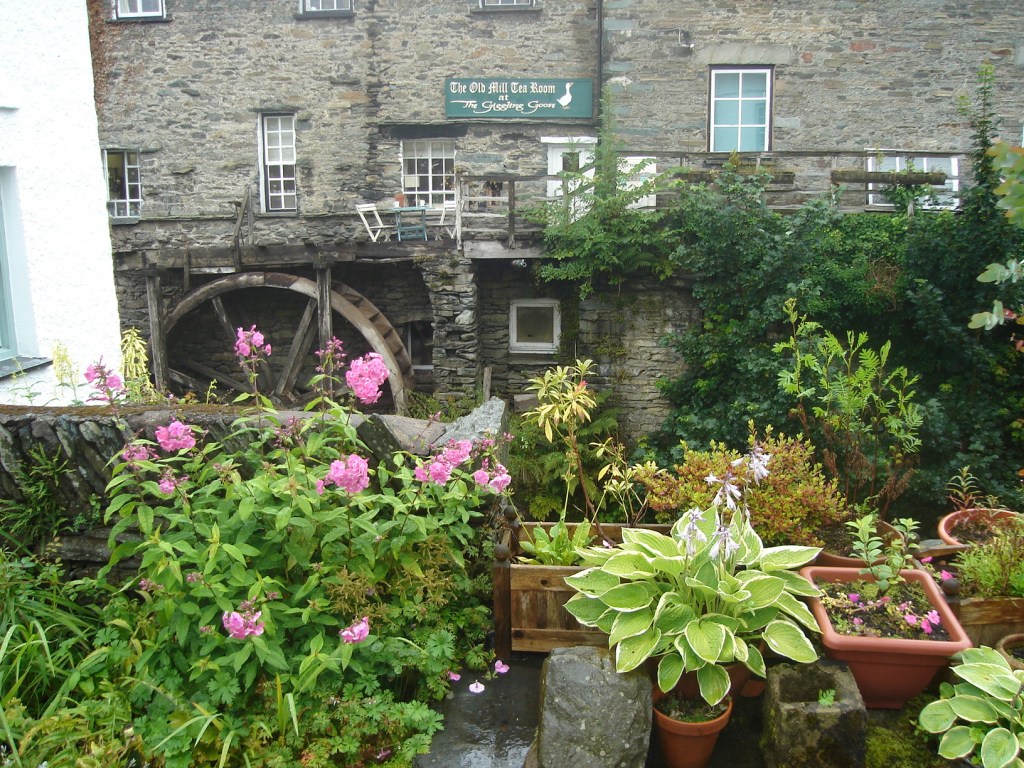
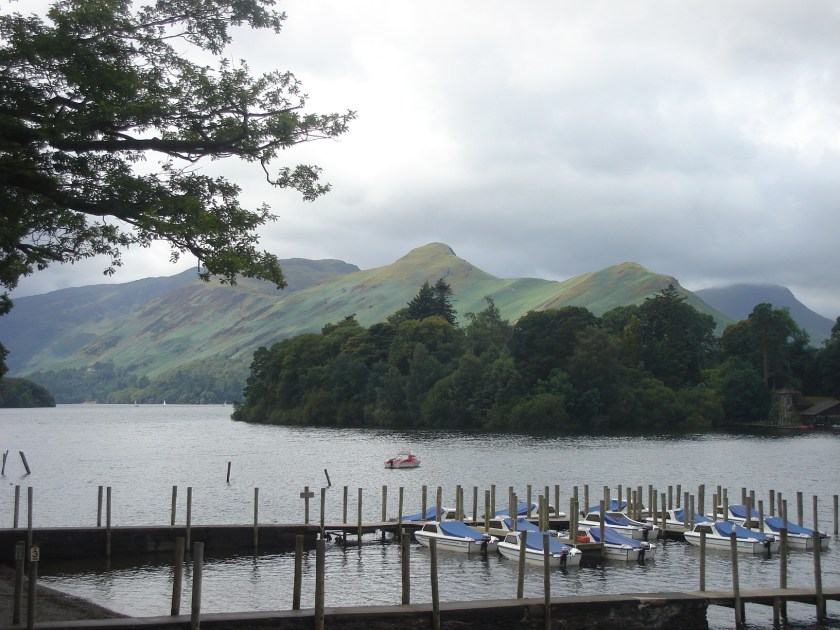
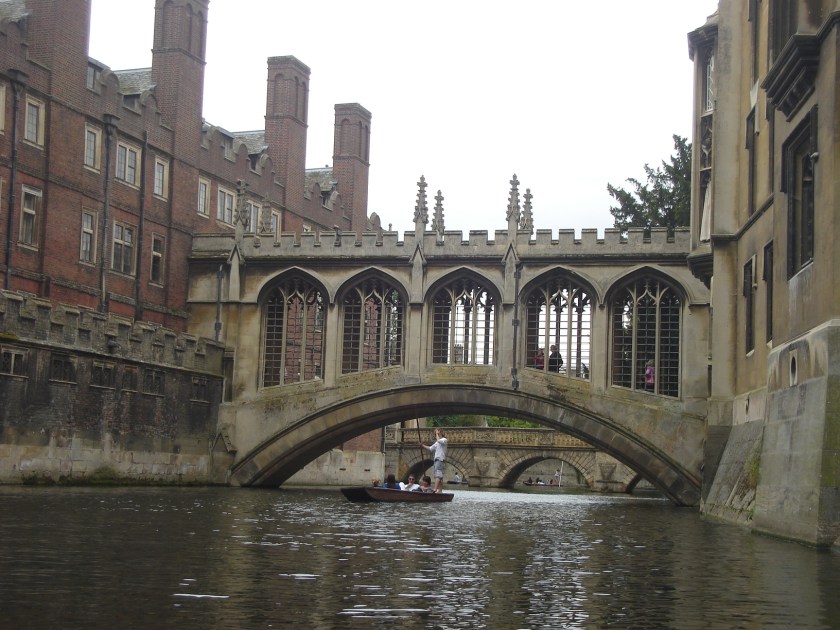
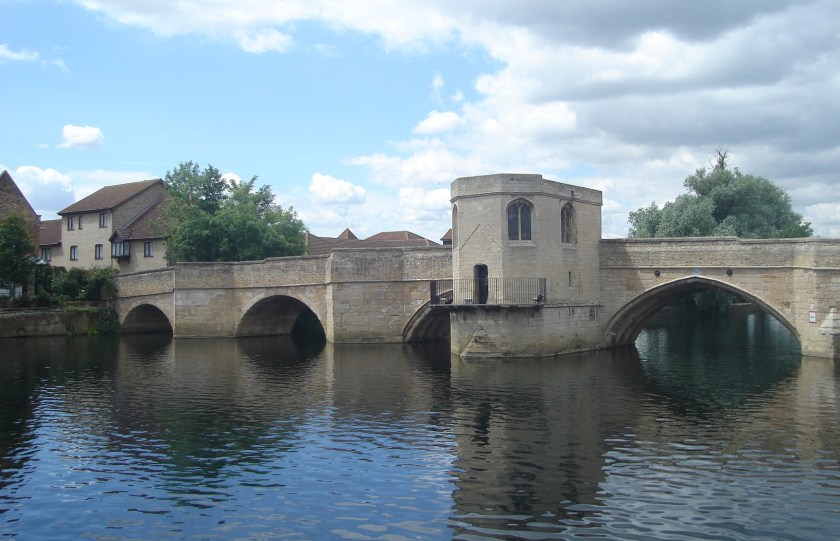
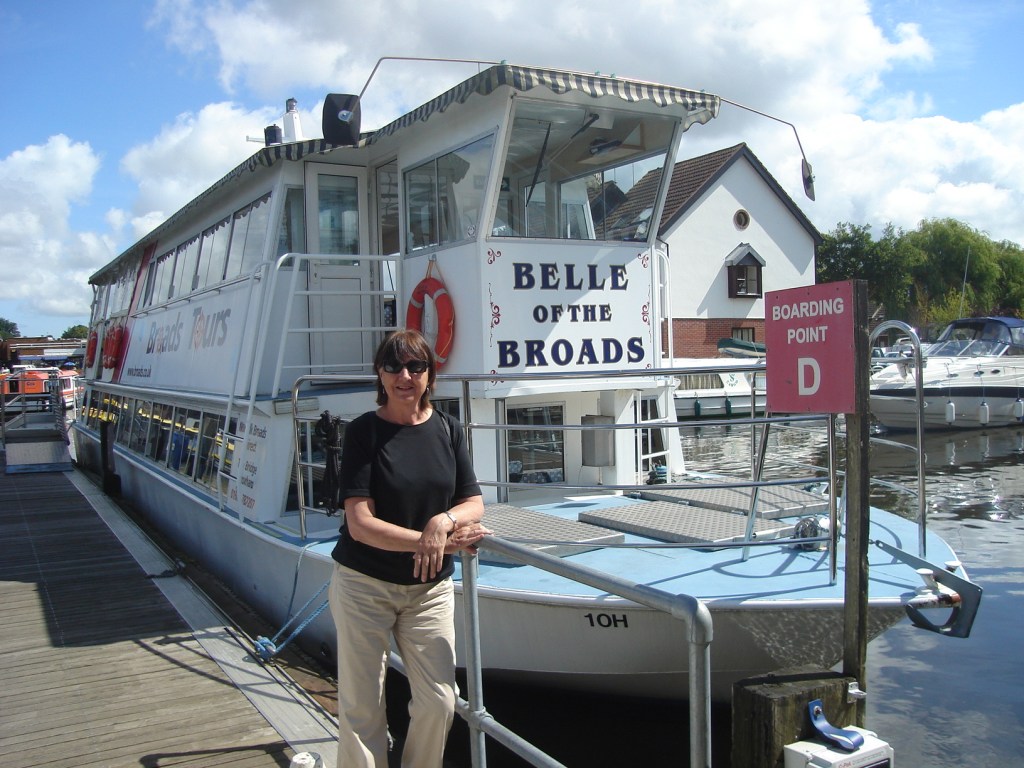
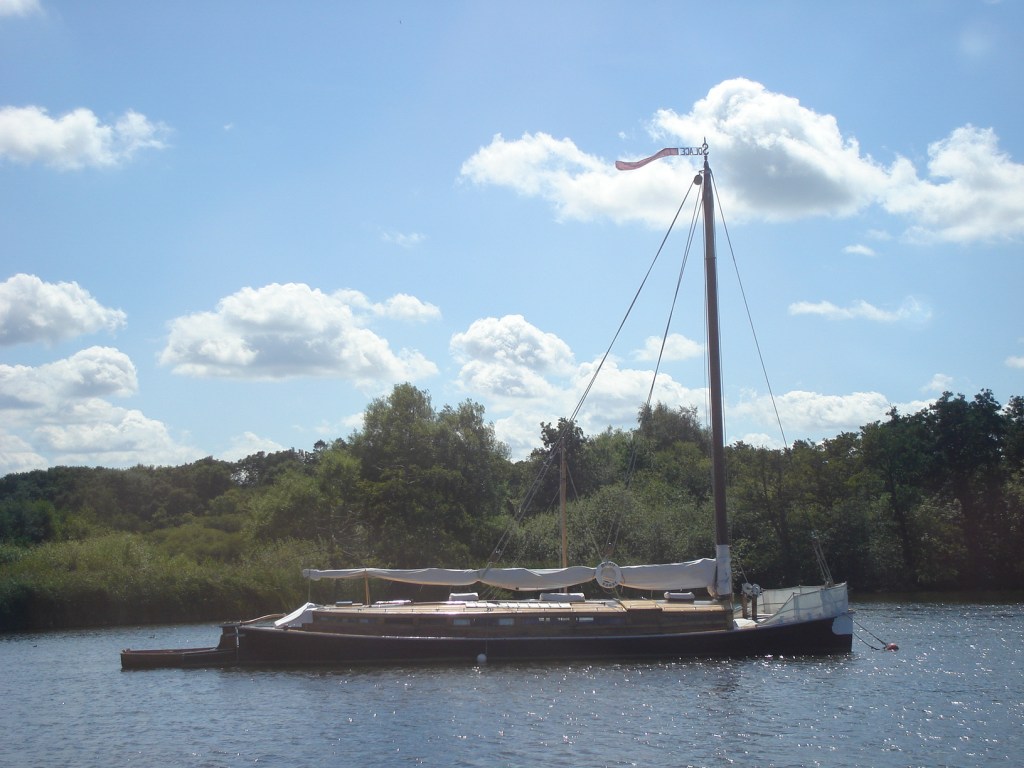
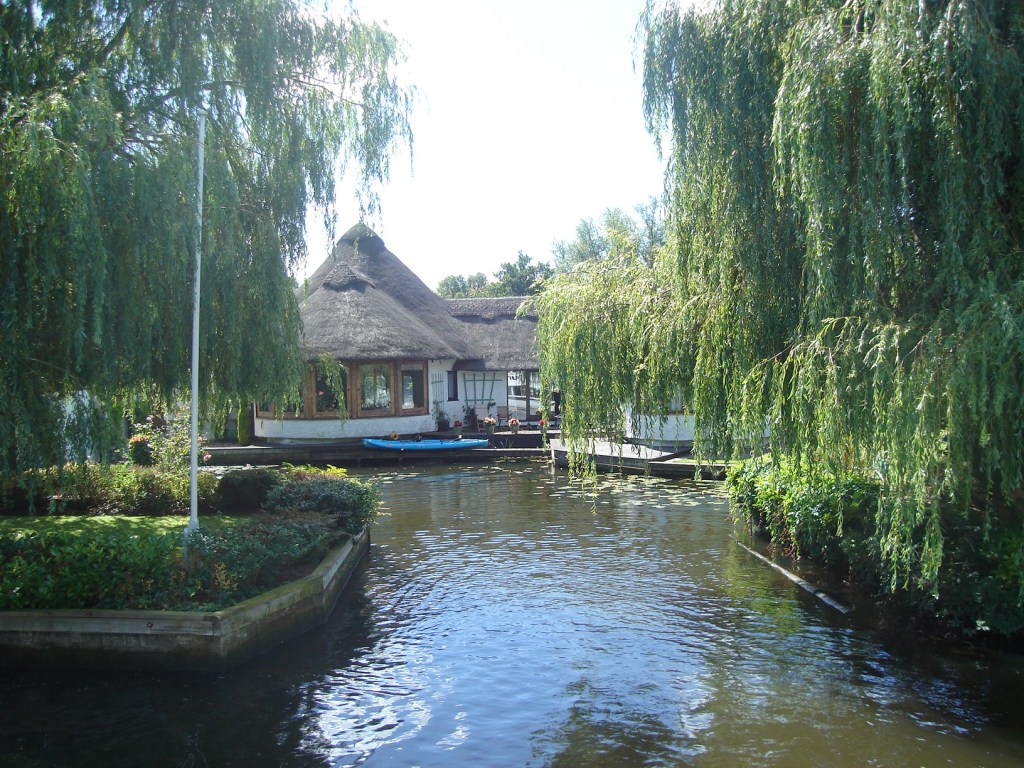

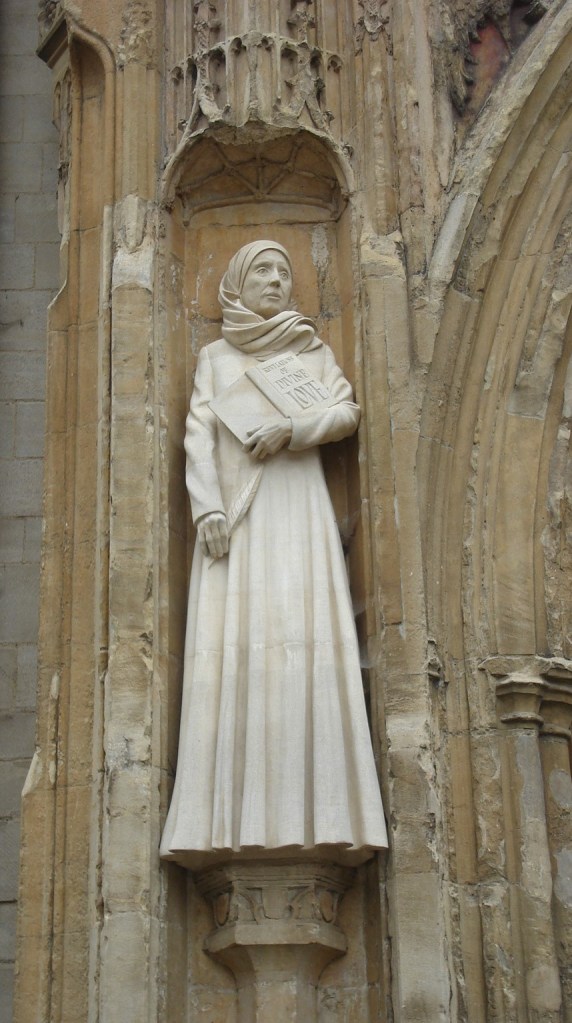
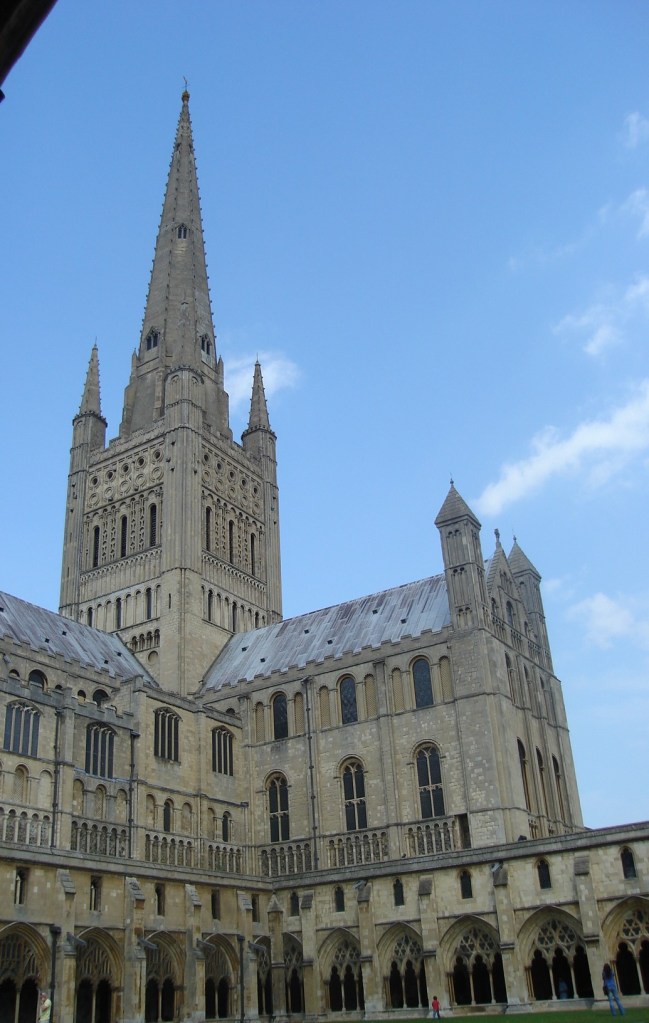
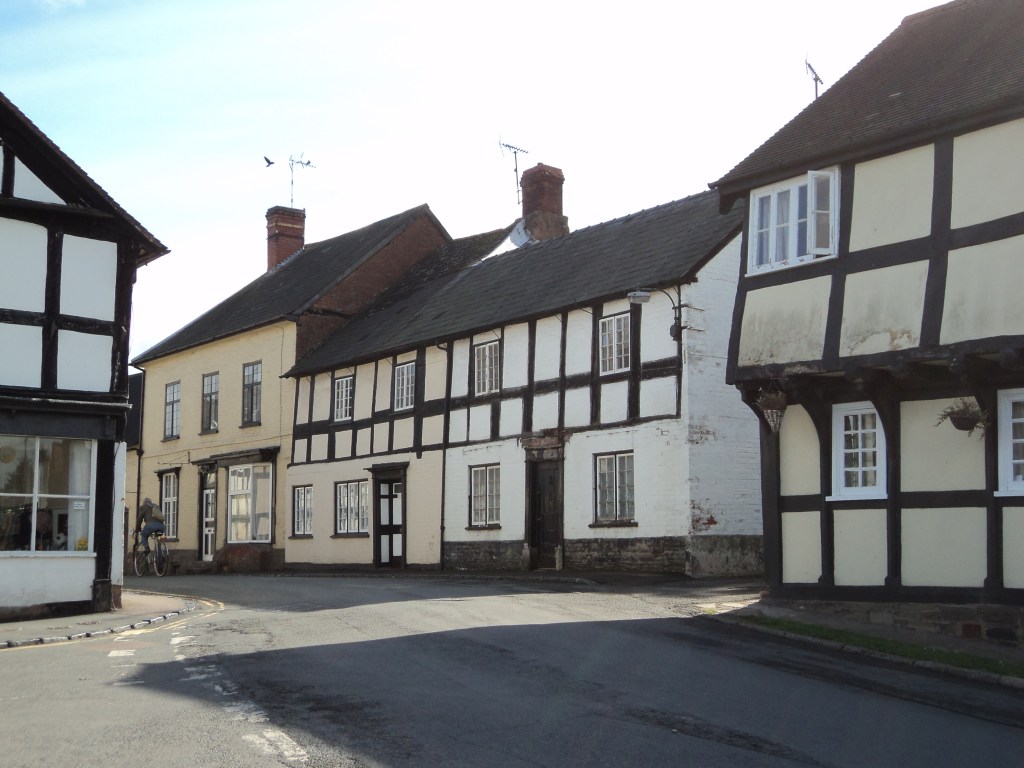
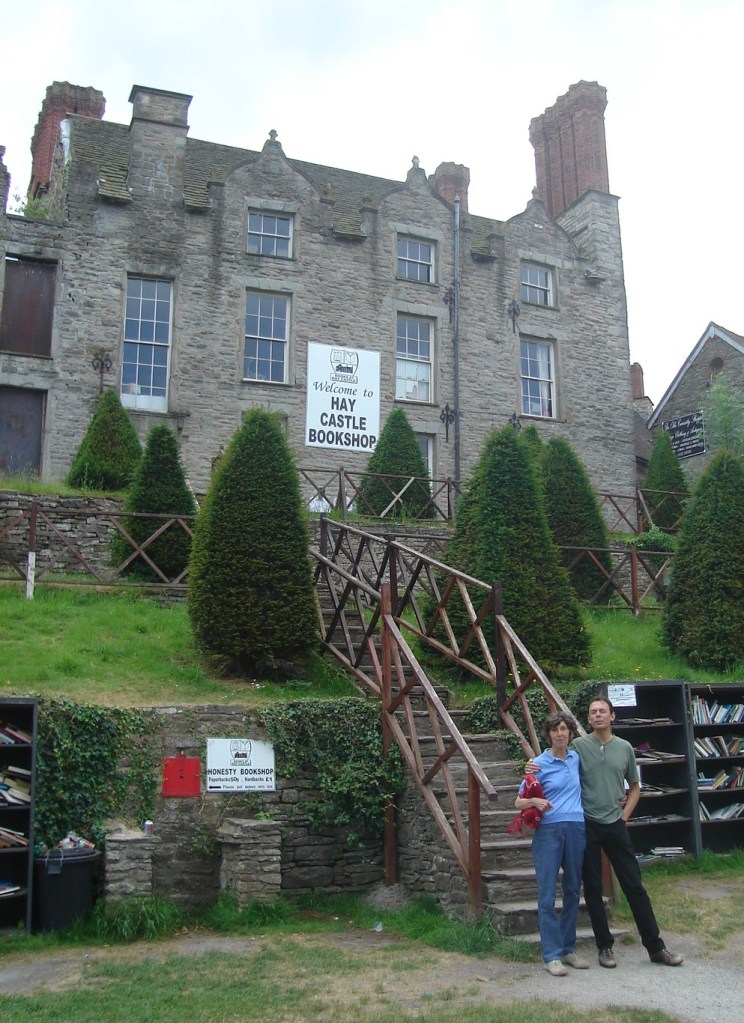
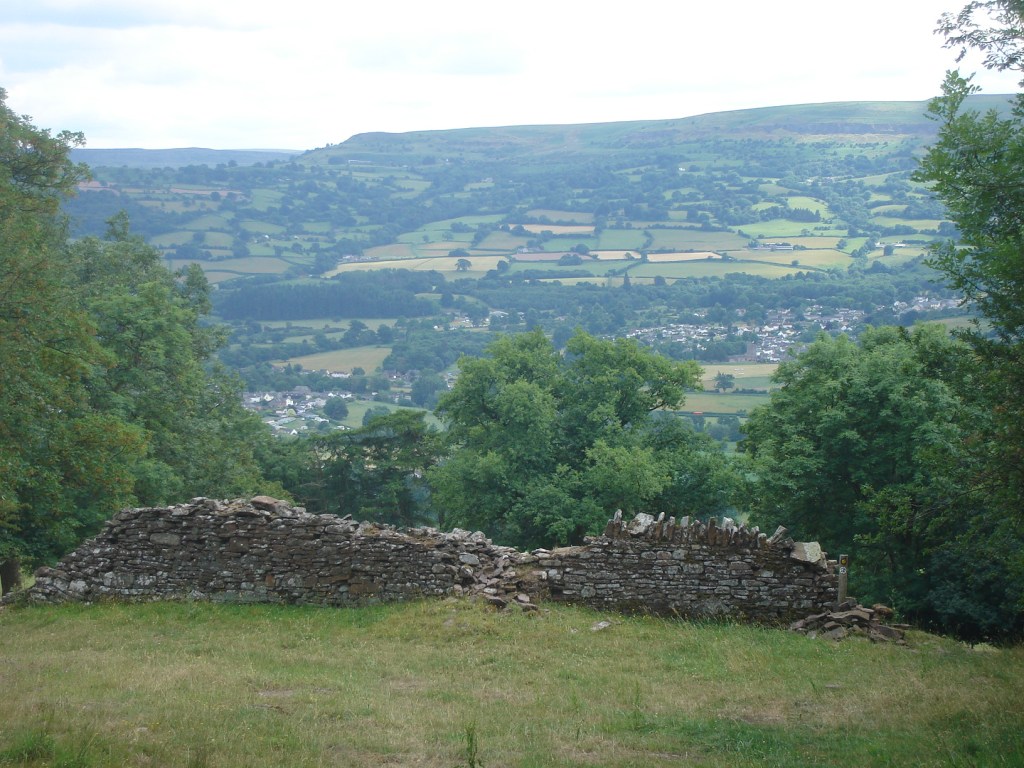
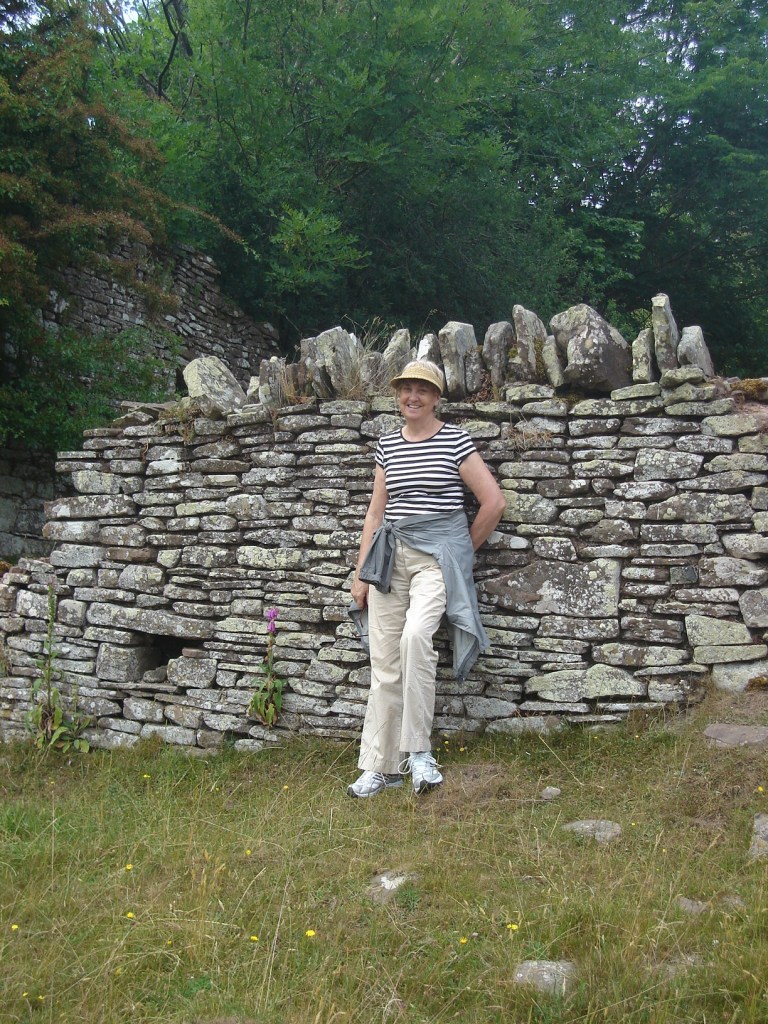
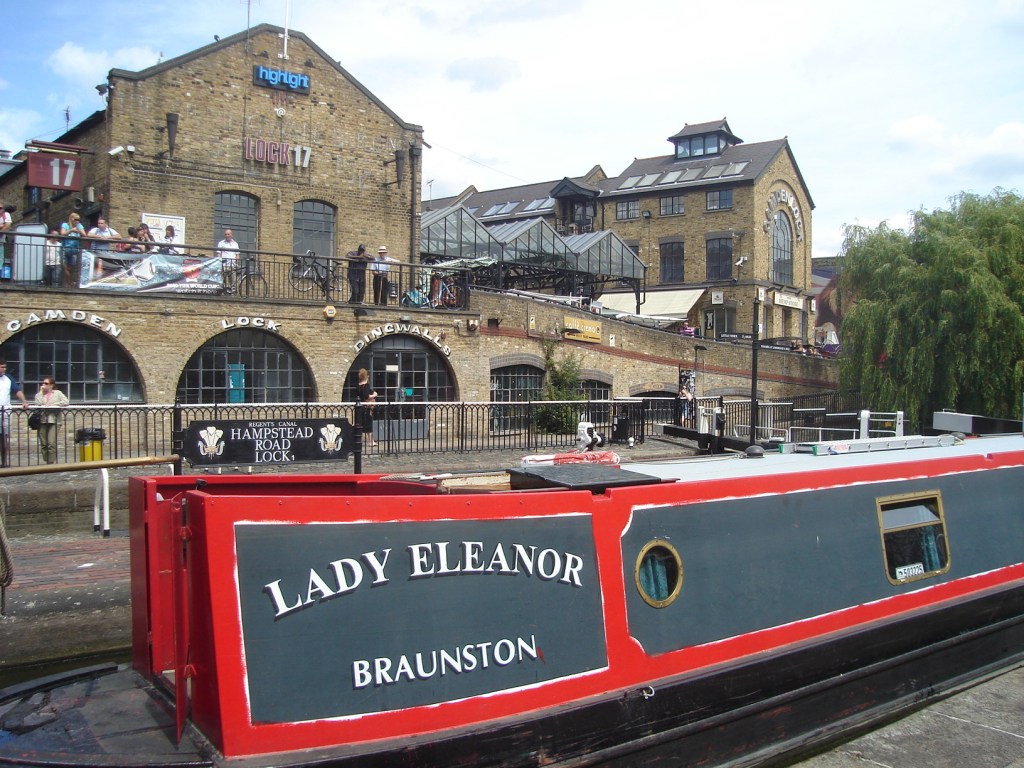
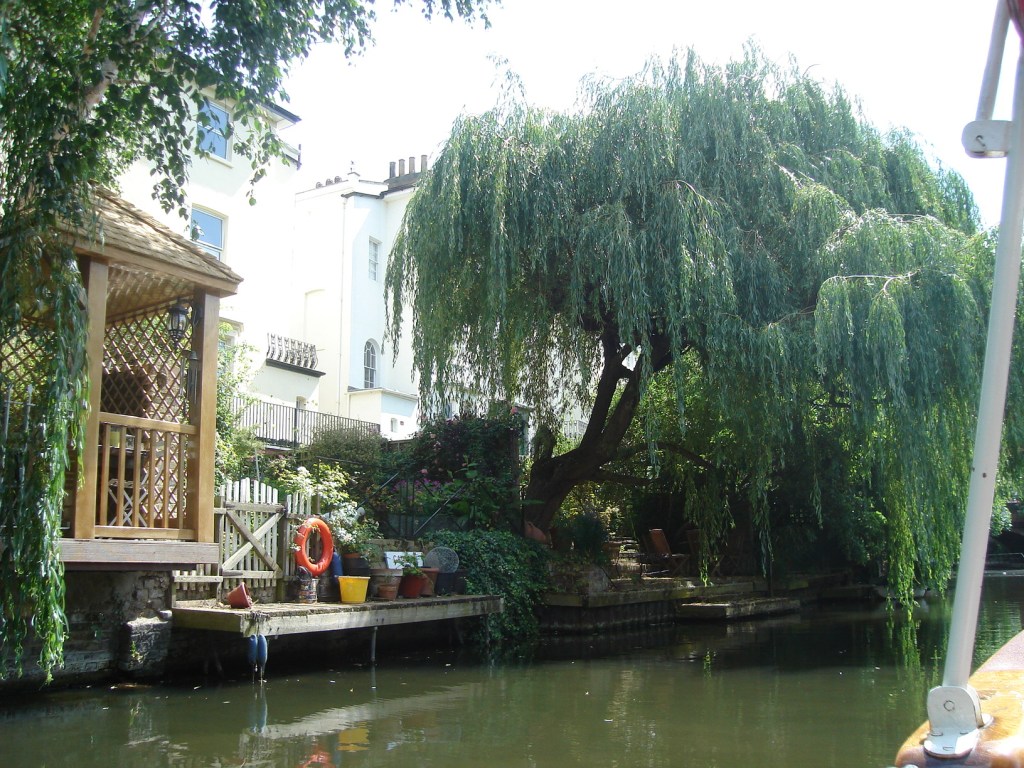
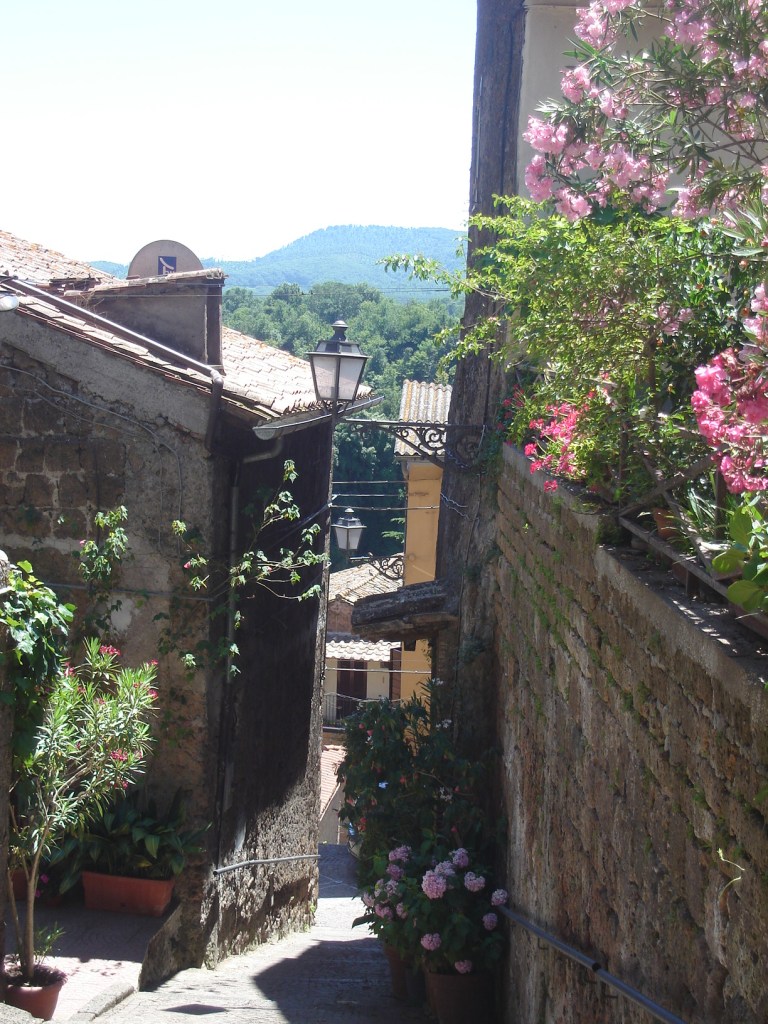
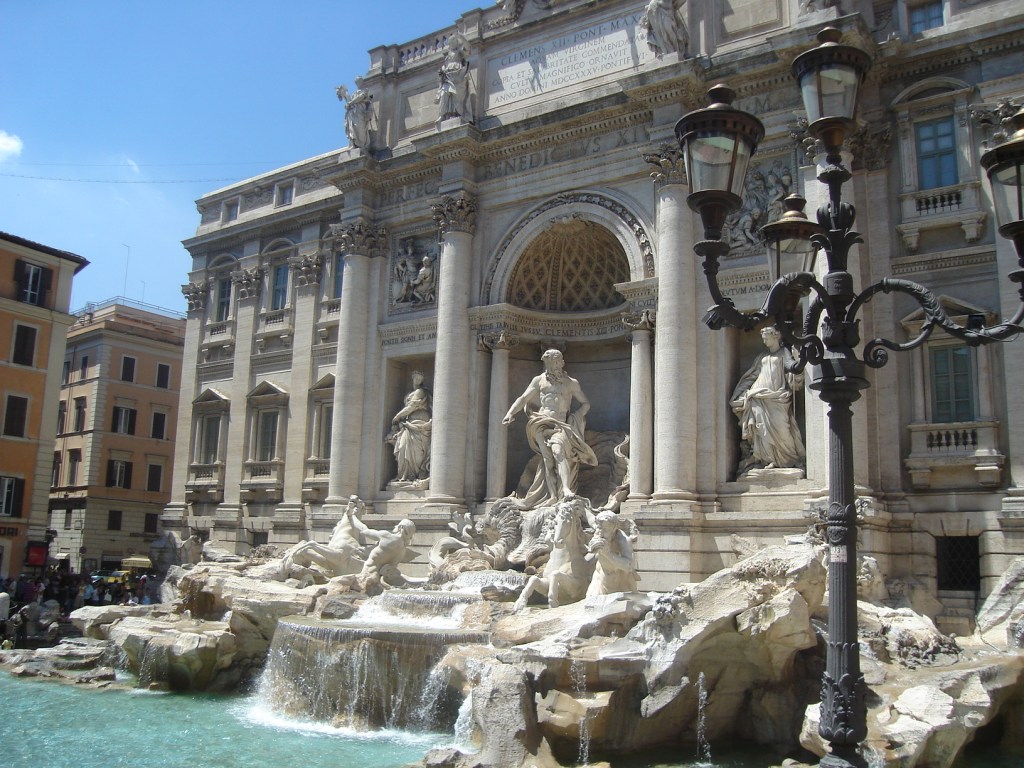
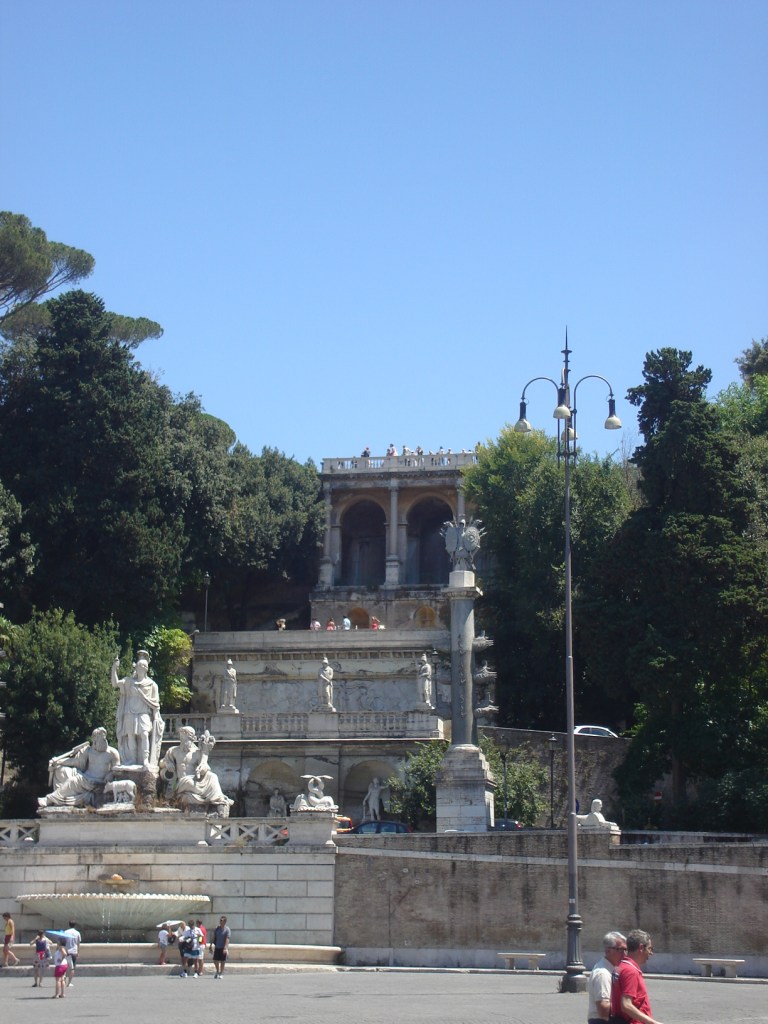
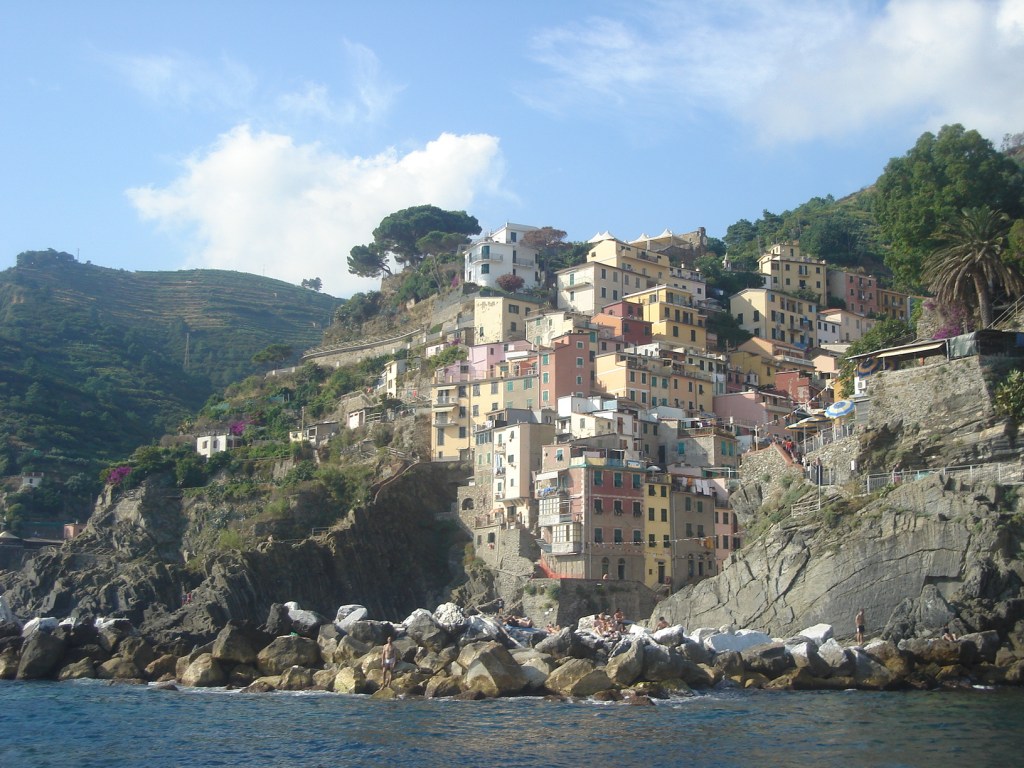
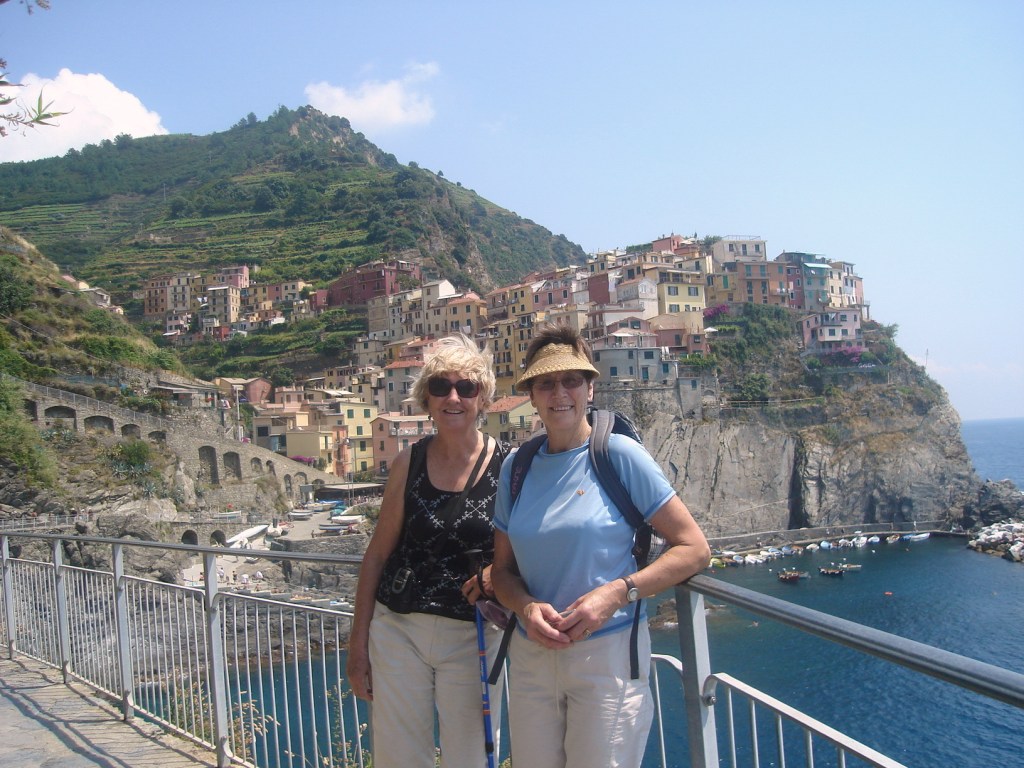
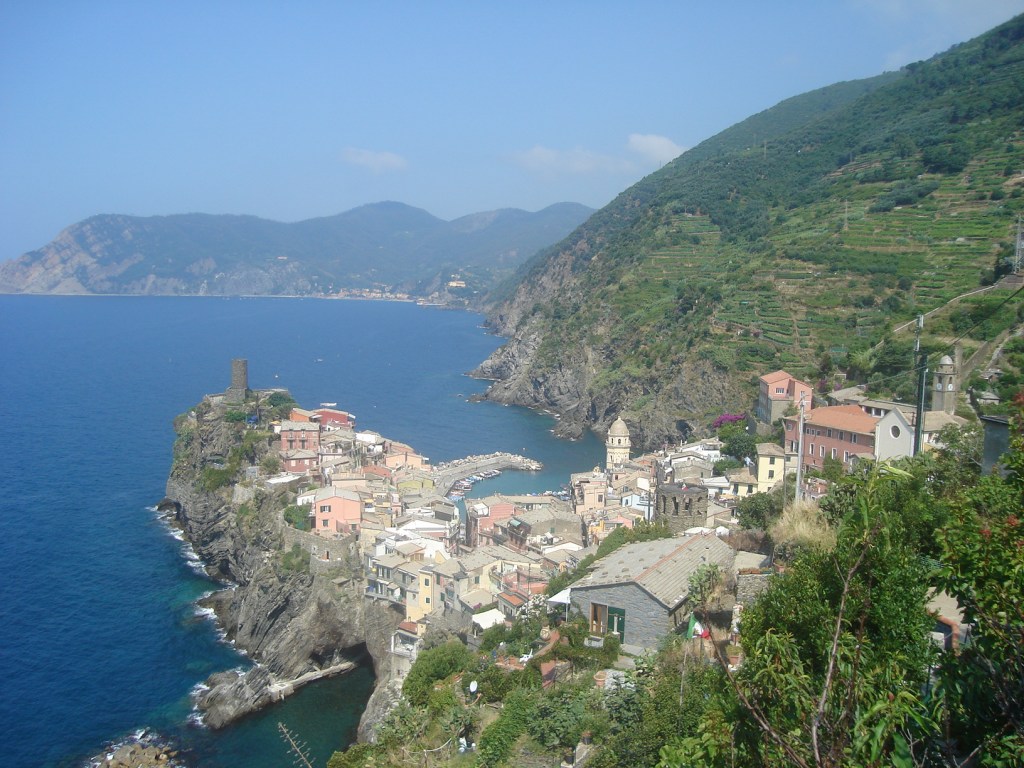
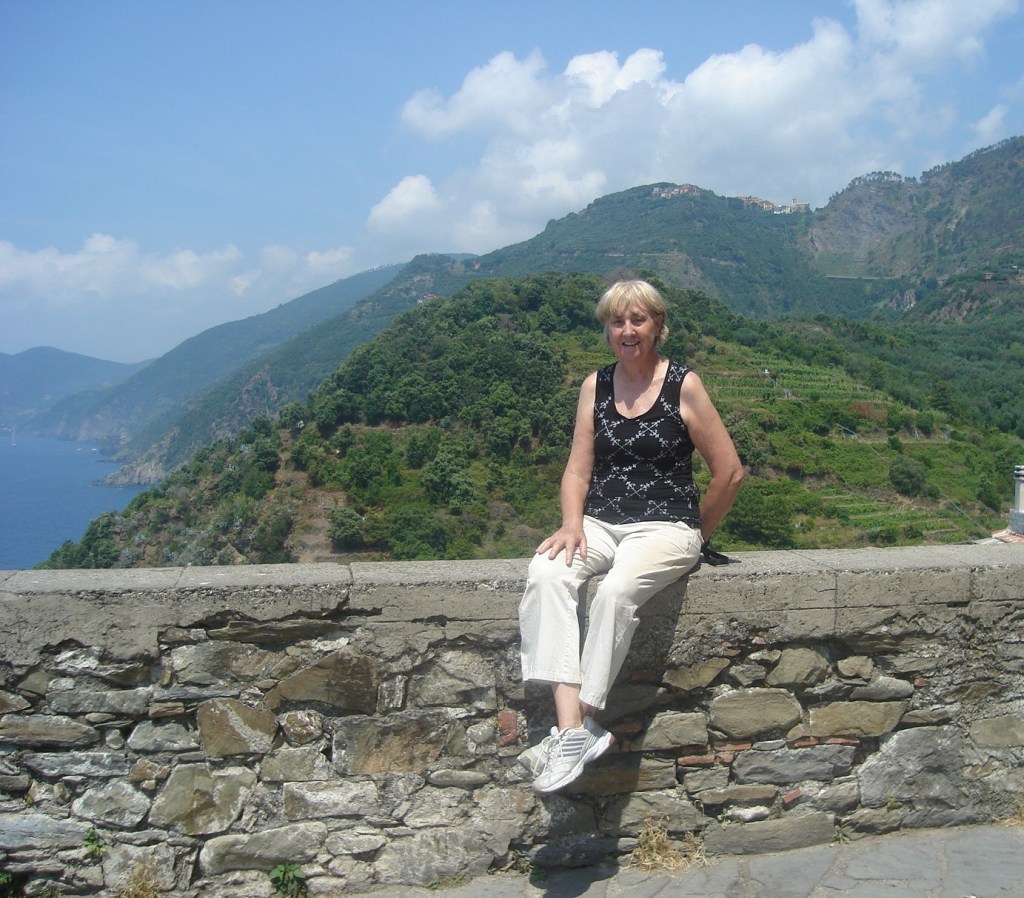
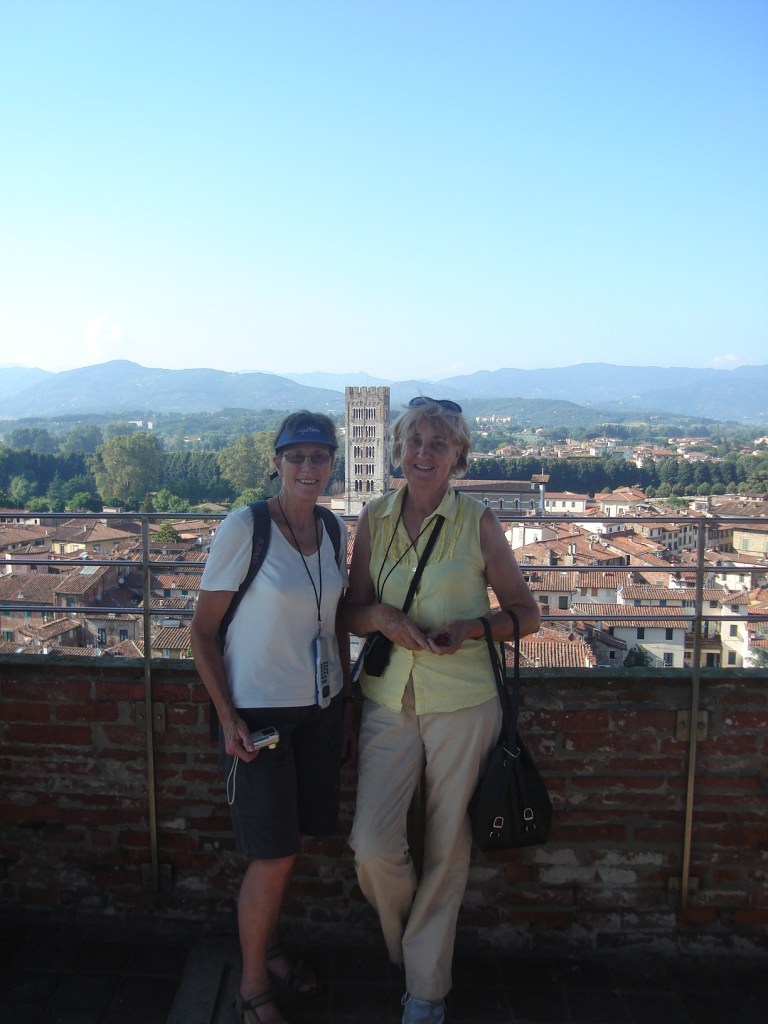
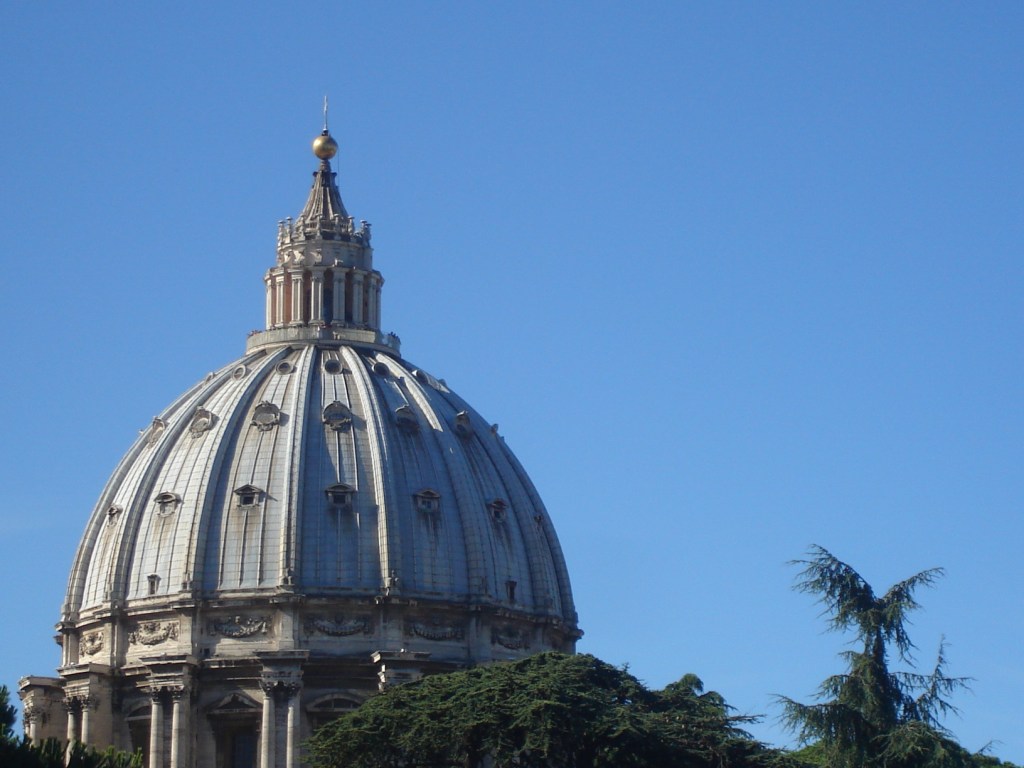
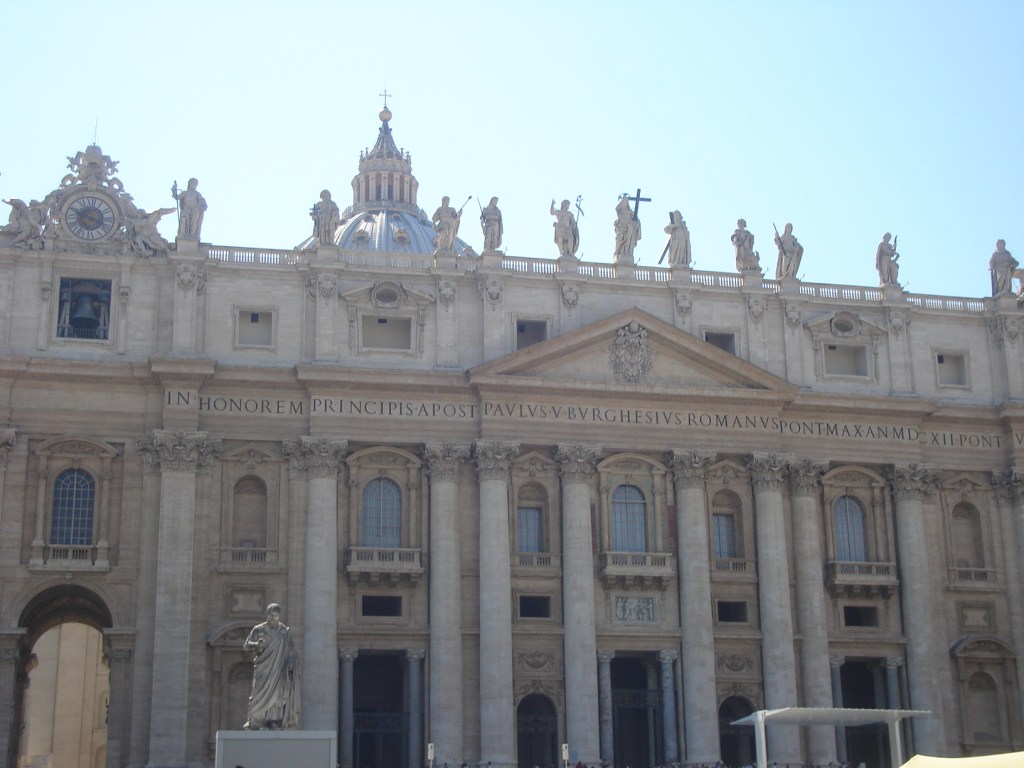
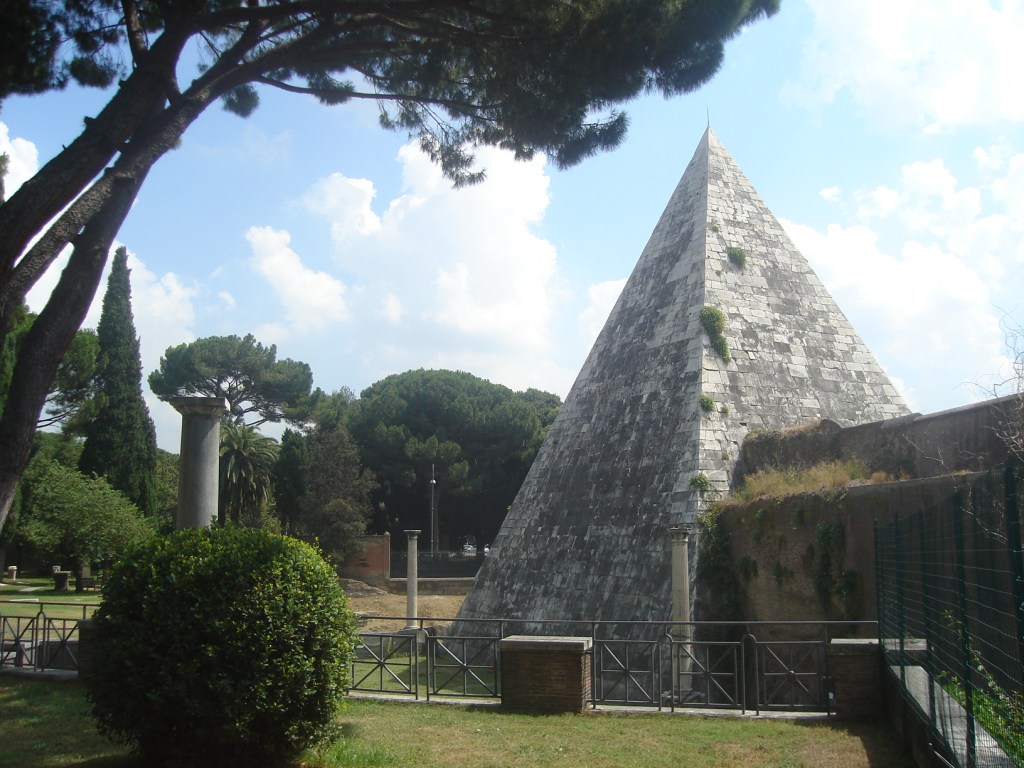
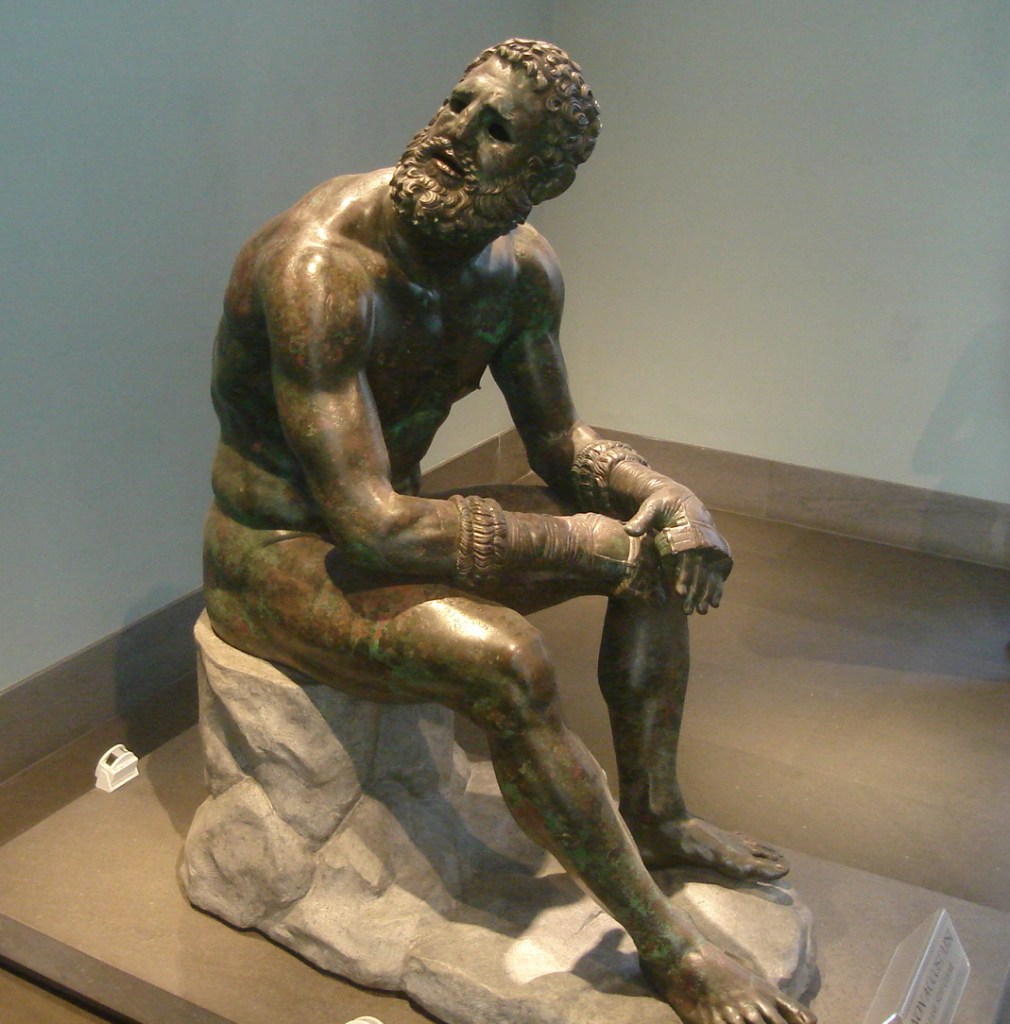
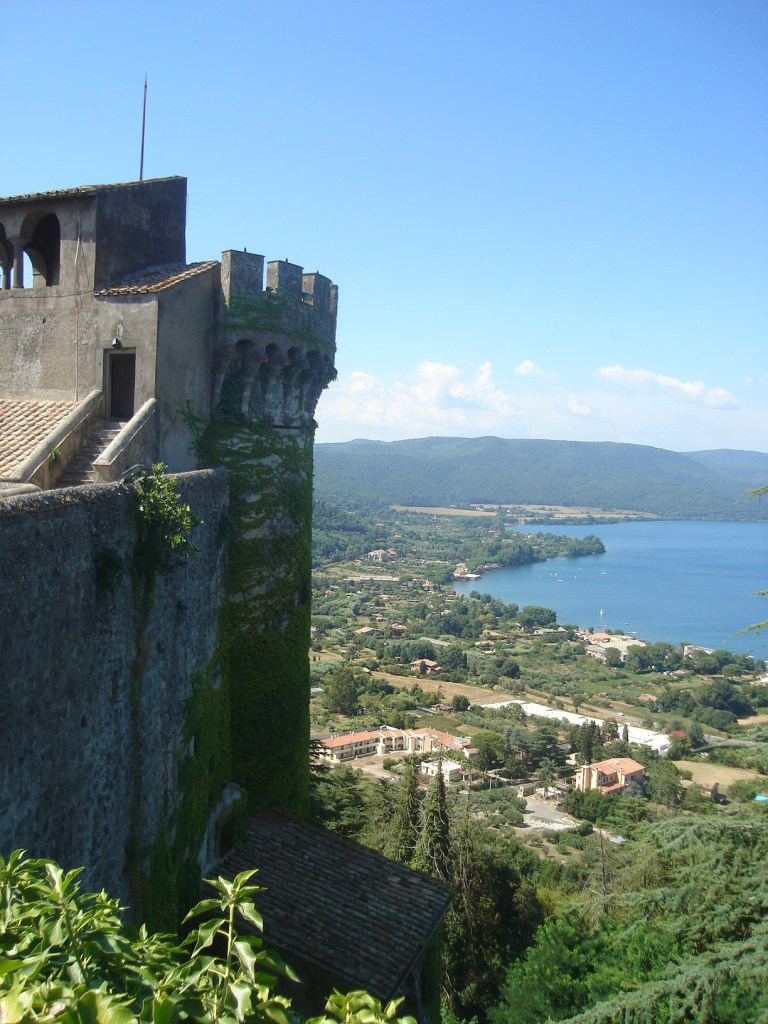
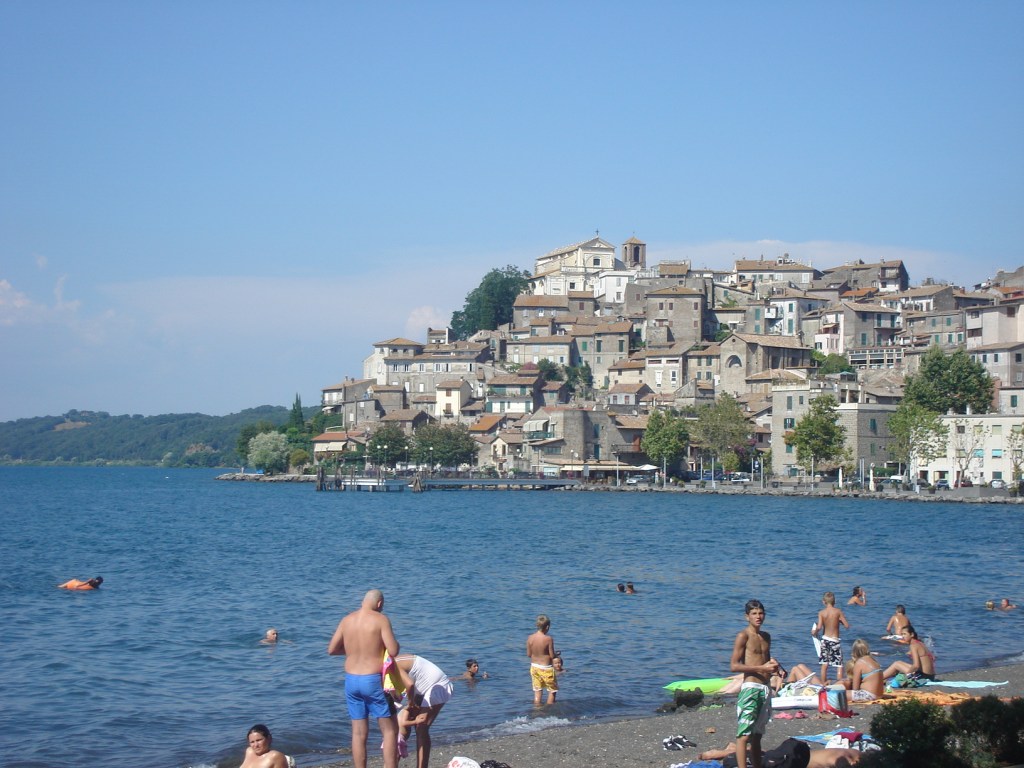
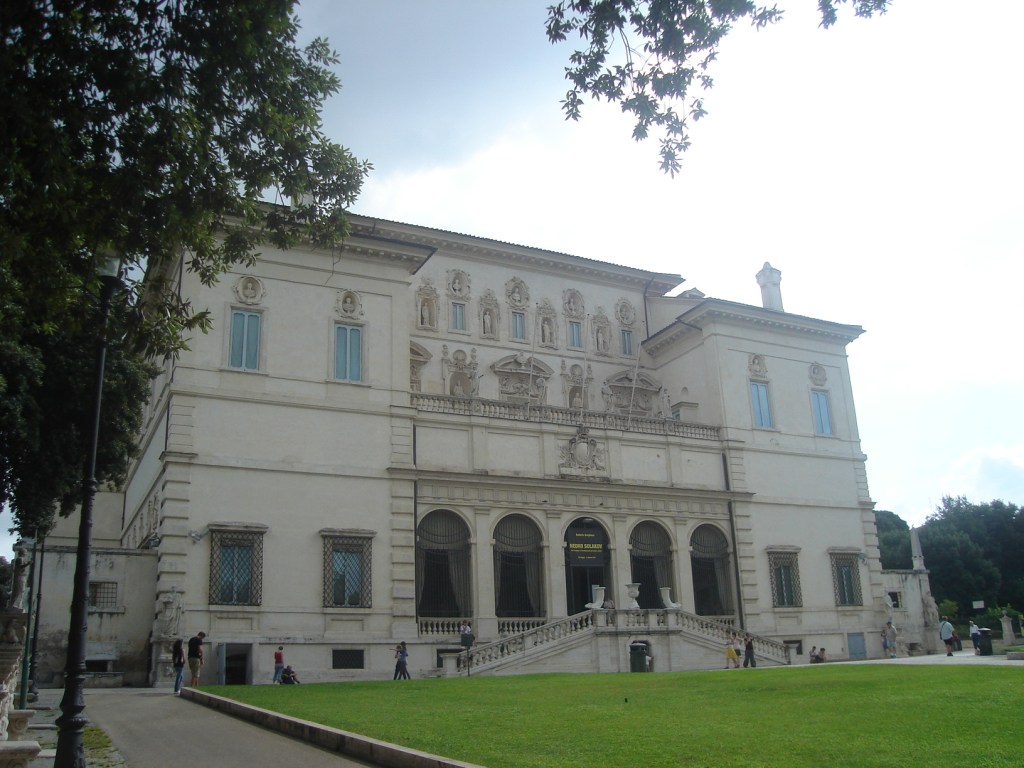
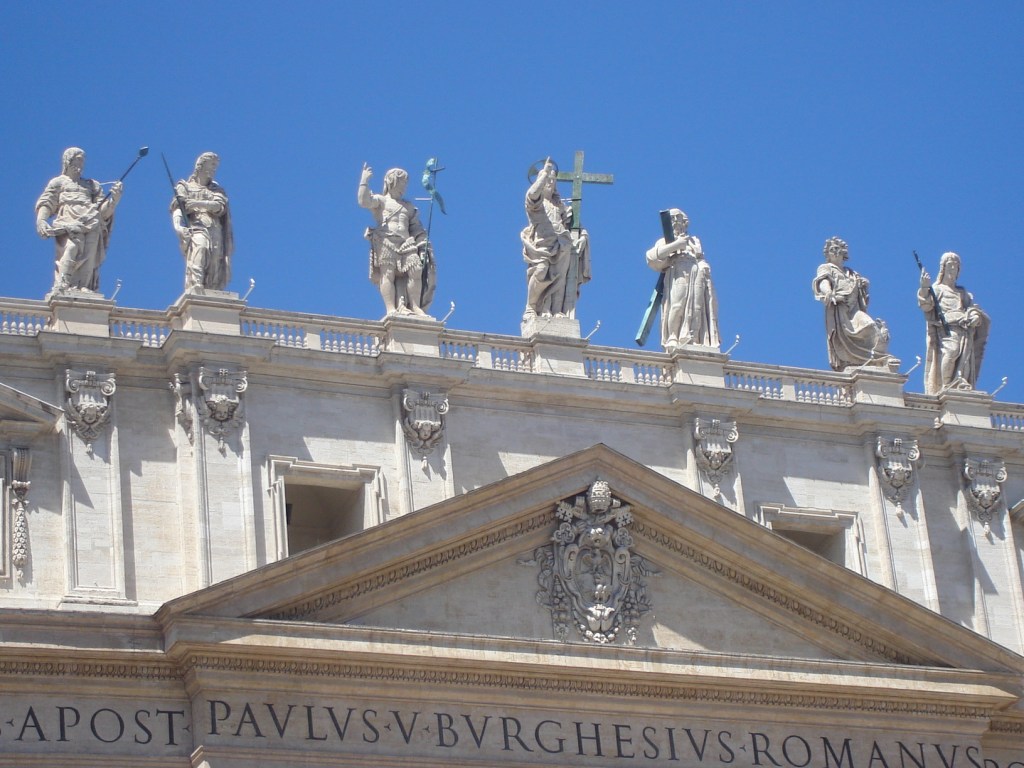
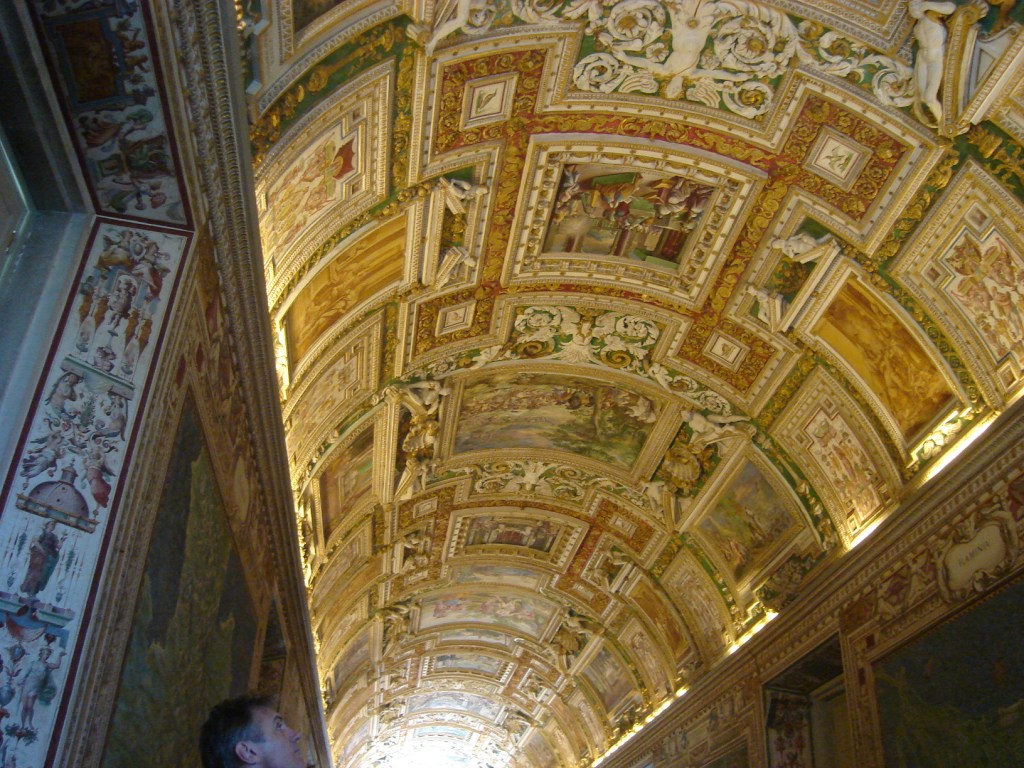

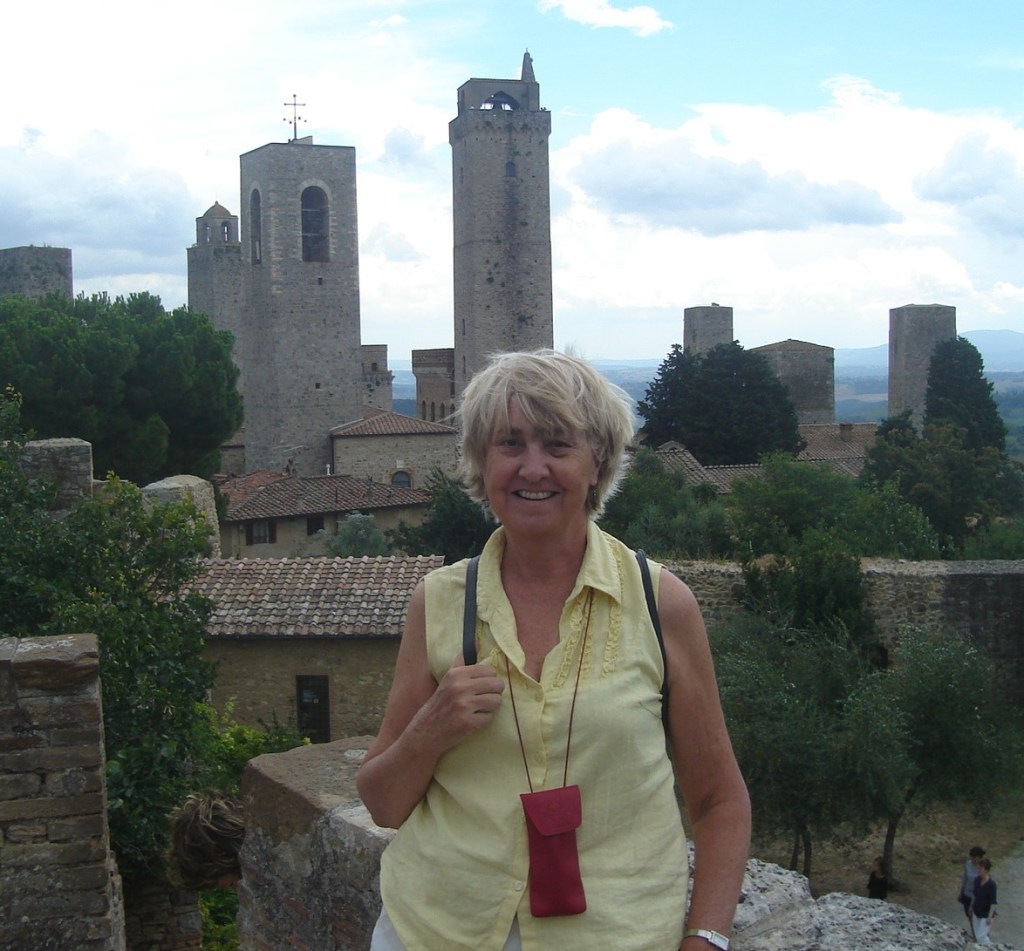
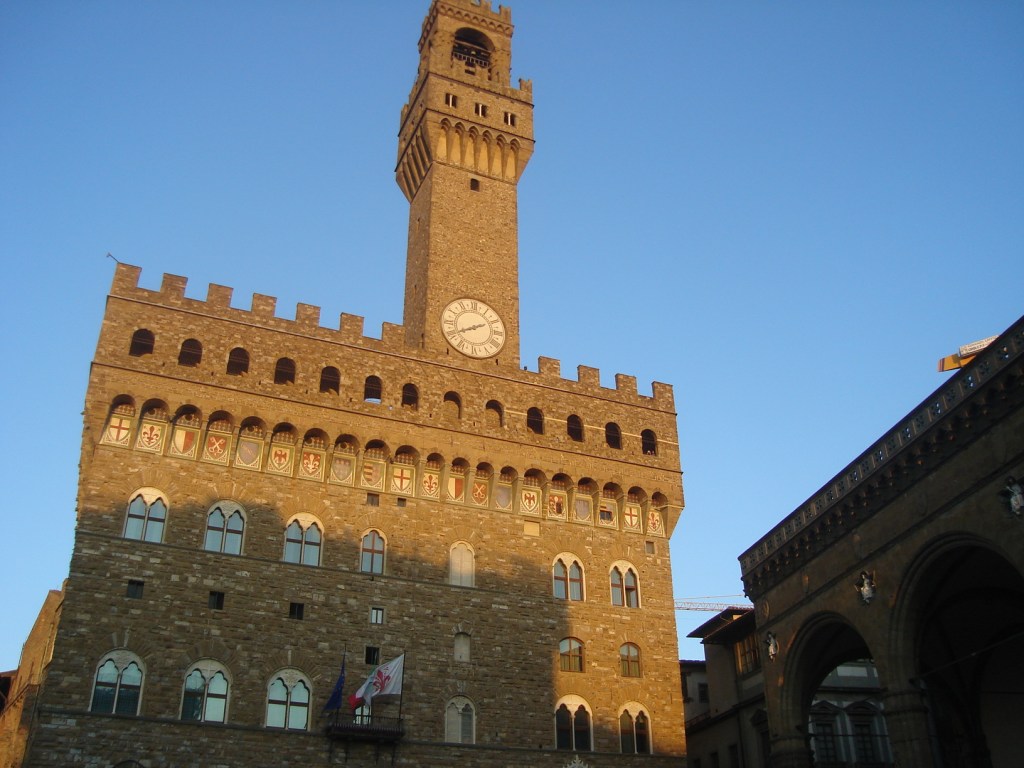
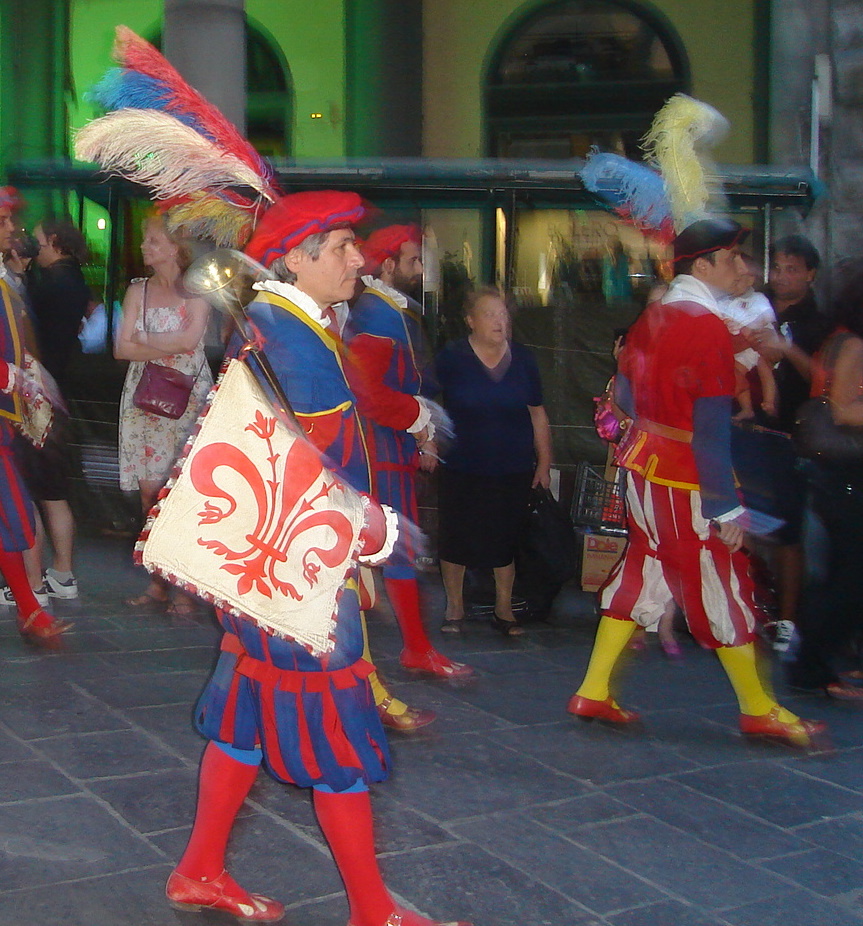

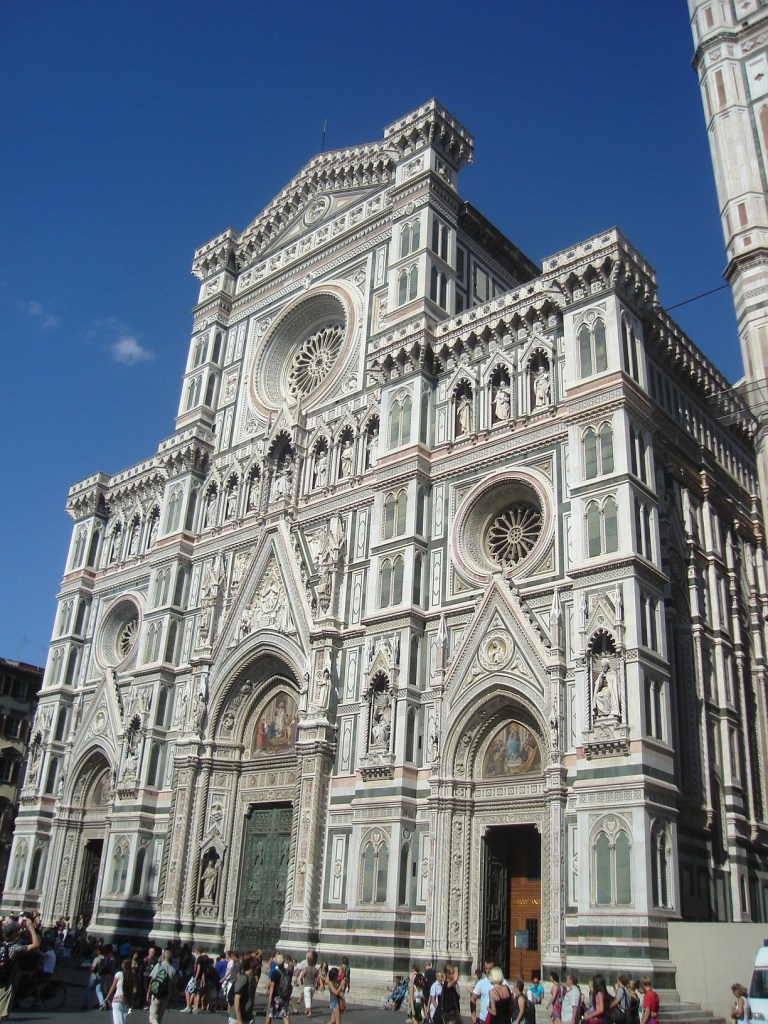
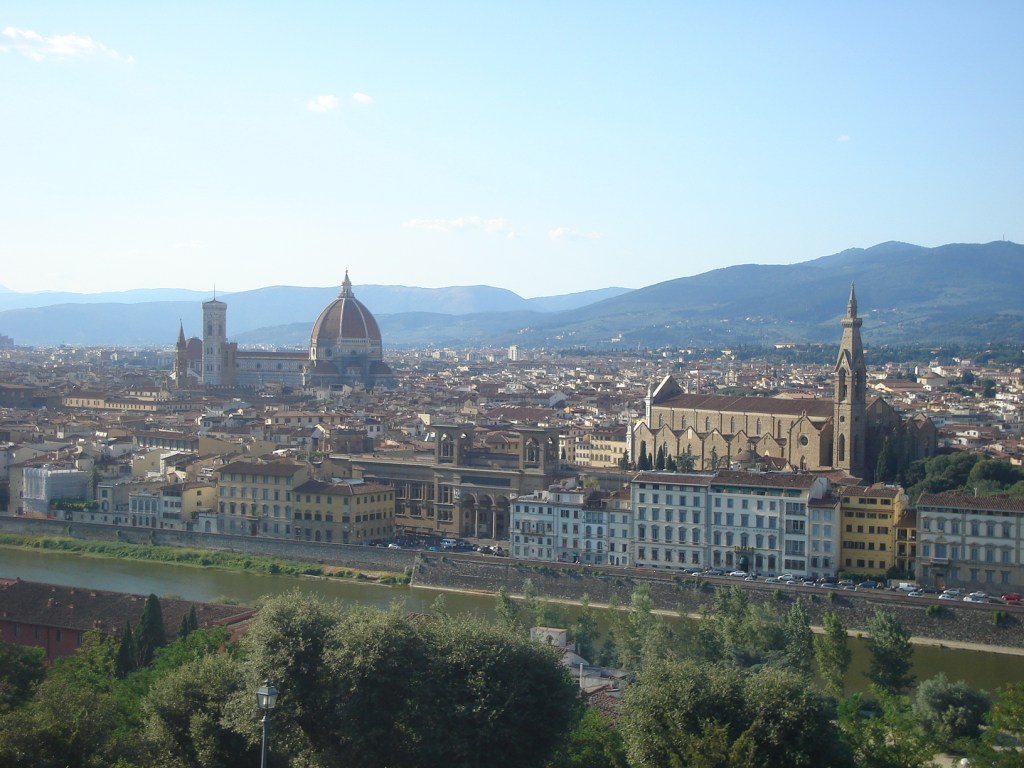
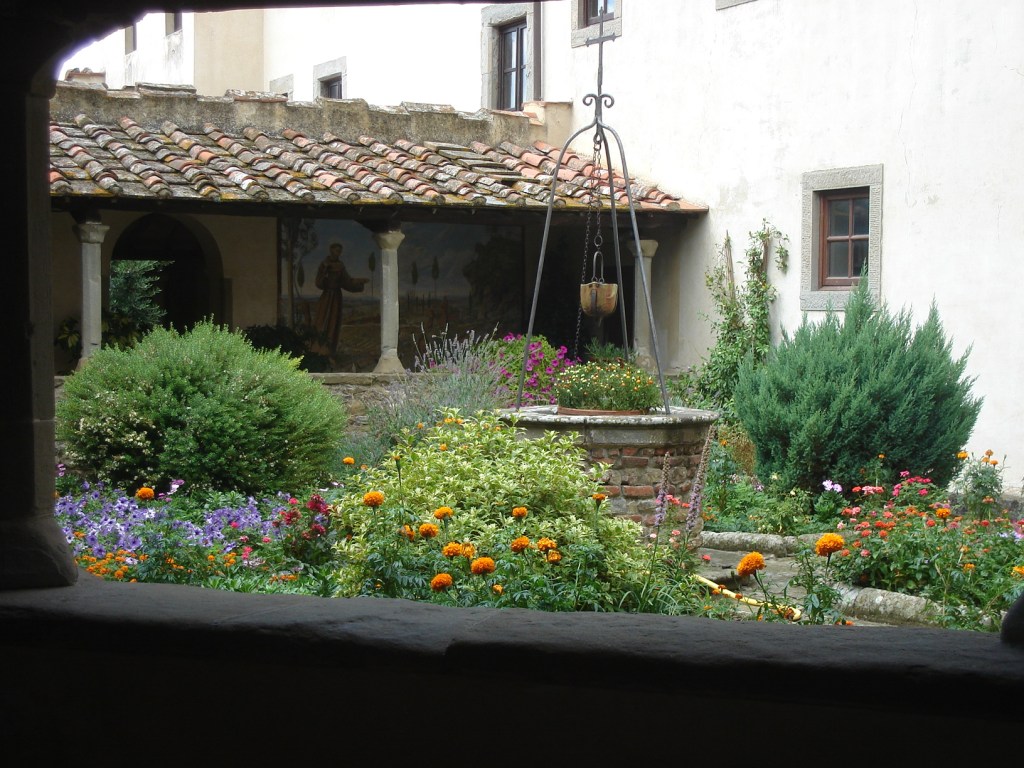
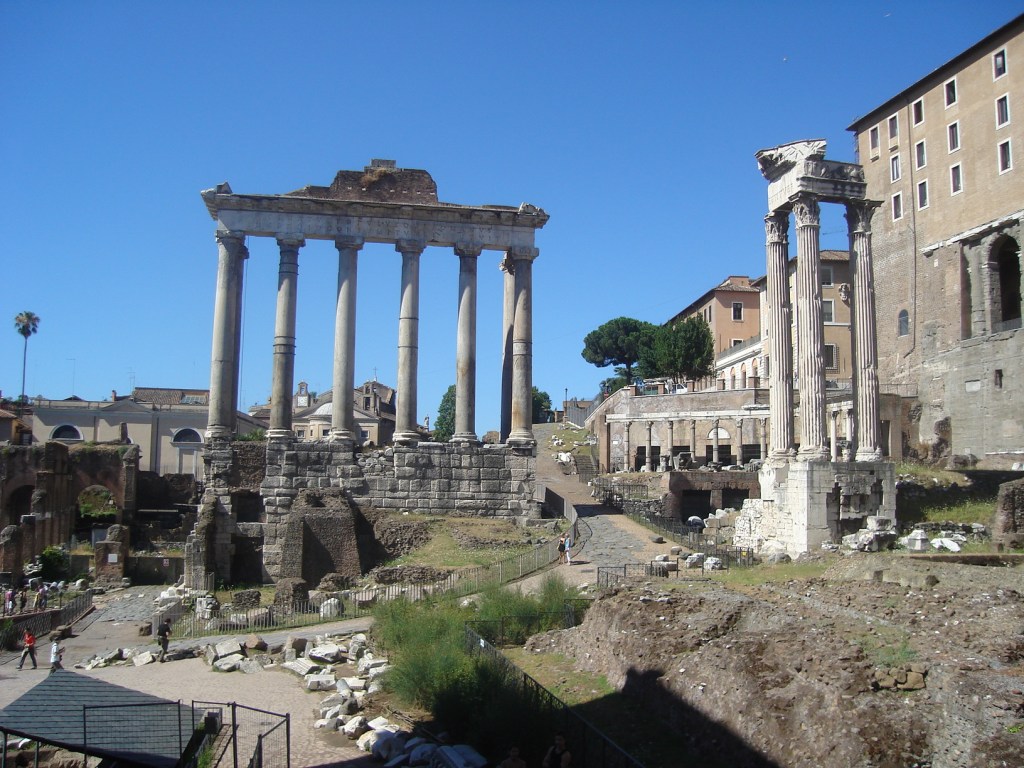
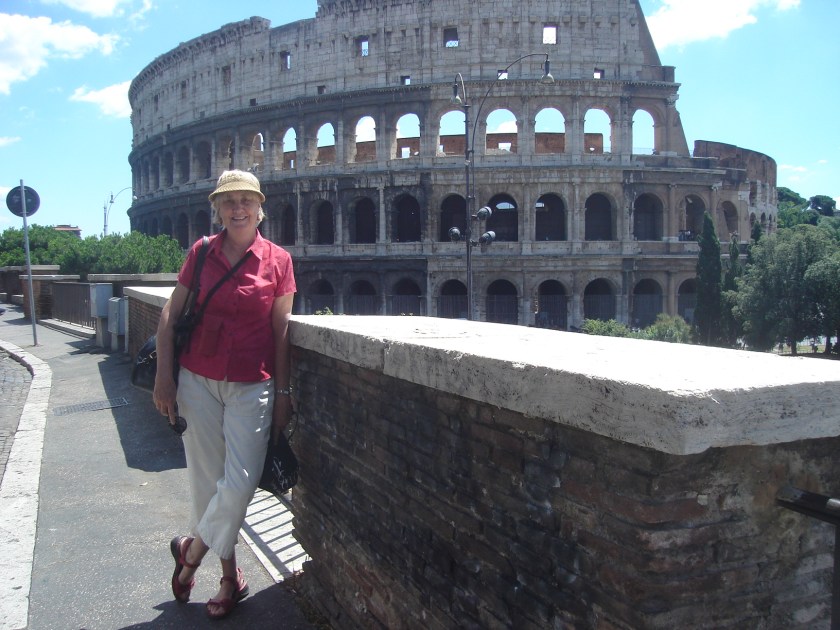
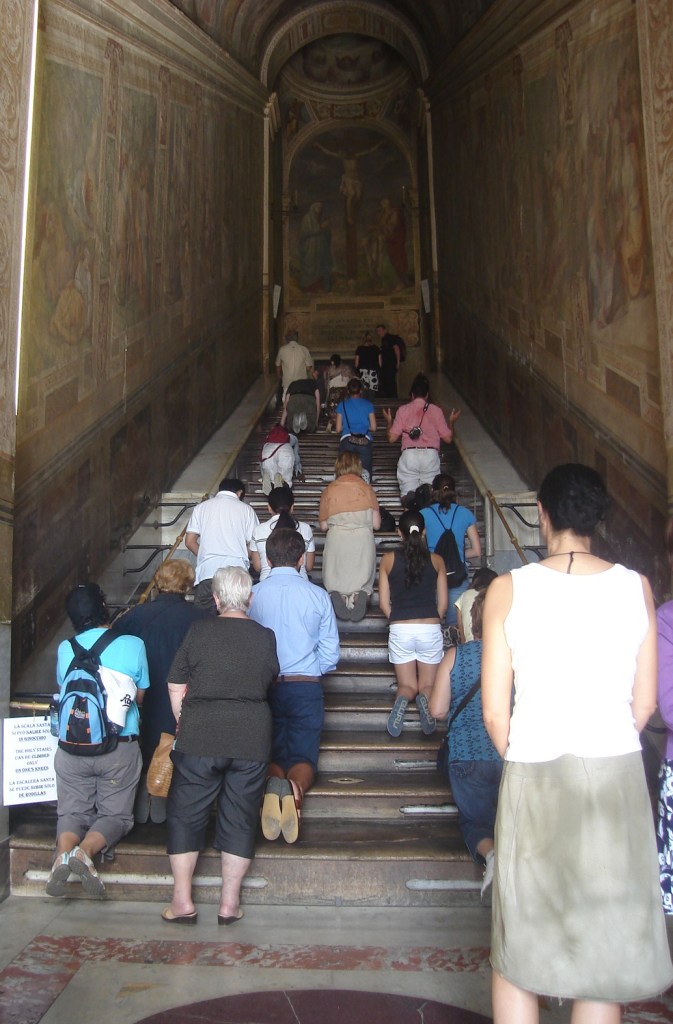
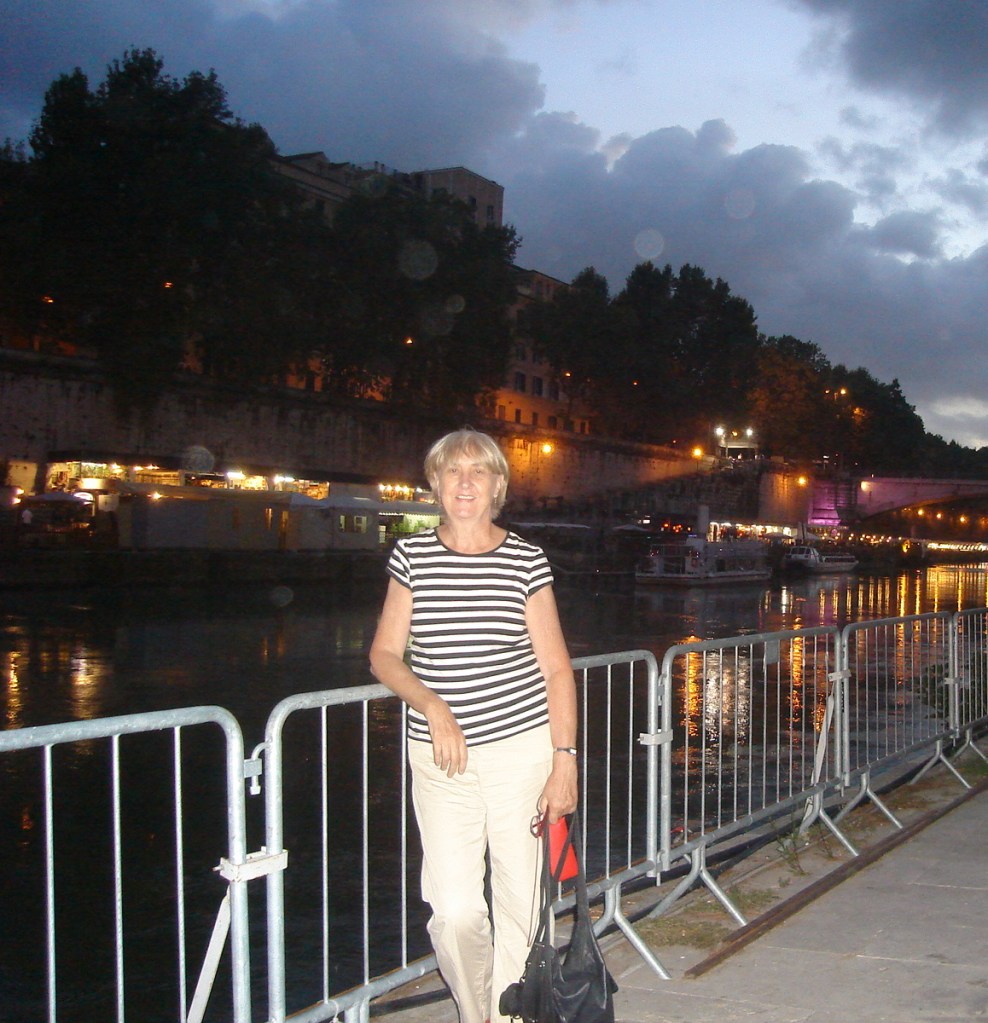
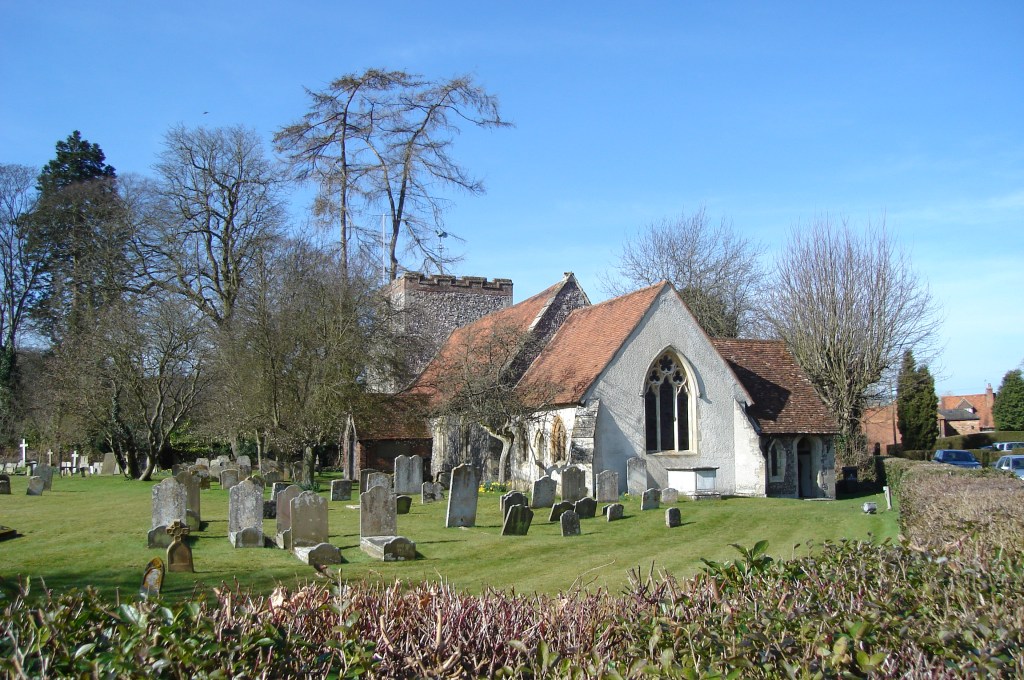
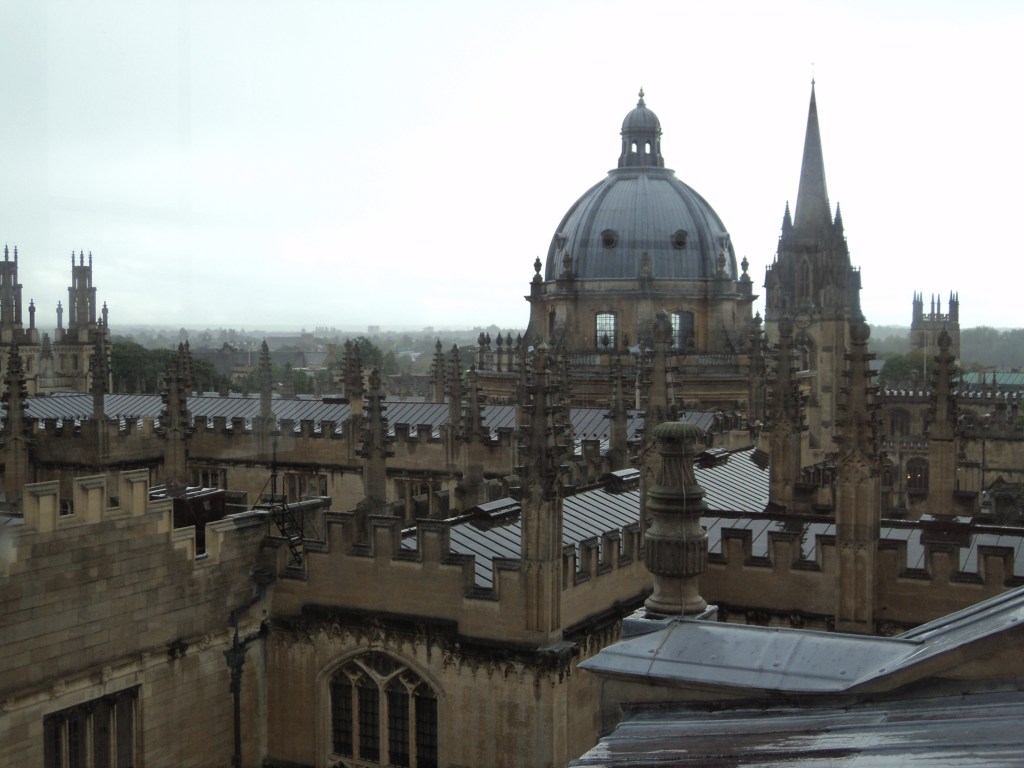
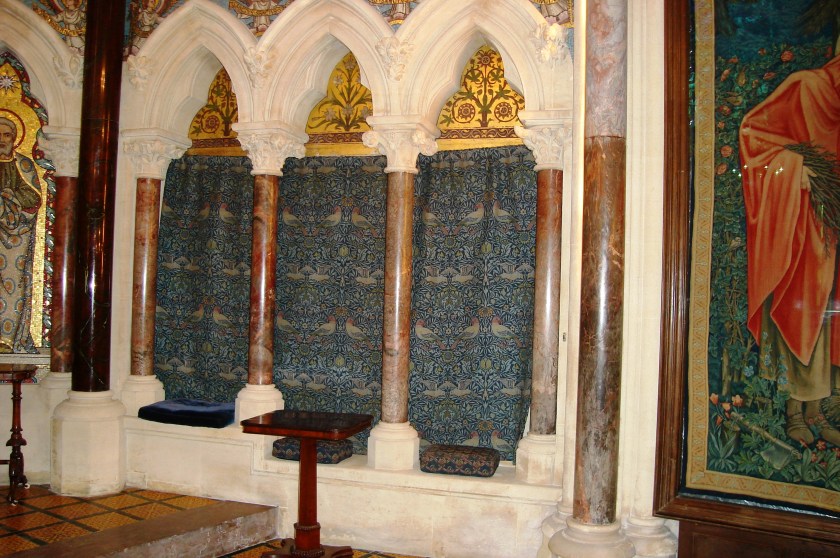
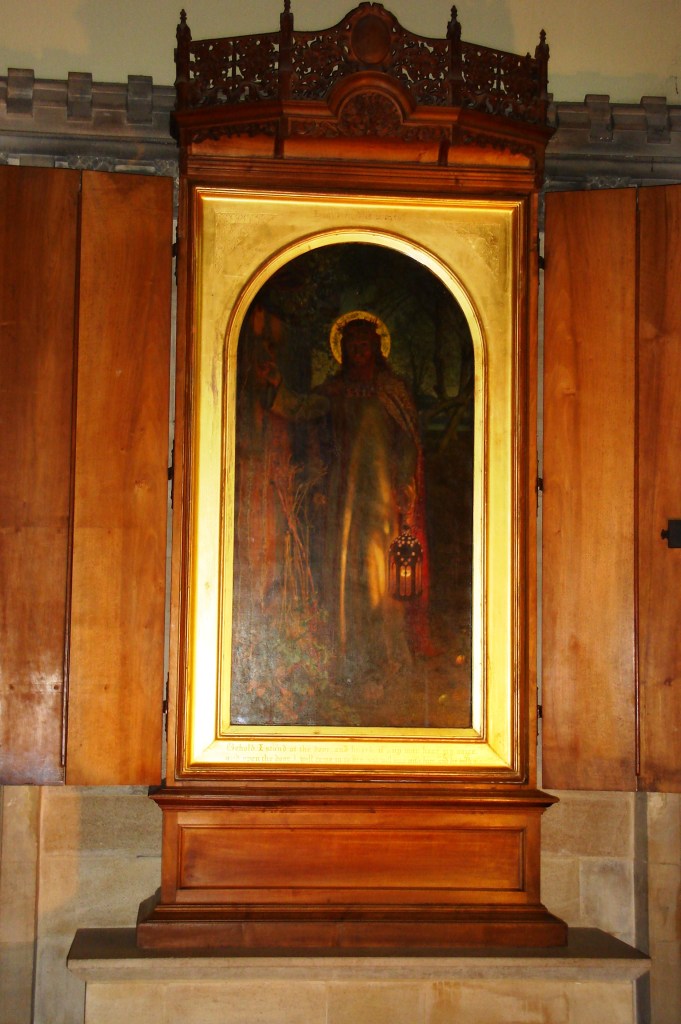
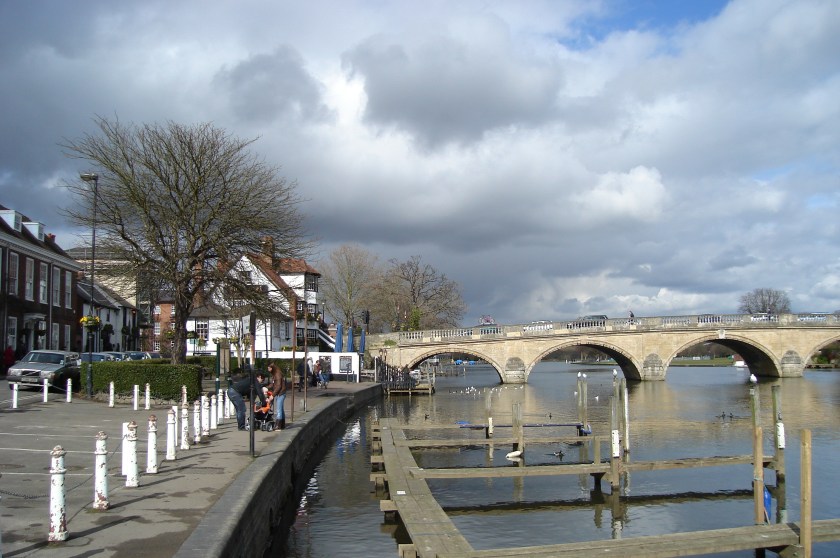
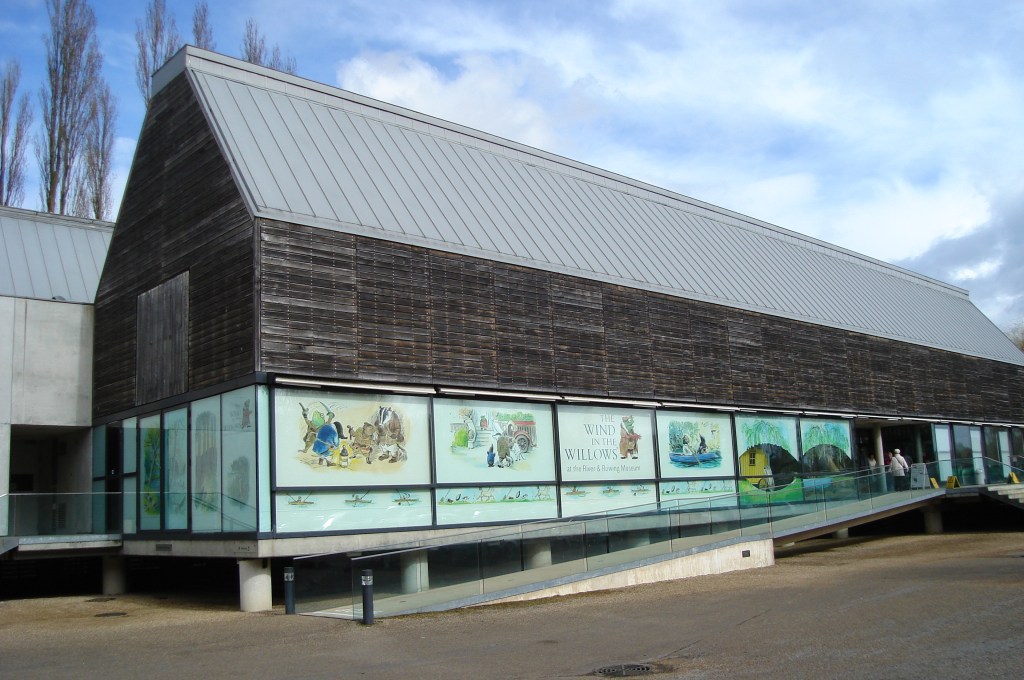
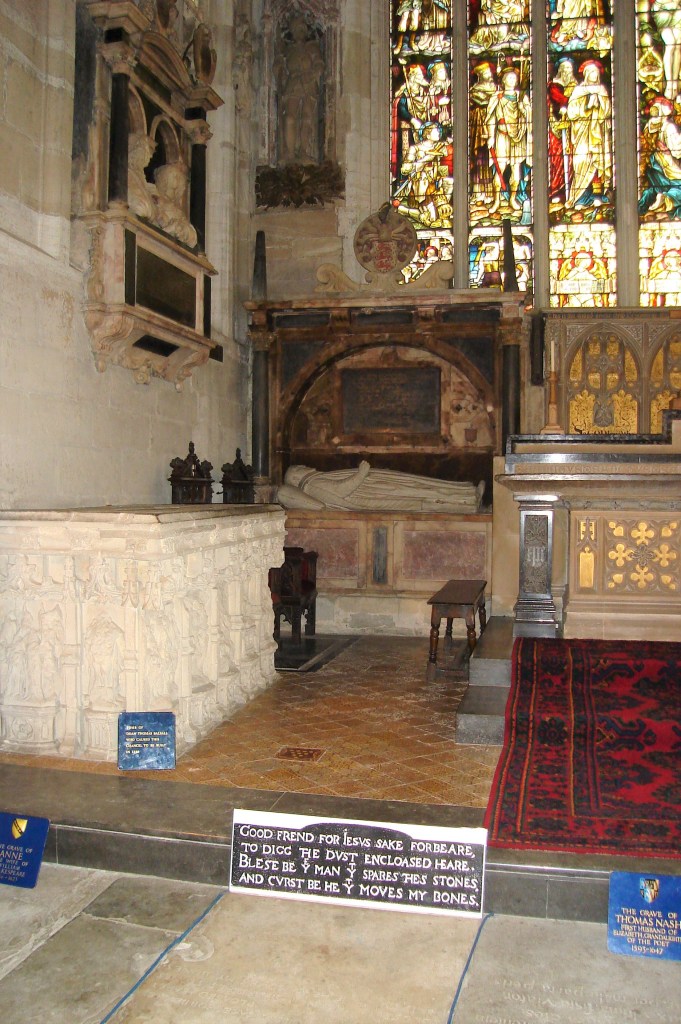
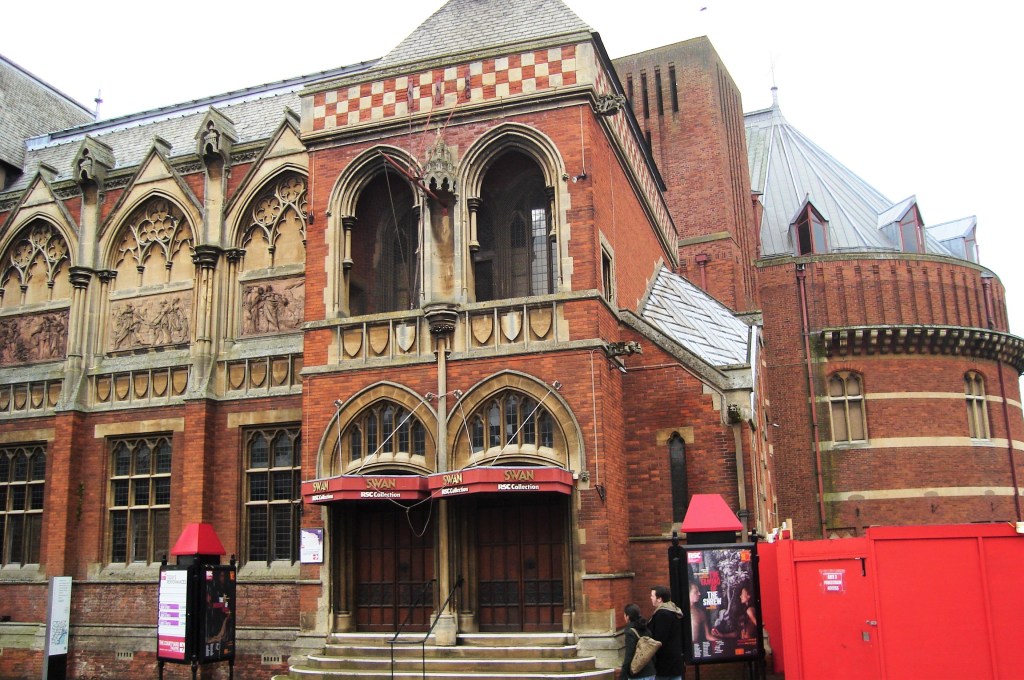
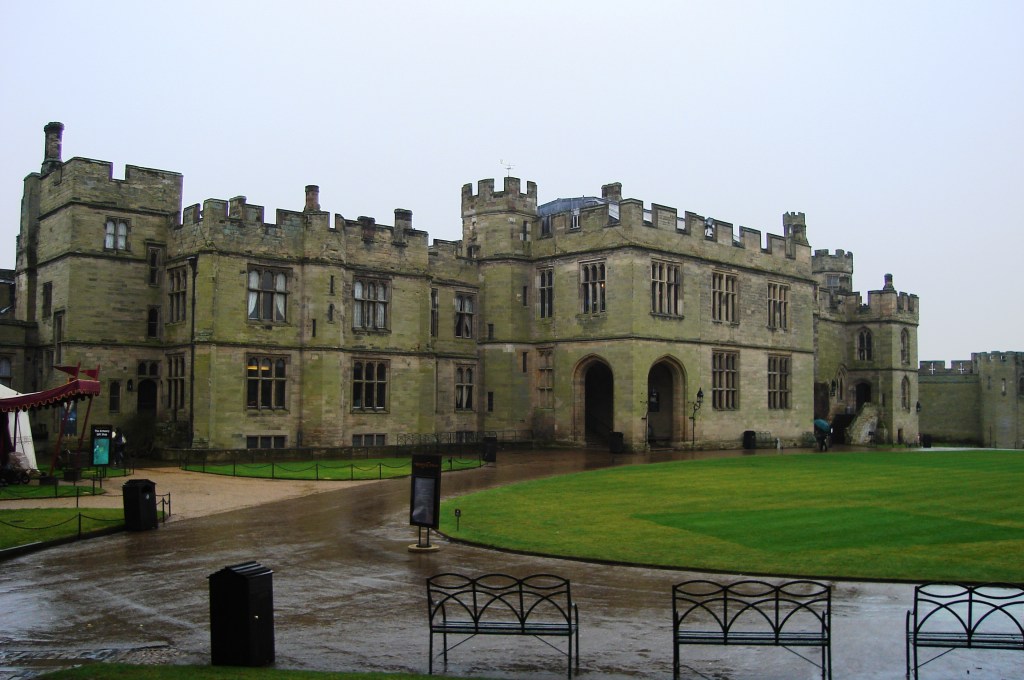
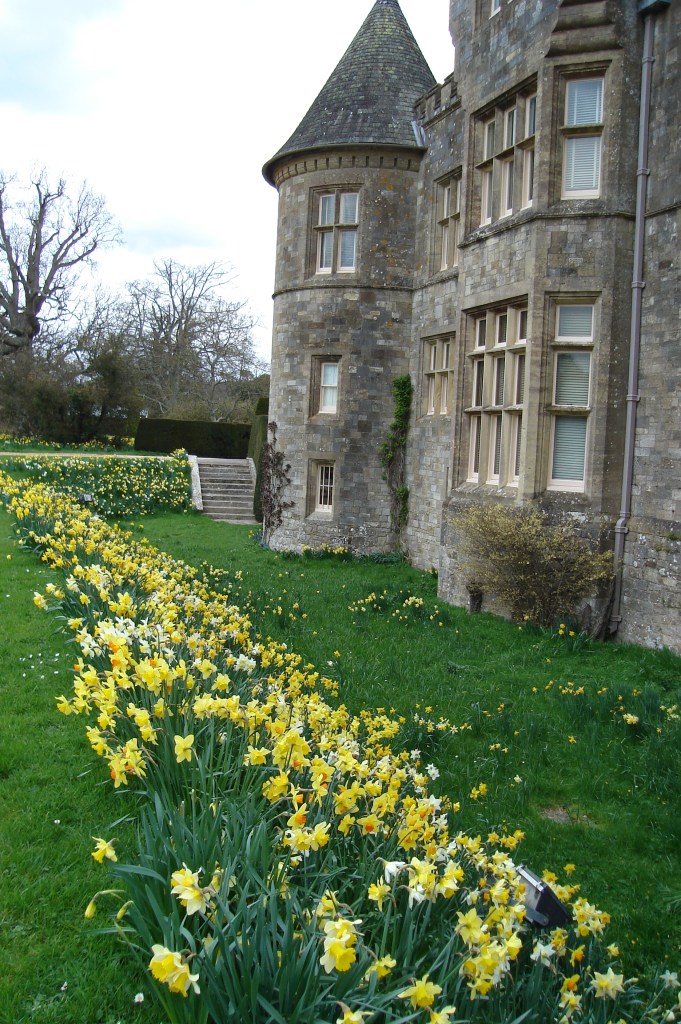
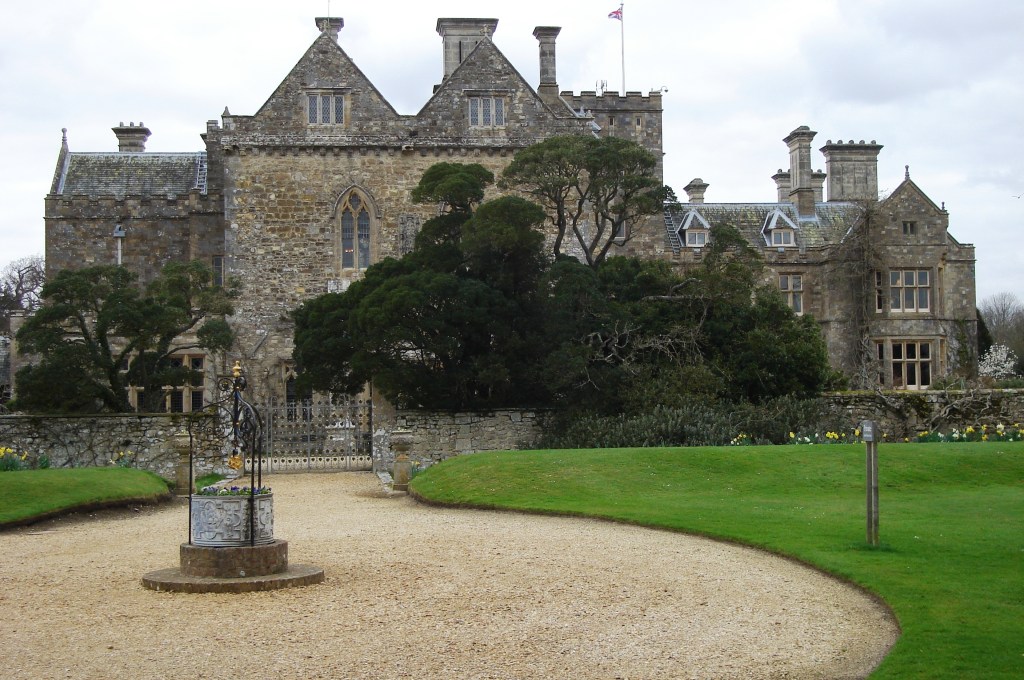
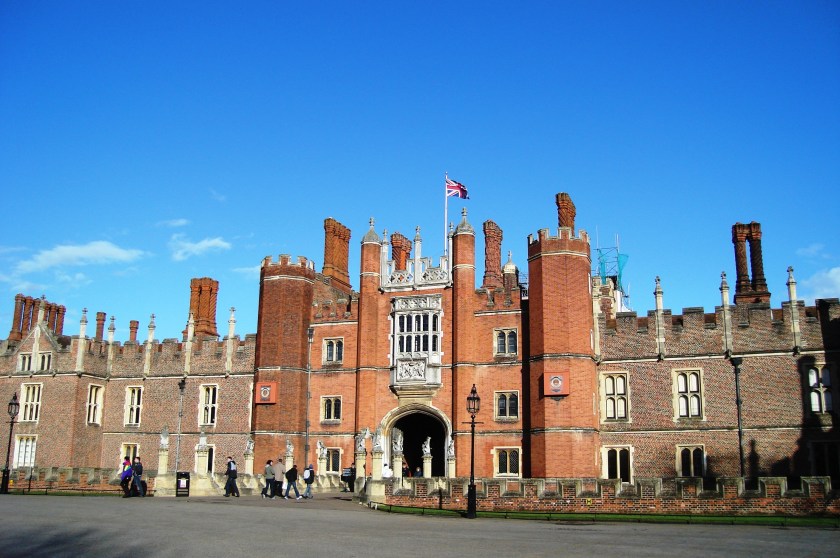
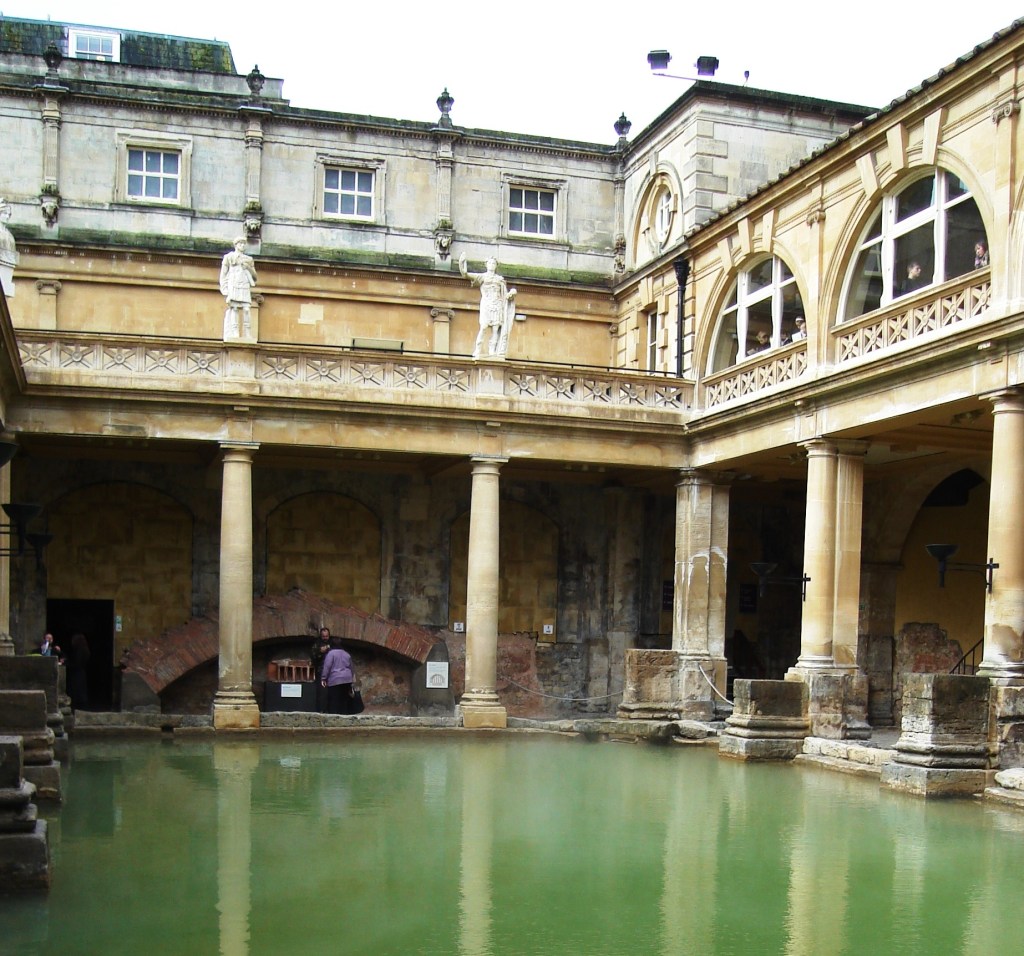
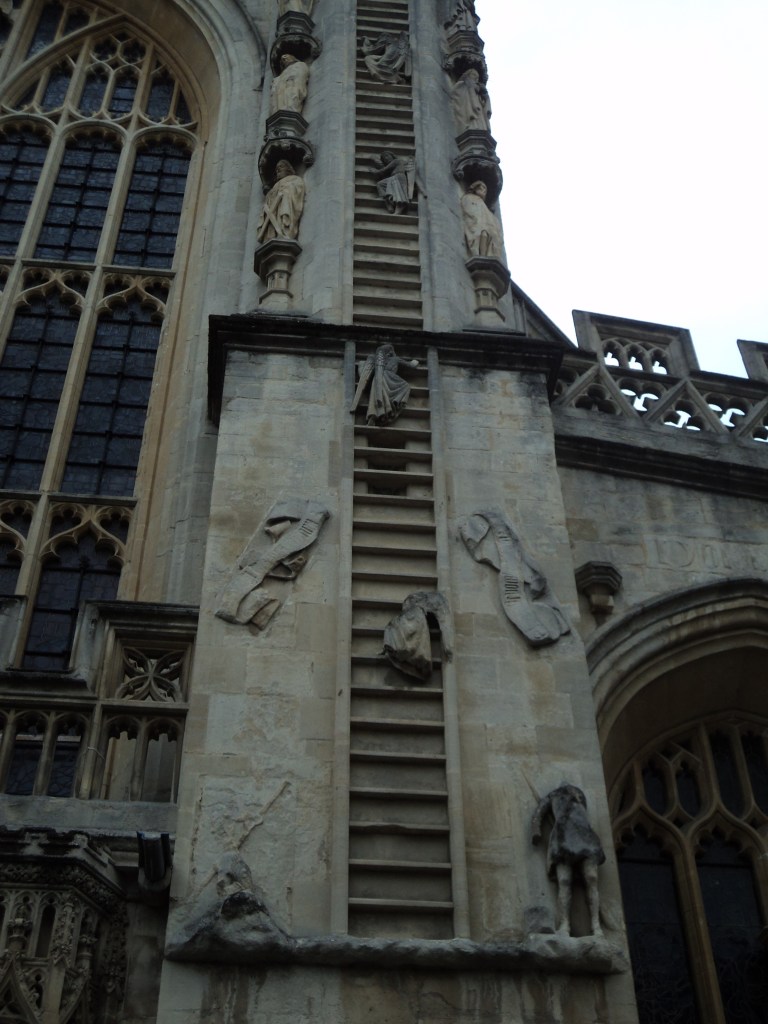
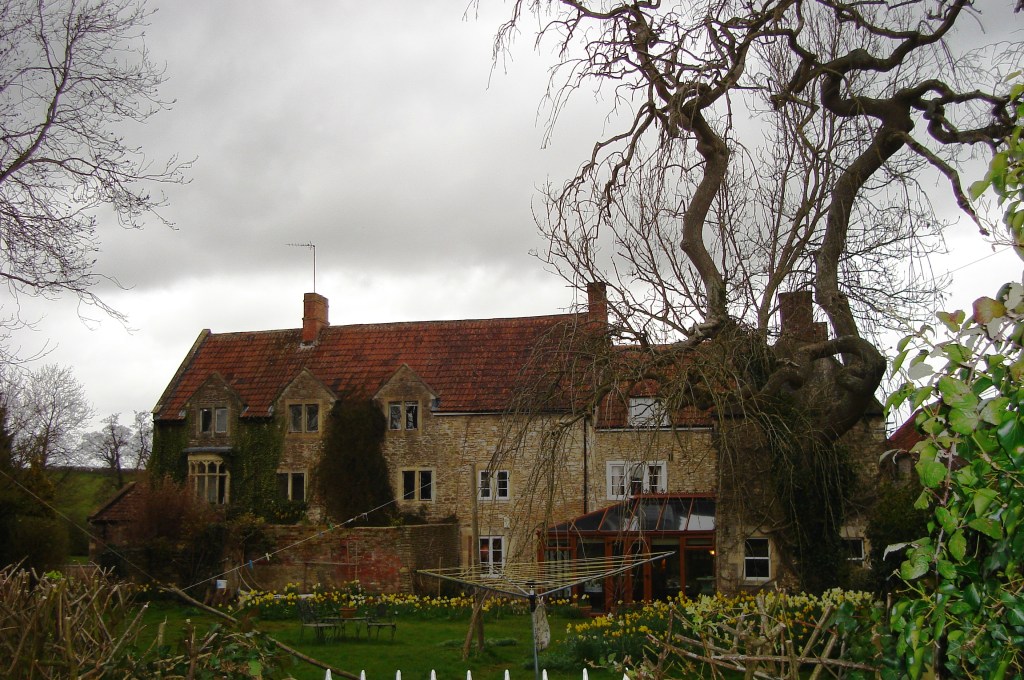
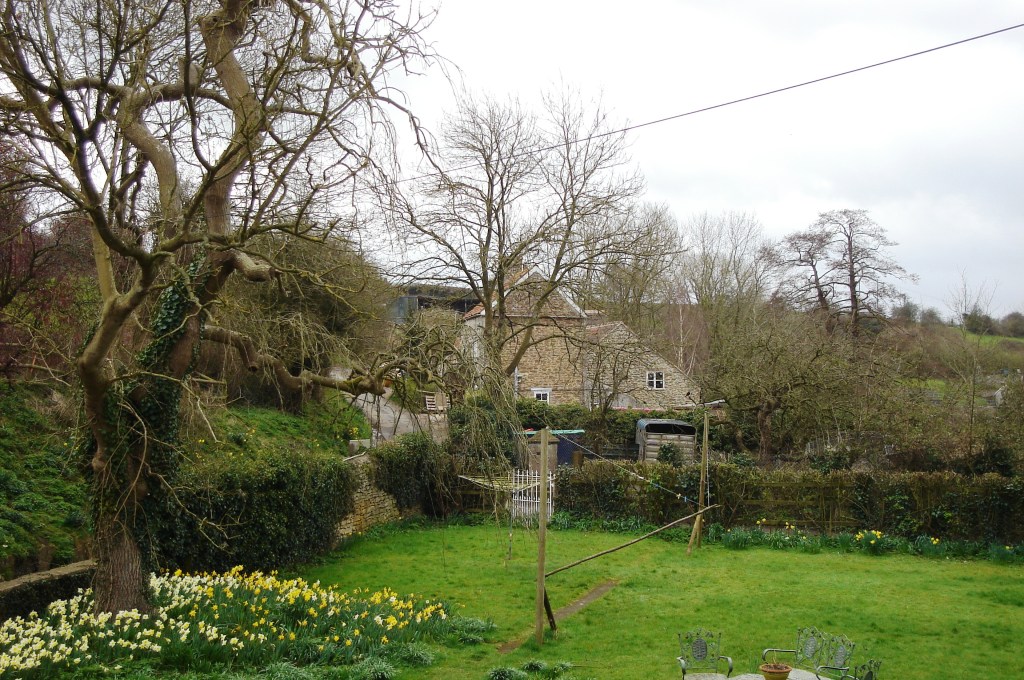
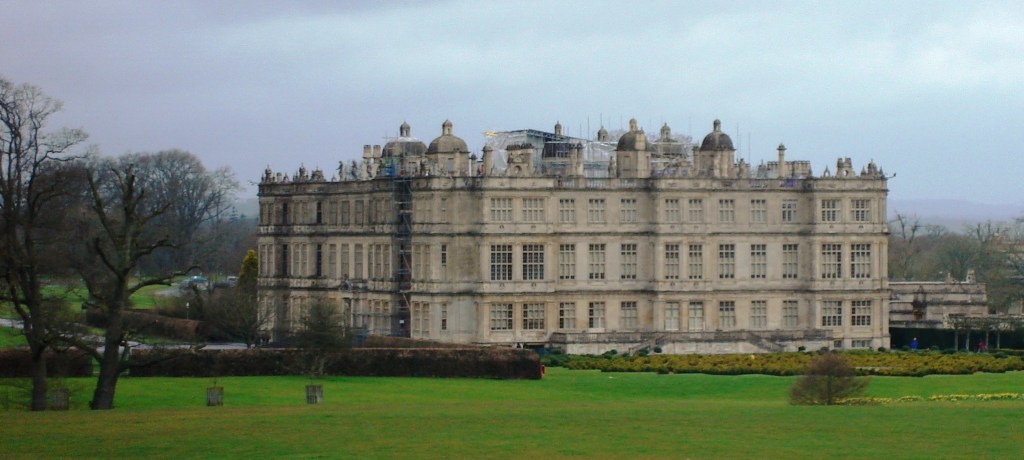

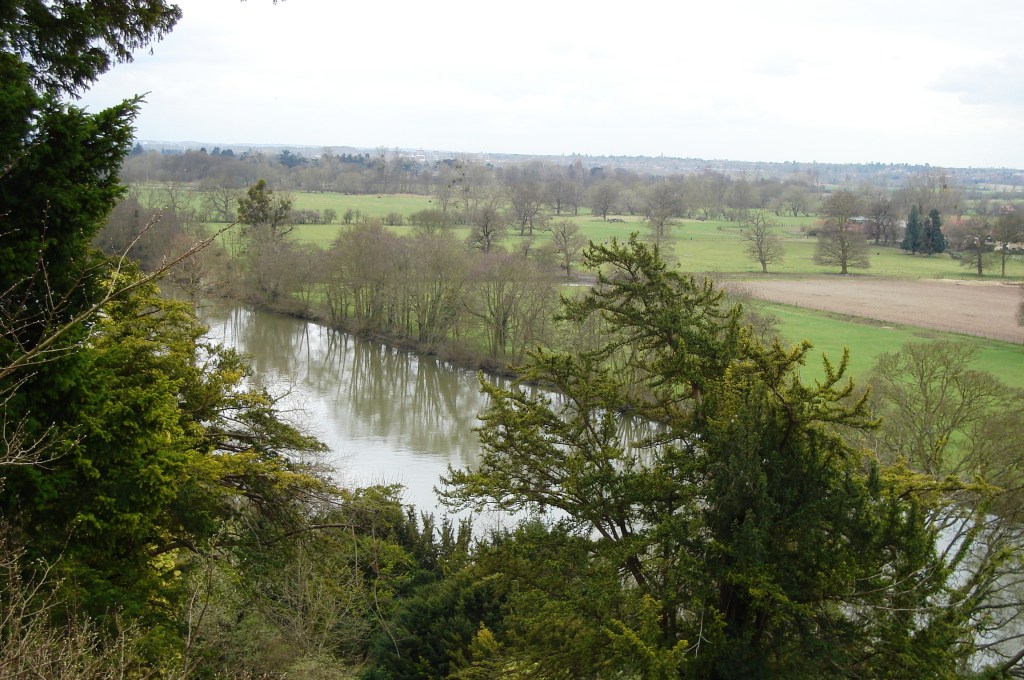
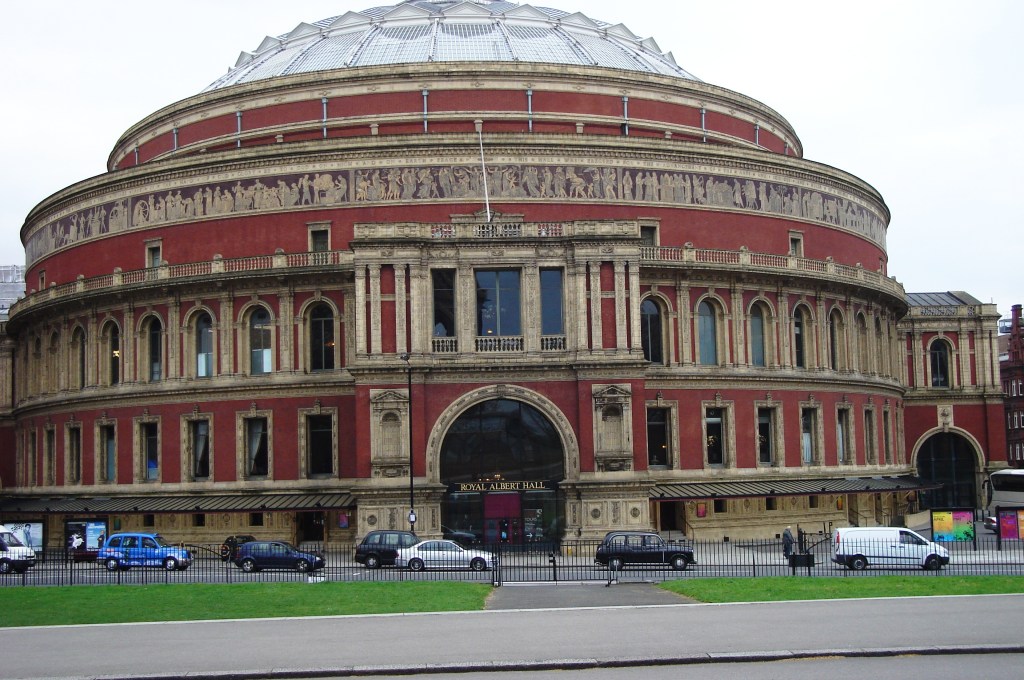
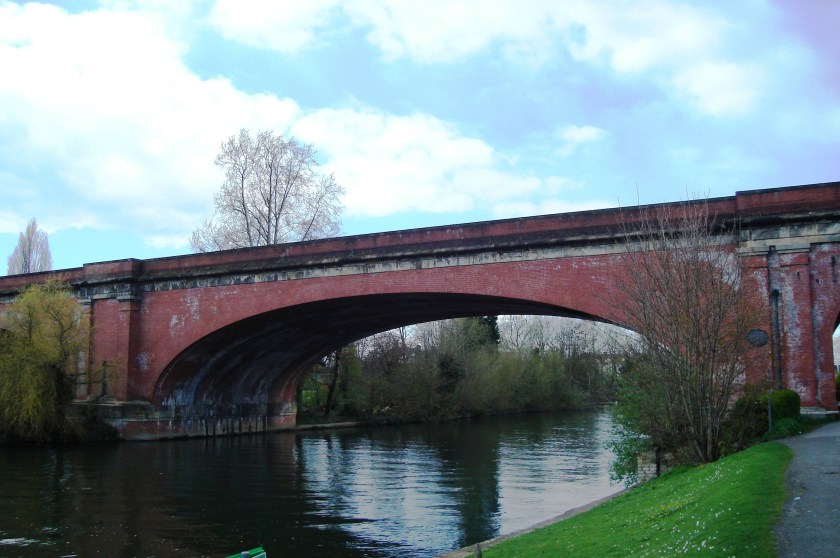
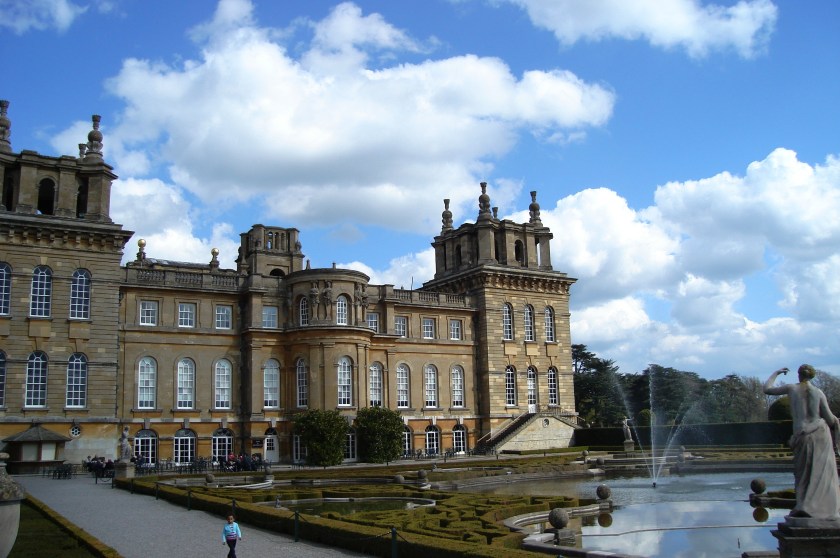

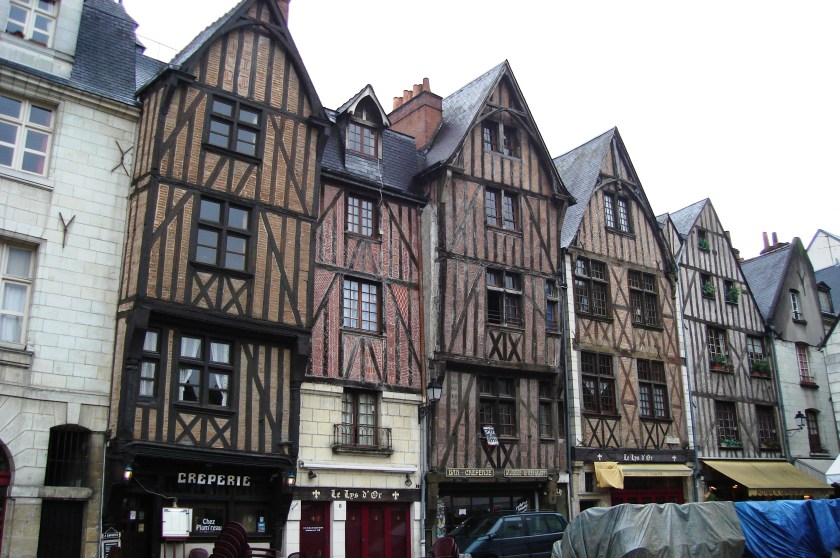
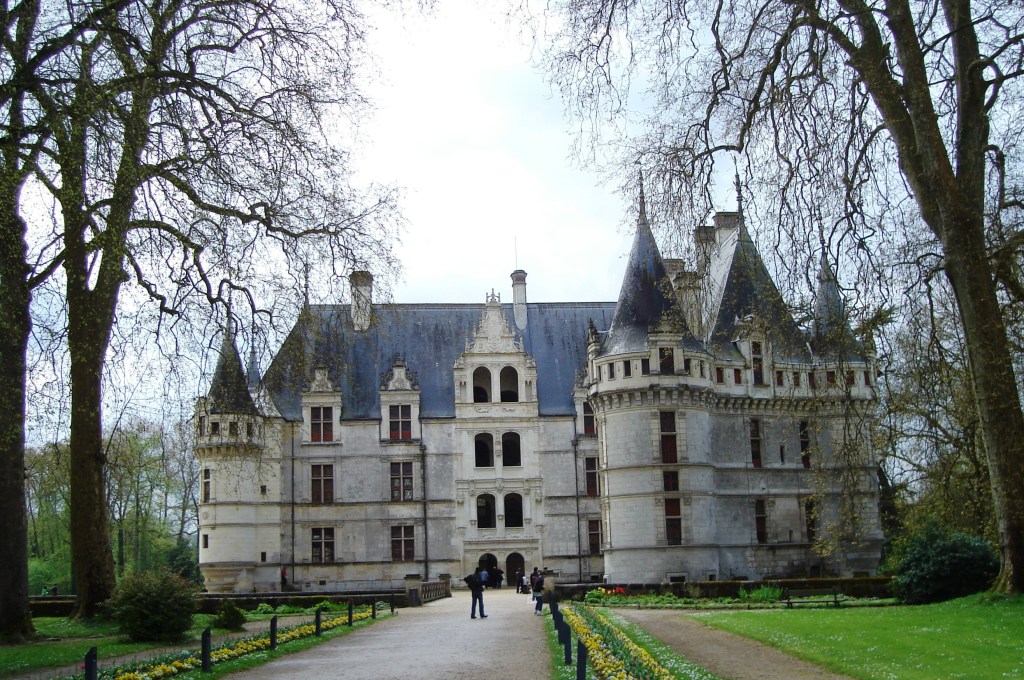
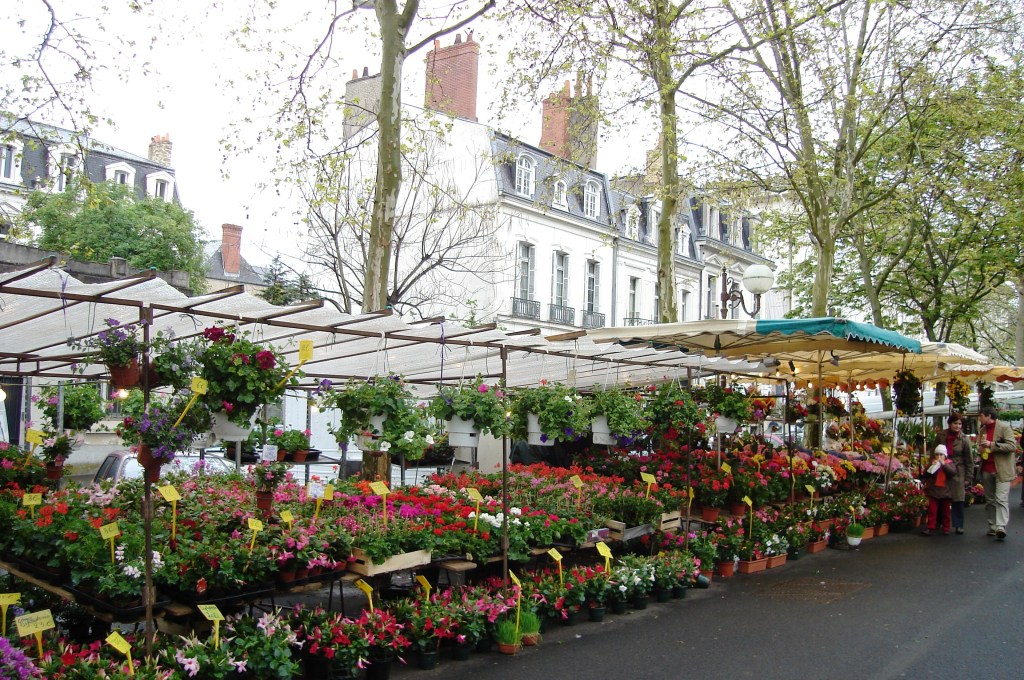
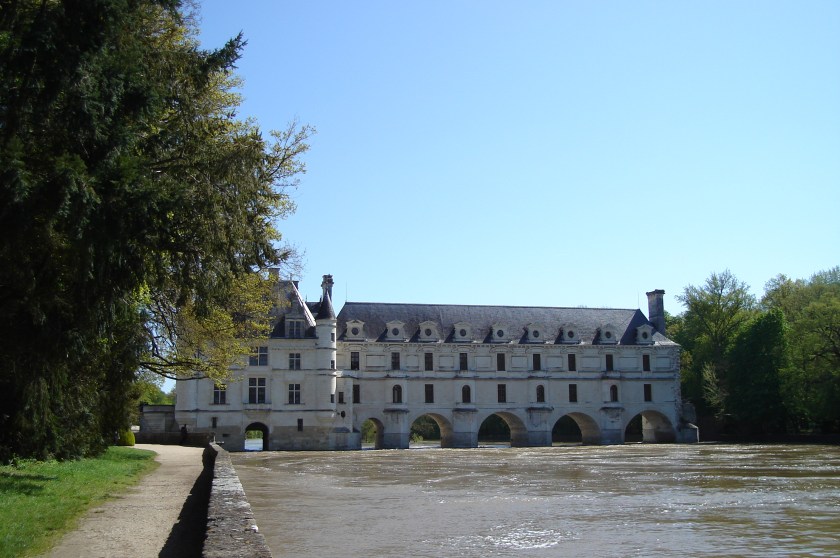
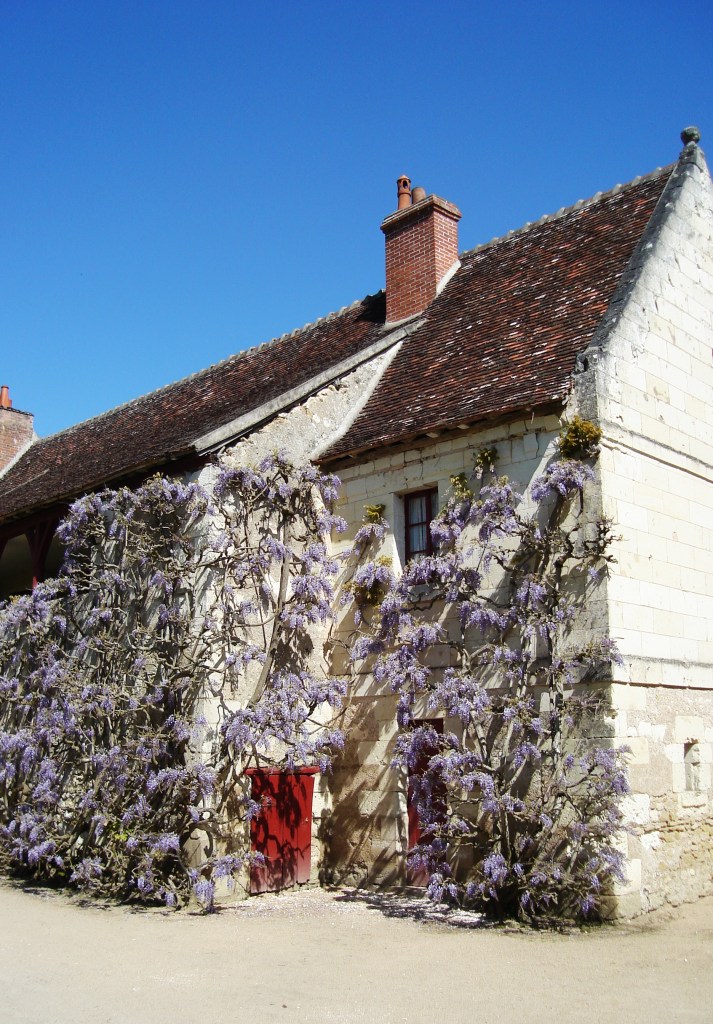
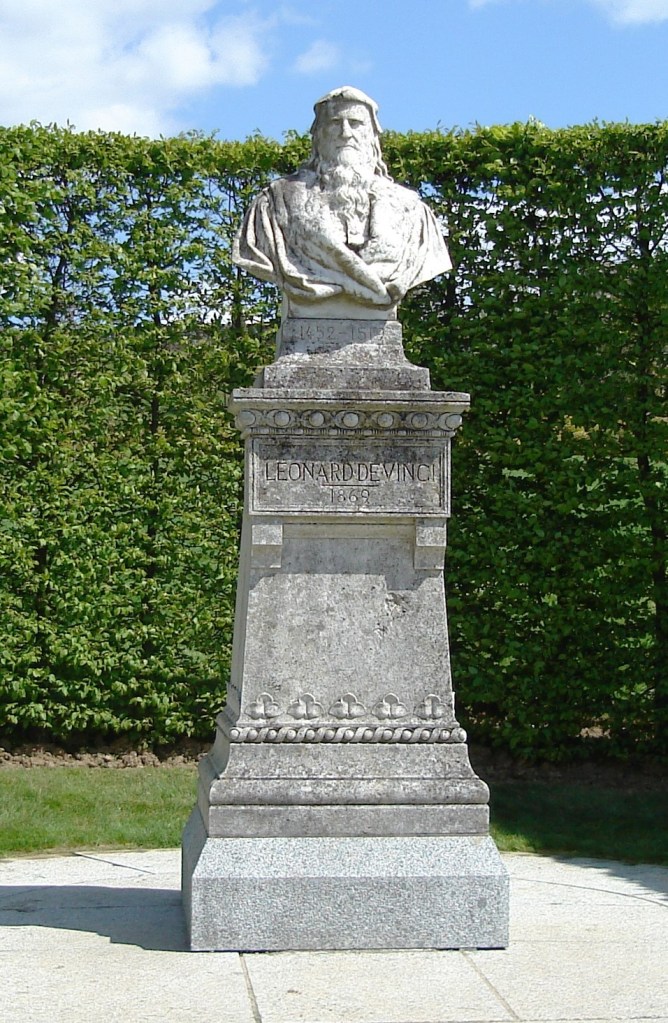
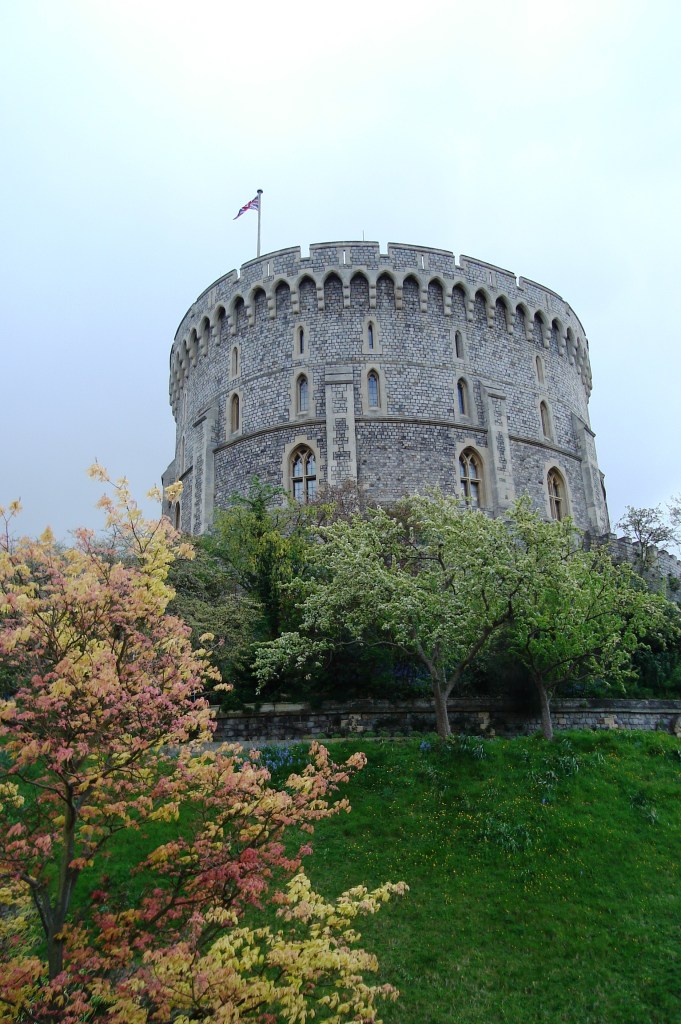
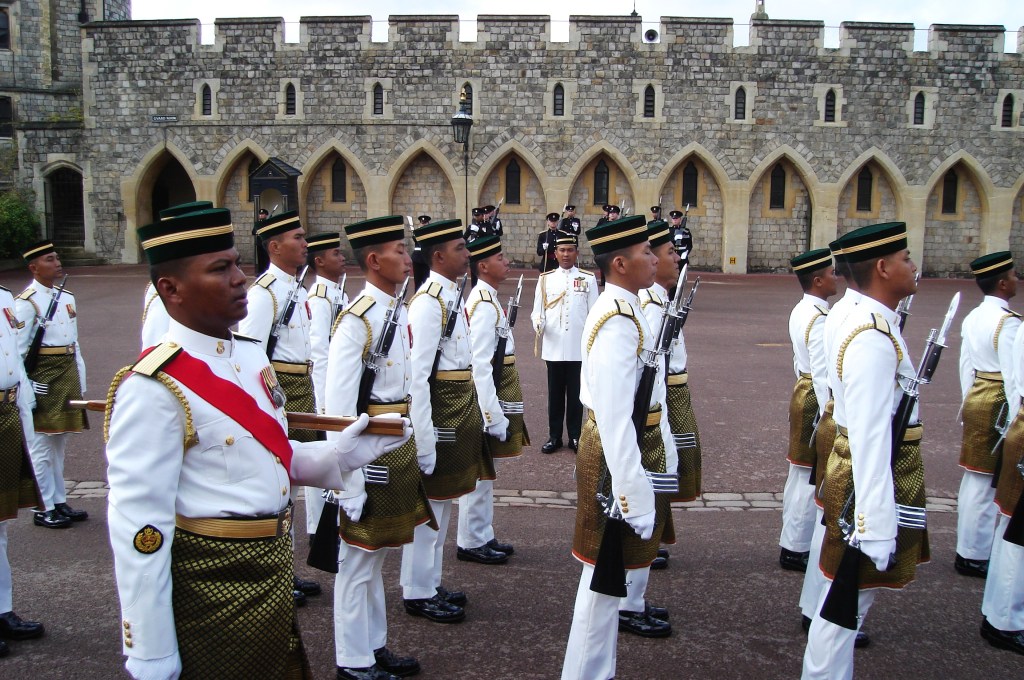

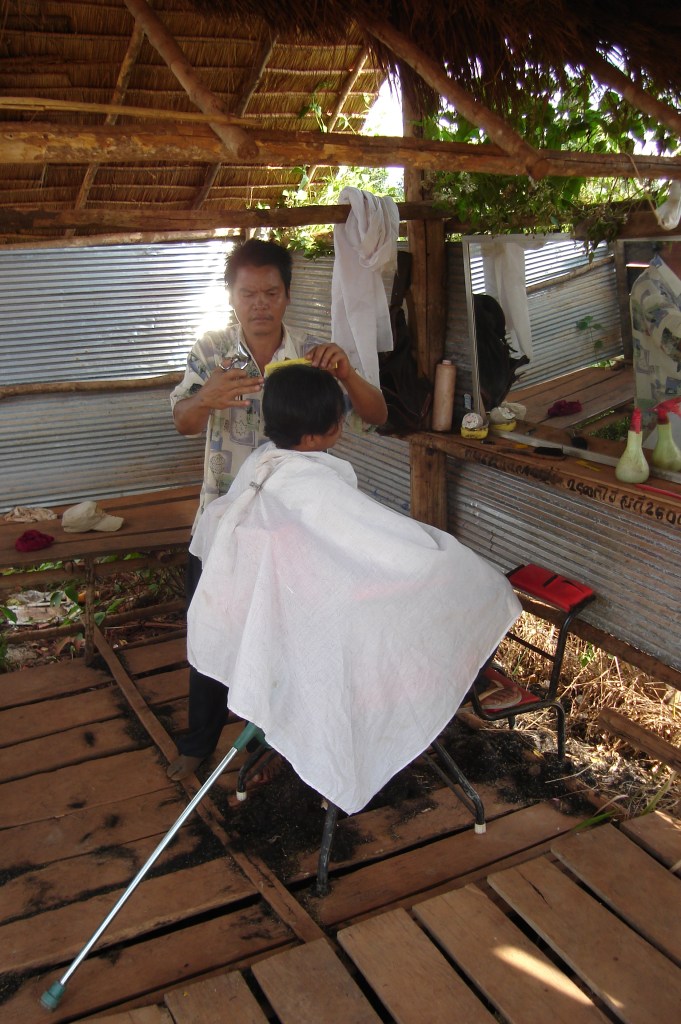

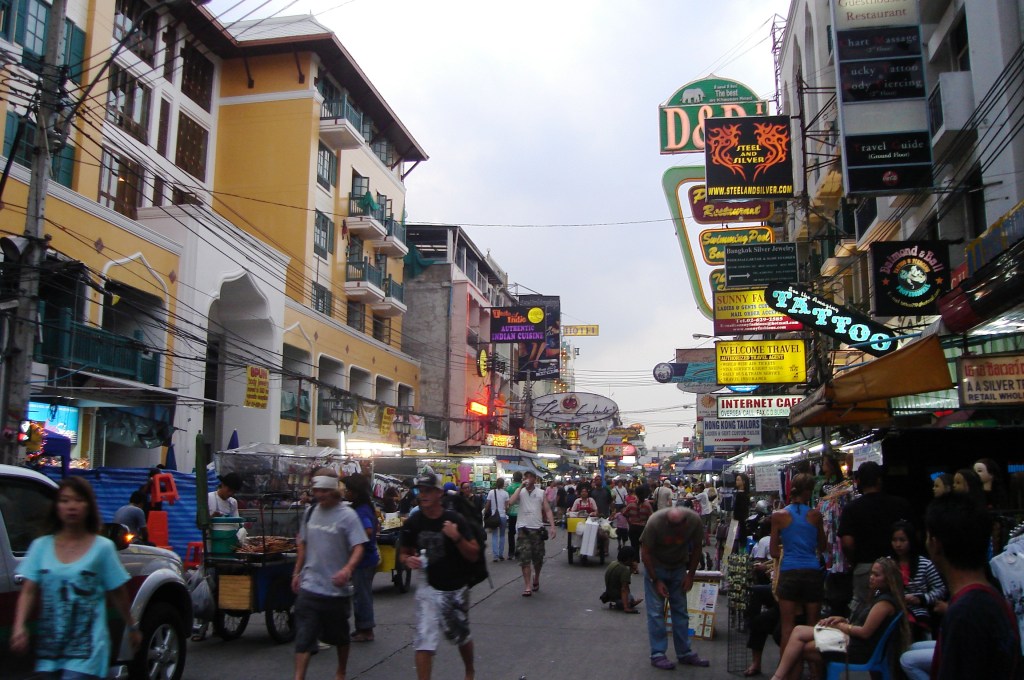
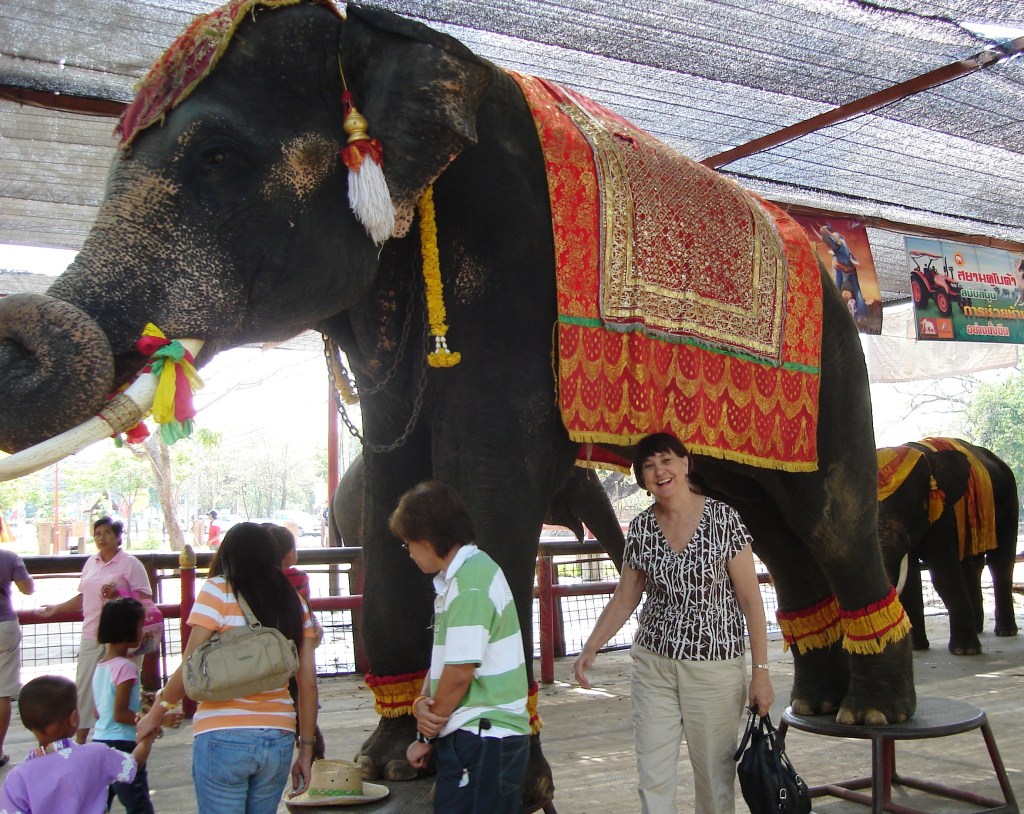
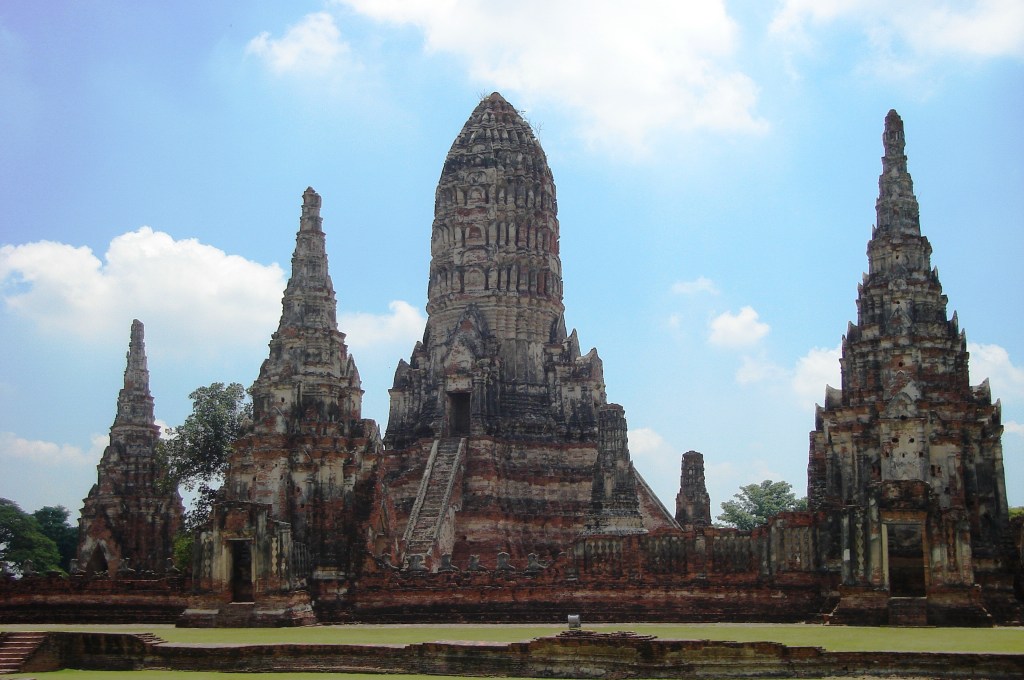

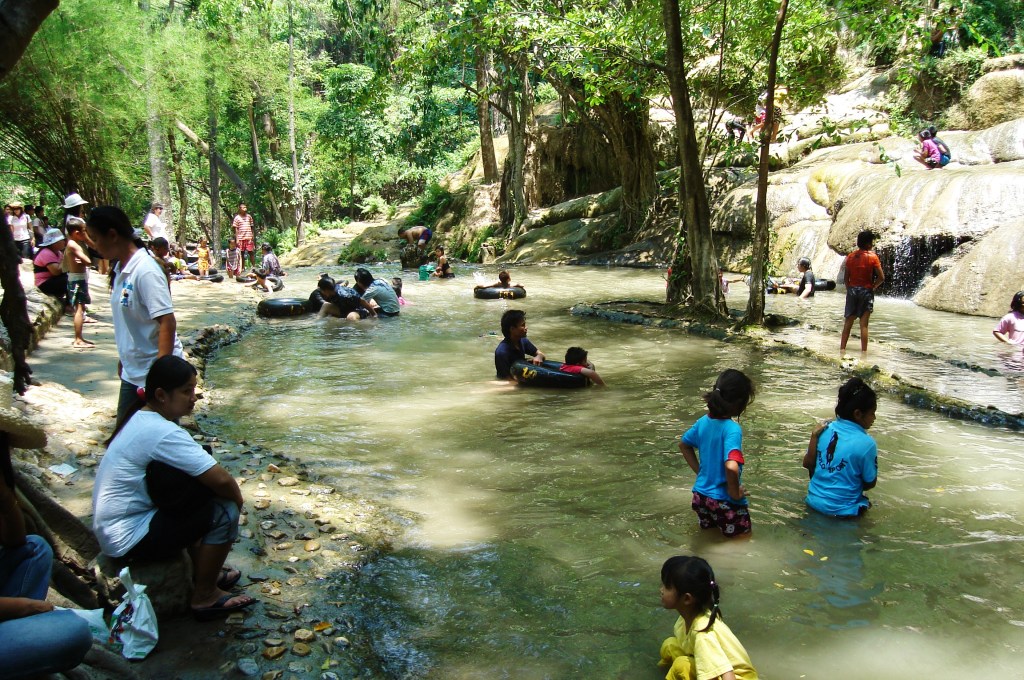
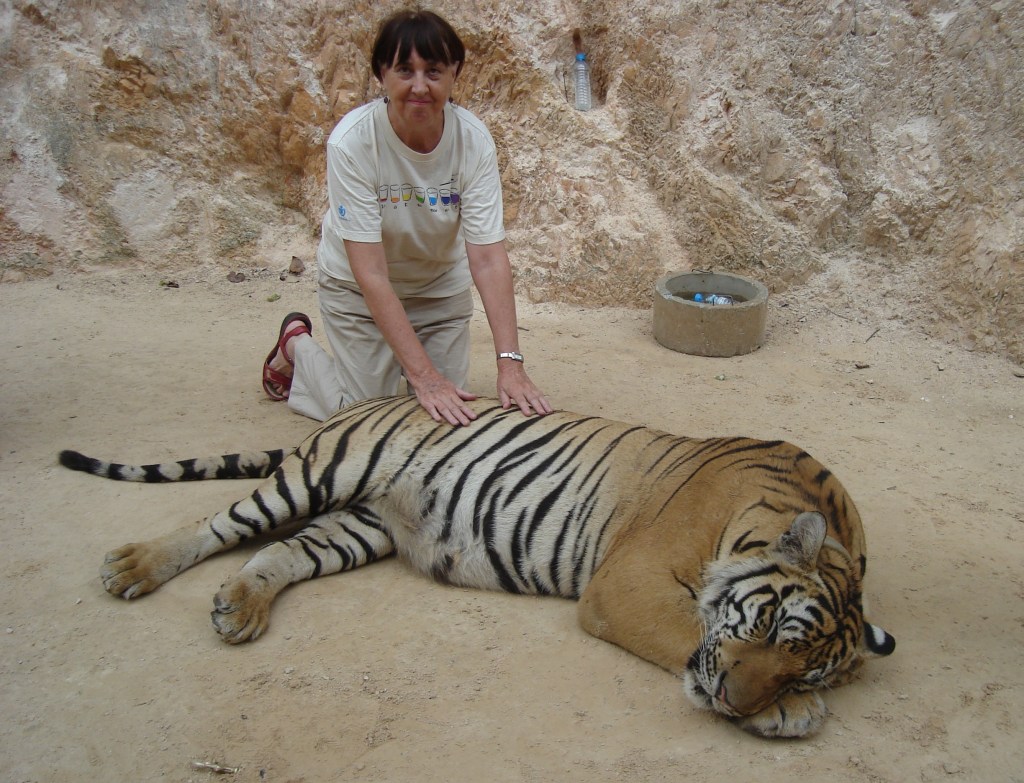
 World Woman